 Coaching Centre
Inside the cell
The organelles of plant and animal cells and their jobs: cell membrane, cytoplasm, nucleus, mitochondria, vacuoles, chloroplasts and cell wall. Comparing plant, animal and bacterial cells, and prokaryotes versus eukaryotes.
A single cell in your body carries out thousands of chemical reactions every second. It takes in food, releases energy, builds proteins, gets rid of waste and copies its own instructions, all inside a space so small that ten of them would fit across the full stop at the end of this sentence. It manages because it's divided into compartments, each with its own job.
Organelles: the cell's working parts
The structures inside a cell are called organelles ("little organs"). Just as your body has organs with different jobs, a cell has organelles with different jobs. You can see some of them with a school microscope; the smaller ones only show up under an electron microscope.
In both plant and animal cells
- Cell membrane. A very thin, flexible layer around the outside of the cell. It is selectively permeable: it lets some substances through (water, oxygen, glucose) and keeps others out, and it lets wastes leave.
- Cytoplasm. The jelly-like fluid that fills the cell. It is mostly water with dissolved chemicals, and many of the cell's reactions happen in it. The organelles sit in the cytoplasm.
- Nucleus. Usually the biggest organelle. It contains DNA, the coded instructions for how the cell is built and what it does. It controls the cell's activities and passes the instructions on when the cell divides.
- Mitochondria (singular: mitochondrion). Sausage-shaped organelles with folded insides, where cellular respiration releases energy from glucose. Cells that use a lot of energy, such as muscle cells, have thousands.
- Vacuoles. Fluid-filled sacs for storage. Animal cells have small, temporary vacuoles, if any.
Only in plant cells
- Cell wall. A stiff layer outside the membrane, made of cellulose. It supports the cell and gives it a fixed, often box-like shape. It lets water and dissolved substances pass straight through.
- Large central vacuole. A big, permanent sac of watery cell sap that can take up most of the cell. When it is full it presses outwards against the wall and keeps the cell firm. When a plant runs short of water, its vacuoles shrink and the plant wilts.
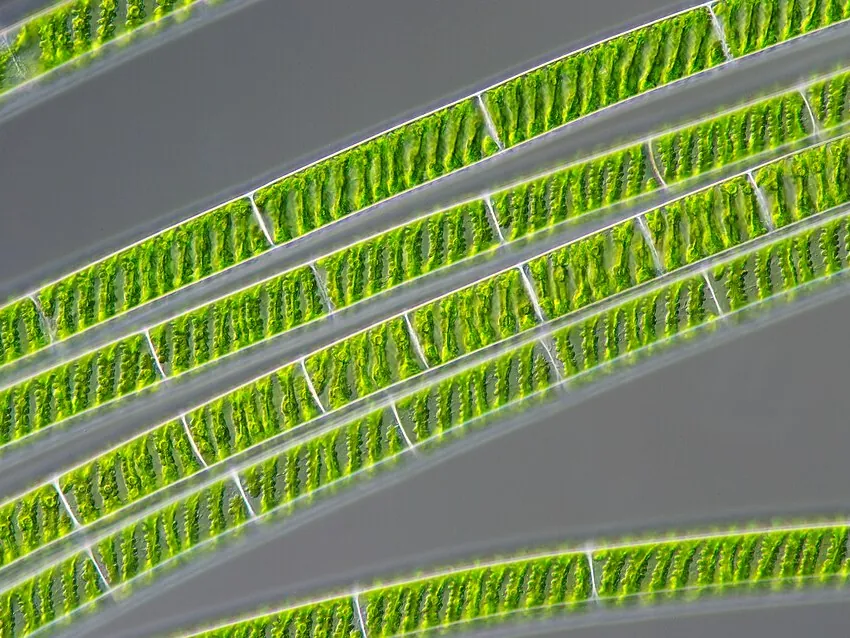
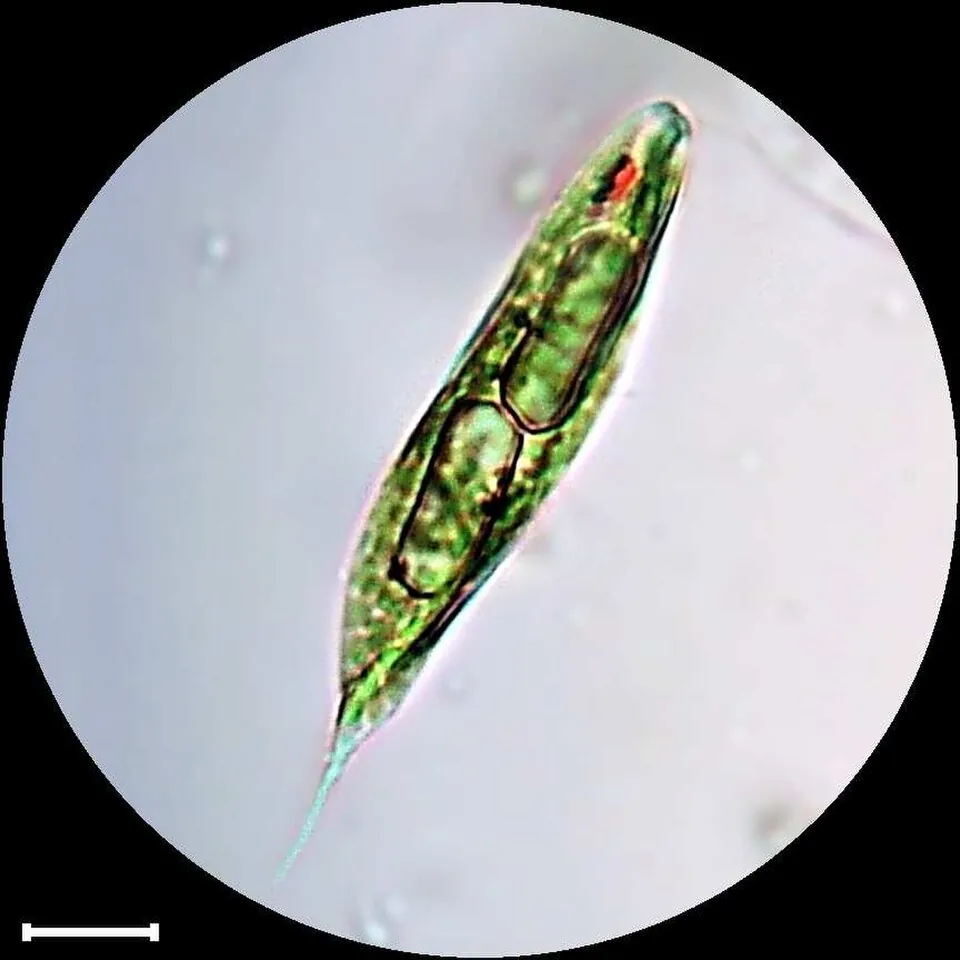
- Chloroplasts. Green organelles containing chlorophyll, which absorbs light energy for photosynthesis: making glucose from carbon dioxide and water. Only cells in the green parts of a plant have them. Root cells and onion skin cells don't.
- Tap each part of the animal cell, then the plant cell. Check the "found in" tags: which parts do plant and animal cells share?
- Open the bacterium. What's missing compared with the other two? What does it have instead?
- Press "Quiz me" and see how many organelles you can find from their job alone.
Comparing plant and animal cells
| Feature | Animal cell | Plant cell |
|---|---|---|
| Cell membrane, cytoplasm, nucleus, mitochondria | Yes | Yes |
| Cell wall | No | Yes, made of cellulose |
| Vacuole | Small and temporary, if any | One large, permanent central vacuole |
| Chloroplasts | No | Yes, in green parts |
| Shape | Irregular, often rounded | Fixed, often rectangular |
A quick way to remember the plant-only parts: plant cells have extra parts for support (wall and big vacuole) and for making food (chloroplasts). Animals don't need either: they have skeletons for support and they eat.
Bacteria: cells without a nucleus
Bacteria are much smaller and simpler than plant or animal cells, usually 1 to 5 micrometres long. They have a cell membrane, cytoplasm and a cell wall (not made of cellulose), and some have a whip-like flagellum to swim. But they have no nucleus and no mitochondria or chloroplasts. Their DNA is a single loop floating in the cytoplasm.
Scientists split all cells into two types based on this difference:
- Prokaryotes ("before a nucleus"): no nucleus and no membrane-wrapped organelles. Bacteria and their relatives.
- Eukaryotes ("true nucleus"): DNA inside a nucleus, plus organelles. Plants, animals, fungi and protists.
Test yourself
Which organelle controls the cell's activities and contains DNA?
The nucleus holds the DNA instructions.
A cell has a cell wall, a nucleus and a large vacuole but no chloroplasts. It is most likely
Wall and big vacuole say plant; no chloroplasts says it gets no light, like a root.
The cell membrane is described as selectively permeable. This means it
It chooses: oxygen and glucose in, wastes out, many other things kept out.
Muscle cells contain many more mitochondria than skin cells because muscle cells
Contracting uses lots of energy, released by respiration in mitochondria.
Which statement about bacteria is correct?
Bacteria are prokaryotes: DNA but no nucleus.
Label the animal cell.
Label the plant cell.
Where is each part found?
The contain a green chemical called that absorbs light for photosynthesis. The plant cell wall is made of . Cells with a nucleus are called , while bacteria, which have no nucleus, are . Energy is released from food in the .
Compare the structure of a plant cell and an animal cell. Explain how the differences relate to how plants and animals live.
Both plant and animal cells have a cell membrane, cytoplasm, a nucleus and mitochondria, because both need to control what enters, carry out reactions, store DNA and release energy. Plant cells also have a cellulose cell wall and a large permanent vacuole. These give the cell a fixed shape and keep it firm, which supports the plant because it has no skeleton. Plant cells in green parts also have chloroplasts, so plants can make their own food by photosynthesis. Animals don't need chloroplasts because they get food by eating, and their flexible cells, with no wall, allow movement.