 Coaching Centre
Solutions, colloids and suspensions
The three main types of mixture by particle size: solutions, colloids and suspensions. How to tell them apart with a torch beam (the Tyndall effect), by leaving them to stand and by filtering. Emulsions, foams, gels and aerosols, and emulsifiers.
Drive through fog at night and your headlights make two bright cones in the air. Shine the same headlights through clear air and you see nothing until the light hits something. Fog is a mixture of tiny water droplets in air, and those droplets are just the right size to scatter light sideways into your eyes. That simple test, shining a beam through a mixture, tells you a lot about the size of the particles in it.
Three types of mixture
Mixtures where one substance is spread through another are grouped by the size of the spread-out particles.
- Solution. The particles are as small as individual molecules or ions. They are spread evenly and the mixture is transparent (it may be coloured, like cordial, but you can see through it). Nothing settles, and the particles pass through any filter paper. Salt water, sugar water, vinegar and air are solutions.
- Suspension. The particles are big enough to see, or nearly. The mixture is cloudy, and if you leave it to stand, the particles settle to the bottom (or float to the top). Filter paper catches them. Muddy water, chalk or flour in water, and many medicines labelled "shake well before use" are suspensions.
- Colloid. In between. The particles are too small to see or to settle, but big enough to scatter light, so a colloid looks cloudy or milky and never separates on standing. They pass through filter paper. Milk, fog, jelly, mayonnaise and paint are colloids.
Testing with a torch
Shine a narrow beam of light (a torch or laser pointer) through the side of a glass. In a solution, the beam is invisible inside the liquid because the particles are too small to scatter it. In a colloid or suspension, the beam shows up as a bright path. This is called the Tyndall effect, after the Irish scientist John Tyndall, who studied it in the 1860s. It's also why sunbeams show up in a dusty room and why searchlights are visible in a smoky sky.

- Pick a sample and run all three tests: torch, leave to stand, and filter.
- Decide whether it's a solution, colloid or suspension. Can you identify all eight?
- Milk and muddy water both look cloudy. Which test tells them apart?
| Test | Solution | Colloid | Suspension |
|---|---|---|---|
| Appearance | Clear (may be coloured) | Cloudy or milky | Cloudy |
| Torch beam visible? | No | Yes | Yes |
| Settles if left to stand? | No | No | Yes |
| Caught by filter paper? | No | No | Yes |
| Particle size | Less than 0.001 µm | 0.001 to 1 µm | More than about 1 µm |
Kinds of colloid
Colloids can be made from any combination of solids, liquids and gases, and many have their own names:
| Type | What's spread through what | Examples |
|---|---|---|
| Emulsion | Liquid droplets in another liquid | Milk, mayonnaise, many skin creams |
| Foam | Gas bubbles in a liquid or solid | Whipped cream, shaving foam, marshmallow, polystyrene |
| Gel | Liquid trapped in a solid network | Jelly, hair gel |
| Aerosol | Liquid droplets or solid particles in a gas | Fog, mist, smoke, bushfire haze |
| Sol | Solid particles in a liquid | Paint, ink |
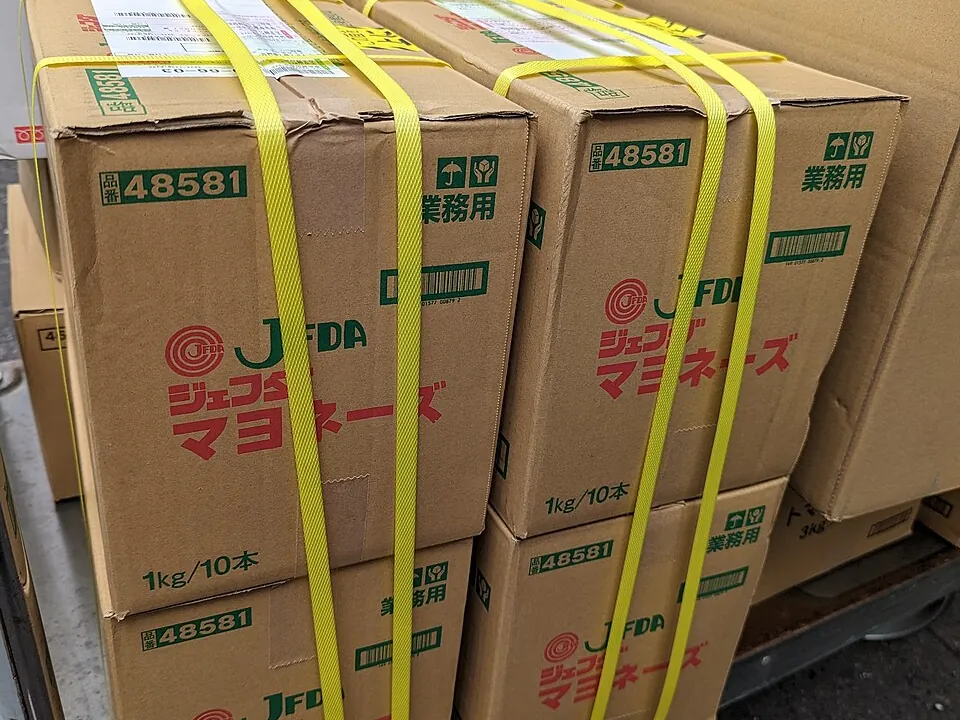
Oil and water don't mix: shake them and they soon split into two layers. An emulsifier stops this by surrounding each oil droplet with molecules that are attracted to oil at one end and water at the other. Egg yolk is the emulsifier in mayonnaise. Soap and detergent work the same way, lifting greasy dirt off plates and into the washing-up water.
Test yourself
A torch beam can be seen passing through a mixture, but the mixture doesn't settle even after a week. It is a
Visible beam but no settling is the signature of a colloid.
Which mixture would leave a residue on filter paper?
Only a suspension's particles are big enough to be caught.
Mayonnaise is an example of
Oil droplets spread through a watery liquid, kept apart by egg yolk.
The job of an emulsifier is to
It coats the droplets so they stay spread out.
Bushfire smoke is a colloid of
Tiny ash and soot particles spread through air: an aerosol.
Sort the mixtures.
Name each type of mixture.
Milk and muddy water both look cloudy. Describe two tests that would show they are different types of mixture, and the result you'd expect for each.
Leave both to stand for an hour: the soil in the muddy water settles to the bottom, but the milk stays the same. Then filter both: the muddy water leaves soil on the filter paper and the filtrate is much clearer, while the milk passes through unchanged and still cloudy. This shows muddy water is a suspension and milk is a colloid.