 Coaching Centre
Water in Australia
How little of Earth's water is fresh and available, how Australians collect, store and use water, droughts, floods, El Niño and La Niña, desalination and recycled water, the Murray–Darling Basin, and saving water at home.
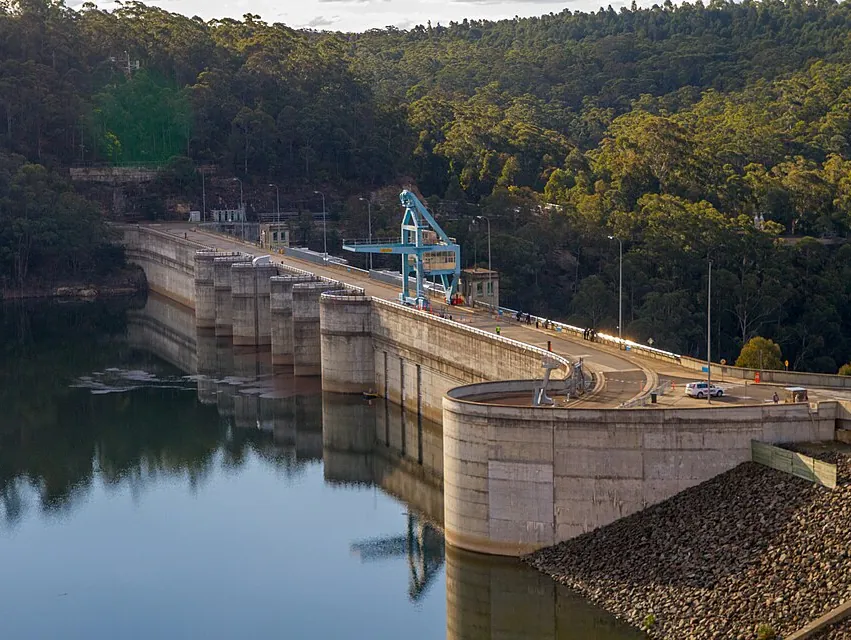
In 2019, after three years of drought, Sydney's dams fell below 45% and the city brought in water restrictions. Two years later, La Niña rains filled Warragamba Dam until it spilled over the top, and in 2022 the Northern Rivers town of Lismore suffered the worst flood in its recorded history. Too little water, then far too much: that's the Australian story.
Less water than you think
About 71% of the Earth's surface is covered with water, yet drinkable water is surprisingly rare.
About 97.5% of all water is salty. Of the 2.5% that is fresh, most is locked in ice caps and glaciers, and nearly all the rest is underground. Less than 1% of all the Earth's water is fresh water we can easily reach in lakes, rivers and shallow groundwater. Drinking seawater makes you more dehydrated, because your kidneys need extra water to get rid of the salt; many sailors on long voyages died of thirst surrounded by ocean.
Water in a dry land
Australia is the driest inhabited continent. Rainfall varies hugely from place to place and from year to year, and much of what falls evaporates. To get through dry years, Australia stores more water per person in dams than almost any other country.
- Warragamba Dam, Sydney's main supply, holds about 2 million megalitres (2 million million litres), roughly four times the volume of Sydney Harbour.
- Water is collected from catchments, stored in dams, treated (topic 5G), then piped (reticulated) to homes and businesses.
- Farming uses the most: irrigation for crops such as rice, cotton, fruit and pasture accounts for well over half of all the water Australians use. Households use around a tenth.
Drought, flood, El Niño and La Niña
Australia's rainfall is strongly affected by the temperature of the Pacific Ocean:
- In an El Niño, the central and eastern Pacific becomes warmer than usual and eastern Australia usually gets less rain, with a higher risk of drought, heatwaves and bushfires.
- In a La Niña, the eastern Pacific becomes cooler, the waters near northern Australia warmer, and eastern Australia usually gets more rain, with a higher risk of floods. Three La Niña years in a row (2020–2023) brought record floods.
During long droughts, soil can bake hard so that when heavy rain finally comes, it runs off instead of soaking in, causing flash floods and erosion. Floods also wash pollution and sewage into rivers, making water unsafe to drink.
New sources of water
- Desalination removes salt from seawater, usually by reverse osmosis: pushing seawater at high pressure through very fine filters. Sydney's plant at Kurnell can supply about 15% of the city's water. Perth relies on it even more: desalination supplies around half of its drinking water, because rainfall in south-western WA has dropped sharply since the 1970s. Desalination works in any weather, but it uses a lot of energy and returns very salty brine to the sea.
- Recycled water from treated sewage waters parks, golf courses and crops, and is used in toilets in some new suburbs (purple pipes and taps mark it).
- Rainwater tanks collect roof run-off for gardens, toilets and laundries.
Saving water at home
An average Sydney resident uses roughly 200 litres of water a day at home. The biggest uses are showers, toilets, laundry and gardens. Water-saving shower heads use about half the water of old ones, and new washing machines and toilets carry a star rating (WELS) showing how water-efficient they are.
- Set the sliders to match your own household as closely as you can. How do you compare with 200 L per person per day?
- Which single change saves the most water for your household?
- How much water would your house save in a year if everyone cut their shower by 2 minutes?
Test yourself
About what percentage of the Earth's water is fresh?
And most of that is frozen or underground.
Most of the Earth's fresh water is
About 69% of fresh water is ice.
In eastern Australia, a La Niña year usually brings
El Niño tends to be drier.
Which uses the most water in Australia?
Well over half of all water used.
A disadvantage of desalination is that it
Pushing seawater through filters takes energy.
Supply or saving?
About % of the Earth's water is salty. Turning seawater into fresh water is called . Drier conditions in eastern Australia are linked to . Sydney's main dam is Dam.
Perth gets around half of its drinking water from desalination, while Sydney gets most of its water from dams. Suggest reasons for this difference, and give one advantage and one disadvantage of desalination.
Rainfall in south-western Western Australia has dropped a lot since the 1970s, so much less water runs into Perth's dams and they can no longer be relied on, so Perth turned to the ocean. Sydney has large protected catchments and Warragamba Dam, which usually refill after rain, so it needs desalination only as a backup in droughts. One advantage of desalination is that it works no matter how little rain falls, because the supply of seawater is unlimited. One disadvantage is that pushing seawater through filters at high pressure uses a lot of energy, which makes the water expensive and, if the energy comes from fossil fuels, adds to carbon dioxide emissions.