 Coaching Centre
Electromagnets
How an electric current makes a magnetic field, building an electromagnet, what makes an electromagnet stronger, soft iron cores, and uses of magnets and electromagnets including cranes, door locks, speakers, motors, maglev trains, recycling and MRI scanners.
In 1820, the Danish scientist Hans Christian Ørsted was giving a lecture when he noticed something odd. Every time he switched on an electric current in a wire, a compass needle lying nearby twitched. Electricity, it turned out, makes magnetism. That small twitch led to electric motors, speakers, MRI scanners and every power station on Earth.
Magnetism from electricity
Whenever an electric current flows through a wire, it makes a magnetic field around the wire. A single straight wire makes only a weak field. But wind the wire into a coil, and the fields from all the loops add together. Put a piece of iron inside the coil, and the iron becomes magnetised too, making the field hundreds of times stronger. This is an electromagnet.
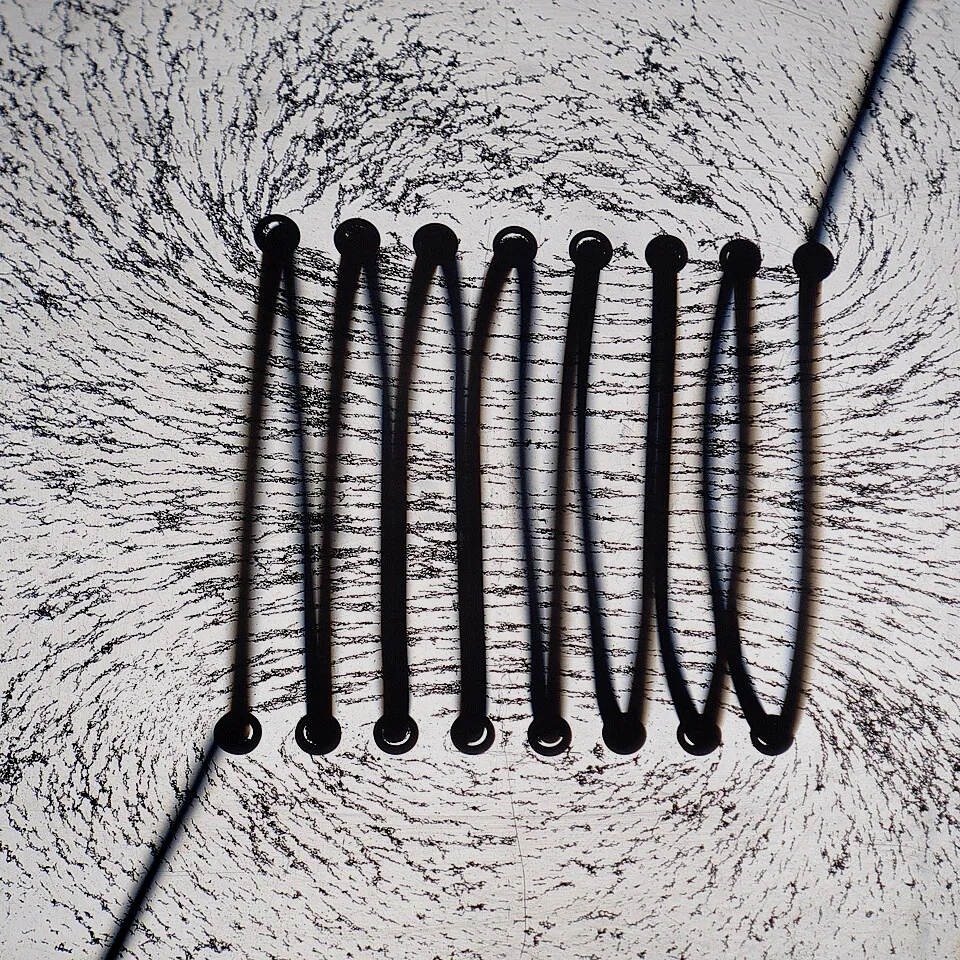
The big advantage over an ordinary magnet (a permanent magnet) is control. An electromagnet:
- can be switched on and off: it is only a magnet while current flows
- can be made stronger or weaker by changing the current
- can be made far stronger than any permanent magnet
- can have its poles swapped by reversing the current
Making it stronger
You can make an electromagnet stronger by:
- adding more turns (loops) of wire to the coil
- increasing the current, for example by using more batteries in a row
- using a soft iron core: iron greatly strengthens the field
The core material matters. Soft iron becomes a strong magnet when the current is on and loses almost all its magnetism the moment the current stops, which is exactly what you want in a crane that has to drop its load. Steel keeps some of its magnetism after the current is switched off, so it's used to make permanent magnets instead. A core of aluminium, copper or wood does nothing, because they aren't magnetic materials.
There's a cost: more current makes the wire heat up and flattens batteries faster. Large electromagnets need cooling.
- Start with 20 turns, 1 battery and an iron nail. Switch on. How many clips does it hold?
- Change one thing at a time: double the turns, then add batteries. Which change has the bigger effect? Keep the other variables the same each time.
- Try the steel bolt, then switch off. What happens? Then try no core and the aluminium nail.
Magnets and electromagnets at work
| Use | How magnetism is used |
|---|---|
| Scrapyard and recycling cranes | A huge electromagnet lifts tonnes of scrap steel, then drops it when switched off. Recycling plants use magnets to pull steel cans out of the mixed recycling. |
| Security doors | An electromagnet holds a steel plate on the door shut; cutting the current (or a fire alarm) releases it. |
| Speakers, earbuds and headphones | A changing current in a coil makes it push and pull against a permanent magnet, vibrating a cone to make sound. |
| Electric motors | Electromagnets and permanent magnets push and pull to make the shaft spin: in fans, drills, washing machines, electric cars and trains. |
| Maglev trains | Powerful electromagnets lift the train off the track and pull it along, with no wheel friction. |
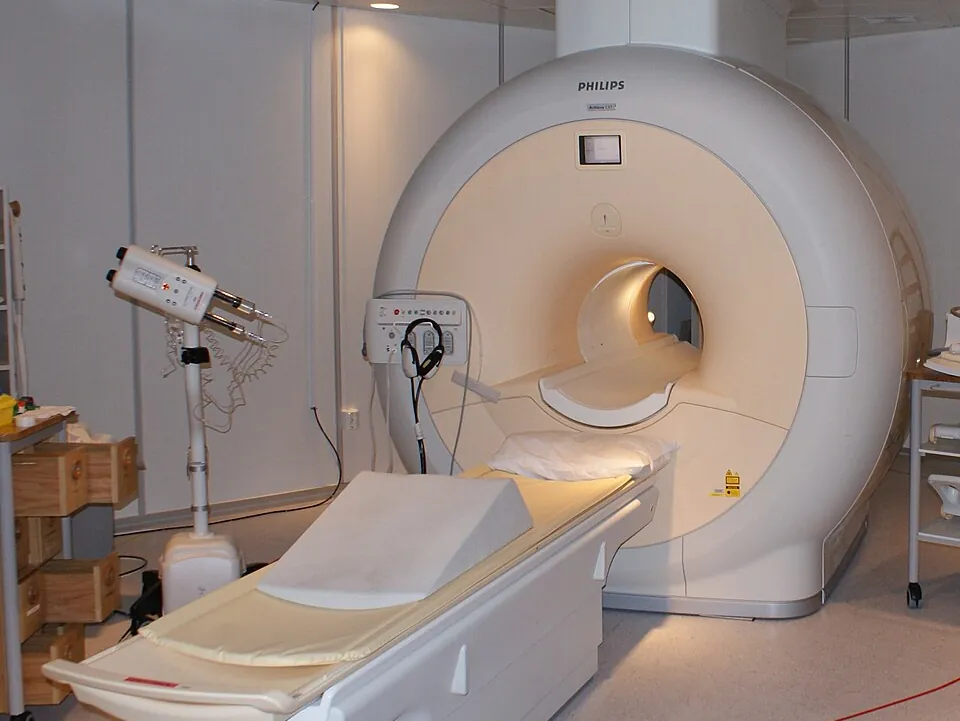
| MRI scanners | A giant electromagnet, with coils cooled by liquid helium to about −269 °C, makes a field tens of thousands of times stronger than the Earth's magnetic field. With radio waves, it builds detailed pictures of soft tissue like the brain without using X-rays. |
| Data and cards | Older hard drives and the black strip on some bank cards store information as tiny magnetised patches. |
| Generators | Spinning magnets near coils of wire make electricity: the reverse of an electromagnet. Every coal, wind and hydro power station does this. |
Test yourself
Who discovered that an electric current affects a compass?
In 1820, during a lecture.
Which change would NOT make an electromagnet stronger?
Plastic isn't magnetic.
Why is soft iron used for the core of a scrapyard crane's magnet?
So the crane can drop its load.
The main advantage of an electromagnet over a permanent magnet is that
And its strength can be controlled.
Label the electromagnet.
Which kind of magnet suits the job?
An electric in a wire produces a magnetic field. An electromagnet is made from a of wire wrapped around a core of soft . Adding more of wire makes it stronger.
Jun wants to find out whether the number of turns of wire affects the strength of an electromagnet. Describe a fair test Jun could do, naming the independent, dependent and controlled variables.
Jun should wind 10 turns of insulated wire around an iron nail, connect it to one 1.5 V battery and count how many identical paperclips it picks up. Then repeat with 20, 30 and 40 turns. The independent variable is the number of turns. The dependent variable is the strength of the electromagnet, measured by the number of paperclips it holds. The controlled variables are the same nail, the same battery (so the current stays the same), the same type and length of wire, and the same size of paperclips. Jun should do three trials for each number of turns and calculate the average, and disconnect the battery between trials so the wire doesn't overheat.