 Coaching Centre
Minerals, ores and mining
Minerals and ores, what Australia mines, getting a metal out of its ore, open-cut and underground mining, waste rock and tailings, rehabilitating mine sites, critical minerals for batteries, and recycling metals and e-waste.
A smartphone contains around 30 different chemical elements: lithium and cobalt in the battery, copper in the wiring, gold and silver on the circuit board, tin in the solder, and rare earth metals in the speaker magnets and screen. Every one of them came out of a mine somewhere in the world, and many of them could have come from Australia.
Minerals and ores
Minerals are the natural, solid chemical substances that make up rocks, usually as tiny grains or crystals. A few, like gold, can be found pure. Most useful metals are chemically joined to other elements, mixed with other minerals in the rock.
An ore is a rock that contains enough of a useful mineral that it is worth mining. Bauxite is the ore of aluminium; haematite is an ore of iron. Whether a rock counts as an ore depends on money as well as science: if the price of a metal goes up, rock with less of it in it becomes worth mining.
Minerals formed over thousands to millions of years by geological processes, so they are non-renewable.
What Australia mines
| Mined product | Where (examples) | Used for |
|---|---|---|
| Iron ore | Pilbara, WA | Steel for buildings, cars, bridges. Australia is the world's largest exporter. |
| Bauxite | Weipa (Qld), Darling Range (WA) | Aluminium for cans, window frames, planes |
| Lithium (spodumene) | Greenbushes and Pilgangoora, WA | Rechargeable batteries in phones, EVs and home batteries |
| Gold | Kalgoorlie (WA), Cadia near Orange (NSW) | Jewellery, electronics, savings |
| Copper | Olympic Dam (SA), Cobar (NSW) | Electrical wiring and motors |
| Rare earths | Mount Weld, WA | Magnets in wind turbines, EV motors and speakers |
| Mineral sands | Murray Basin, WA coast | White paint pigment, ceramics |
Lithium, rare earths and cobalt are called critical minerals: the switch to renewable energy and electric vehicles depends on them. Australia mines more lithium than any other country.
From ore to metal
Getting a metal out of its ore takes several steps: crushing the rock, separating the useful mineral from the waste (often with methods you met in the Mixtures chapter, such as froth flotation), then using heat or electricity to break the chemical bonds and release the pure metal. Aluminium is pulled out of bauxite using huge amounts of electricity, which is why aluminium smelters are built next to power stations.
Open-cut and underground mining
- Open-cut (open-pit) mining is used when ore is fairly close to the surface. All the soil and rock on top, the overburden, is removed by huge trucks and diggers, then the ore is dug out in steps called benches. It's cheaper per tonne and gets almost all the ore, but it destroys everything on the surface and leaves a huge hole and piles of waste rock.
- Underground mining is used when the ore is deep. A shaft or sloping tunnel (decline) leads down to the ore, and tunnels follow it. Much less land is disturbed, but it is more expensive, more dangerous for workers, and some ore must be left behind as pillars to hold up the roof.
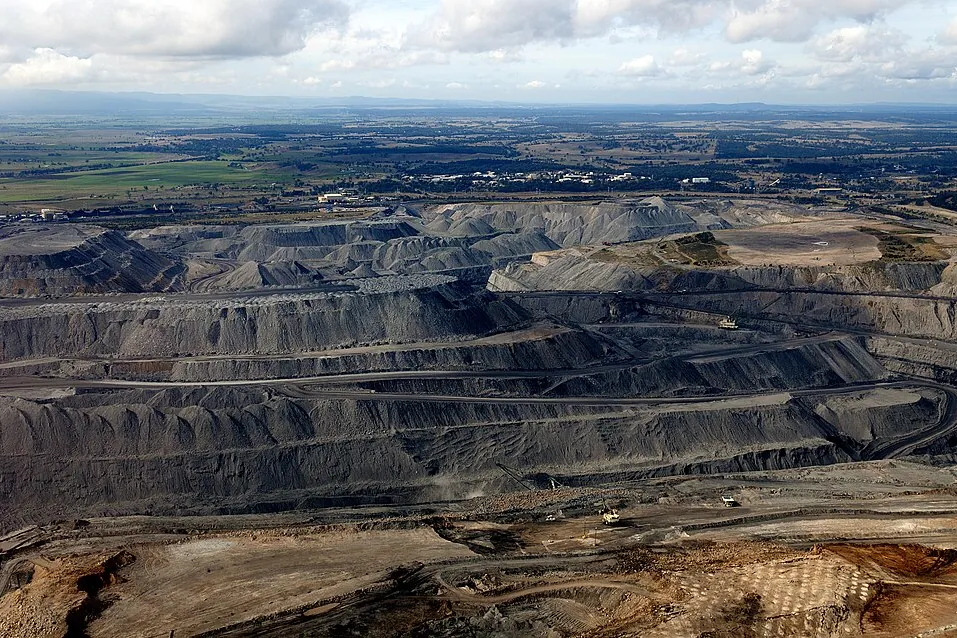
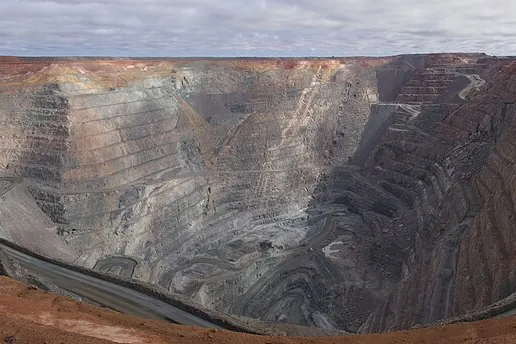
- As an open-cut mine, dig out the shallow ore body. How much waste rock did you move?
- Is the deep ore body worth digging as an open cut? Check the profit.
- Start again as an underground mine. Can you reach the deep ore with a profit while clearing only one surface block?
Looking after the land
Mining creates large amounts of waste. After the useful mineral is removed, the leftover crushed rock and water, called tailings, can contain harmful chemicals and are stored behind dams. If a tailings dam fails, the results can be deadly: in 2019 a dam collapse at Brumadinho in Brazil killed 270 people.
In Australia, a company must study the environmental impact before a mine is approved, control dust, noise and water pollution while it runs, and rehabilitate the land when it closes: reshaping waste rock, spreading the stored topsoil back over it and replanting native species so animals can return. Many communities, including Aboriginal Traditional Owners, are involved in decisions about whether mining should happen on their land at all.
Mining without digging: recycling
Metals don't get "used up" the way fuels do: the atoms are still there in old cans, cars and phones. Recycling metals saves energy, reduces mining waste and makes non-renewable ores last longer. A tonne of old phones contains far more gold than a tonne of gold ore. Electronic waste (e-waste) is one of the fastest-growing kinds of rubbish, so taking old phones and computers to a proper e-waste collection point, rather than putting them in the bin, matters.
Test yourself
Bauxite is
Aluminium is extracted from it.
Open-cut mining is most suitable when
The overburden can be removed cheaply.
Tailings are
They're stored behind tailings dams.
Lithium is called a critical mineral because it is
The energy transition depends on it.
Rehabilitating a mine site means
So plants and animals can return.
Label the two kinds of mine.
Which kind of mining?
A rock with enough of a useful mineral to be worth mining is an . The soil and rock on top of it is the . Minerals are . Melting old cans to make new ones is called .
A company wants to build an open-cut gold mine near a country town. Describe two benefits and two problems the community should consider before deciding.
One benefit is jobs: the mine would employ local people for many years and bring money to shops and businesses in the town. A second benefit is that the company would pay royalties to the government, which can be spent on schools and hospitals. One problem is that an open-cut mine destroys everything on the surface, including bushland and animal habitats, and leaves a large pit and waste rock piles. A second problem is pollution: dust and noise from blasting and trucks, and the risk of harmful chemicals leaking from the tailings dam into rivers and groundwater that farms and the town rely on.