 Coaching Centre
The Linnaean system and scientific names
The seven Linnaean ranks from kingdom to species, what a species is, binomial (two-part) scientific names and how to write them, decoding Latin and Greek roots in Australian animal names, and why names sometimes change.
If you post a letter addressed to "Sam, Earth", it will never arrive. Add the country, the state, the suburb, the street and the house number and it reaches exactly one person. The Linnaean system gives every species an address like this, from the broadest group down to a single kind of organism.
Seven ranks
Linnaeus sorted living things into groups inside groups. The biggest group is the kingdom. Each kingdom is split into several phyla (singular: phylum), each phylum into classes, and so on down to the species:
Kingdom → Phylum → Class → Order → Family → Genus → Species
A classic way to remember the order: King Philip Came Over For Good Soup. (Make up your own; the sillier, the better it sticks.)
Going down the ranks, each group contains fewer kinds of organisms, and the members are more alike. The kingdom Animalia holds everything from sponges to sparrows. The class Mammalia holds only animals with hair and milk. The genus Felis holds a handful of small wild cats and the house cat.
Today scientists also use a level above kingdom called the domain (topic 2I), so you'll sometimes see eight ranks.
What a species is
A species is a group of organisms that can breed with each other in natural conditions and produce fertile offspring (young that can themselves breed). All domestic dogs are one species: a chihuahua and a Great Dane look nothing alike, but they can breed and their puppies are fertile. A horse and a donkey can breed, but their offspring (a mule) is almost always infertile, so horses and donkeys are separate species.
This definition doesn't work for everything (bacteria don't breed with partners, and you can't test fossils), so scientists also use similarities in structure and DNA.
- Pick a target organism. At each rank, choose the group it belongs to and watch everything else drop away.
- Do the koala, then the human. At which rank do they separate?
- Find the pairs that stay together right down to family. What does that tell you about them?
Two-part names
Linnaeus's other great idea was the binomial name ("two names"): every species is named by its genus plus a species word. Humans are Homo sapiens, the domestic cat is Felis catus, and the dog is Canis familiaris. Like your own name, it's just the last two lines of the address; the rest can be looked up.
The genus comes first and starts with a capital letter: Phascolarctos.
The species word comes second and is all lower case, even if it comes from a person's or place's name: cinereus.
The whole name is in italics when typed, or underlined when handwritten: Phascolarctos cinereus (koala).
After you've written it once, you can shorten the genus to its first letter: P. cinereus.
Decoding the names
Scientific names come from Latin and Greek, the shared language of European scholars when Linnaeus was working. The words usually describe the organism, so knowing a few roots lets you decode names:
| Root | Meaning | Root | Meaning |
|---|---|---|---|
| ornitho- | bird | macro- | large |
| rhynchus | snout, beak | -pus, -pod | foot |
| anatinus | duck-like | tachy- | fast |
| phascol- | pouch | glossus | tongue |
| arctos | bear | aculeatus | spiny |
| cinereus | ash-grey | rufus | red |
| chlamy- | cloak, cape | saurus | lizard |
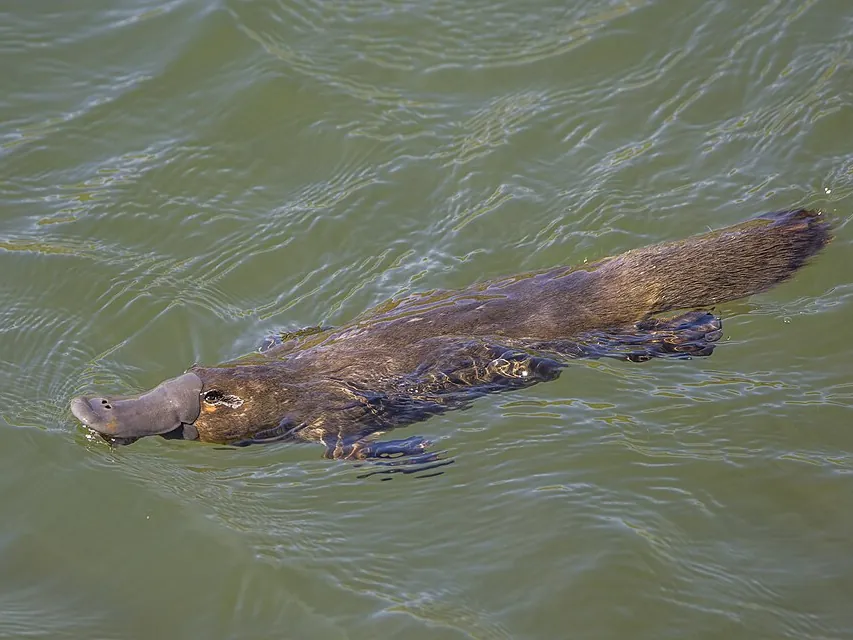
- Ornithorhynchus anatinus: bird-snout, duck-like. The platypus.
- Tachyglossus aculeatus: fast-tongue, spiny. The short-beaked echidna.
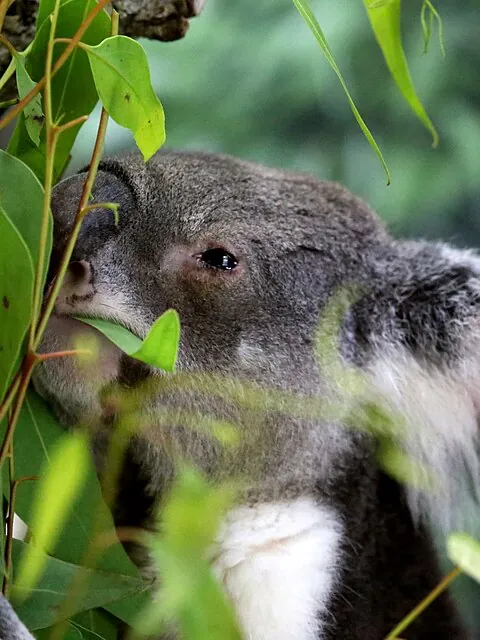
- Phascolarctos cinereus: ash-grey pouched bear. The koala (which is a marsupial, not a bear; the name records a mistake).
- Chlamydosaurus kingii: King's caped lizard. The frill-necked lizard, named after the naval officer Phillip Parker King.
Names can change
Scientific names aren't fixed forever. When new evidence, often DNA, shows that a species belongs in a different genus, its name changes. Older books call the red kangaroo Macropus rufus ("big-foot, red"). In 2019, after DNA studies, it was moved to the genus Osphranter, so it is now Osphranter rufus. The cultivated banana was once called Musa sapientum; we now know most bananas are hybrids of two wild species, and the old name is no longer used.
Before a new species name is accepted, a type specimen (holotype) is chosen and stored in a museum or herbarium, and a description is published. If anyone is ever unsure what a name refers to, they go back to that specimen.
Test yourself
Which is written correctly?
Genus capital, species lower case, both in italics.
Which rank contains the most different kinds of organisms?
Phylum is the highest of these, just below kingdom.
Lions (Panthera leo) and tigers (Panthera tigris) belong to the same
Both names start with Panthera, the genus. Sharing a genus means they share every rank above it too.
A horse and a donkey can mate, but they are different species because
A species produces fertile offspring.
Using the table of roots, what would Macroglossus aculeatus most likely look like?
Macro = large, glossus = tongue, aculeatus = spiny. (It's an imaginary animal.)
Put the ranks in order, from the biggest group to the smallest.
The scientific name of an organism is called a name. The first word is the and starts with a letter. The second word is the . When typed, the name is written in , and when handwritten it is .
Explain why giving your address as "Sam, Southern Hemisphere, Earth" would not get a letter to you, and link this to why biologists need seven ranks.
Billions of people live in the Southern Hemisphere, so the address doesn't narrow it down to one person. In the same way, "Animalia" contains over a million kinds of animals. Each rank narrows the group further, until the species identifies exactly one kind of organism.
The red kangaroo was called Macropus rufus but is now Osphranter rufus. (a) Translate the old name. (b) Explain why a scientific name might be changed.
(a) Macropus rufus means "big foot, red". (b) Names change when new evidence shows the species is more closely related to a different group. DNA studies showed the red kangaroo belongs in the genus Osphranter, so its genus name changed. Classification is updated as scientists learn more.