 Coaching Centre
How classification keeps changing
How new evidence changes classification: from two kingdoms to five, archaea and the three-domain system, DNA comparisons that regrouped organisms, new species from the deep sea such as giant tube worms, and museum type specimens and online databases.
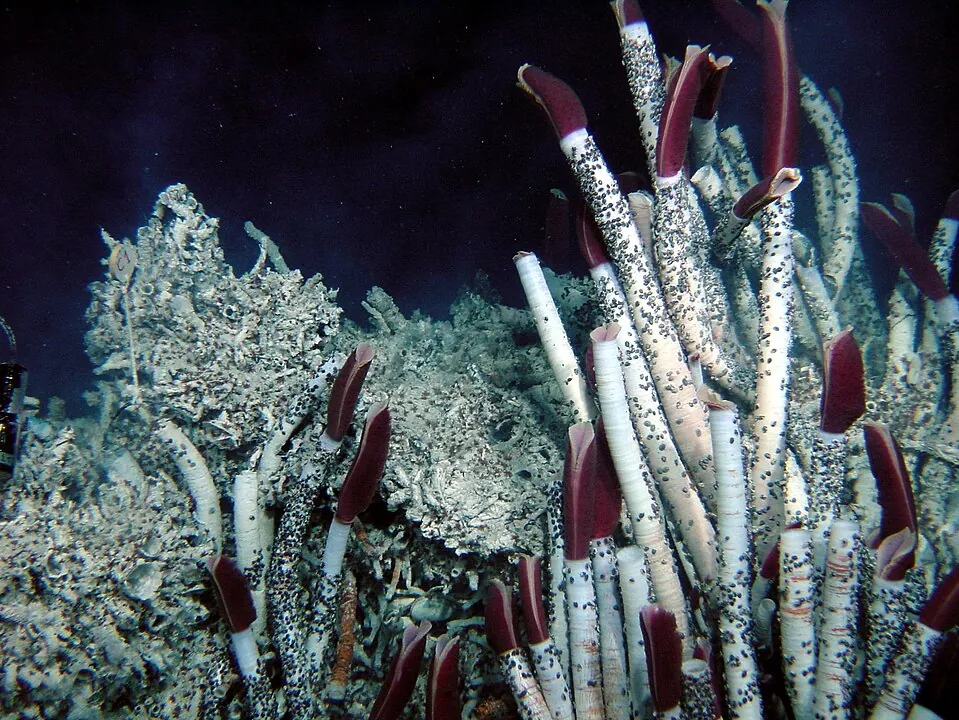
In 1977 scientists in the submarine Alvin dived 2.5 km down to the sea floor near the Galápagos Islands, expecting a dark, nearly empty desert. Instead they found hot springs gushing from the rocks, surrounded by clams the size of dinner plates and forests of tube worms taller than a person, living with no sunlight at all. Nobody had a group to put them in.
From two kingdoms to five
Classification has always changed when new evidence arrived:
- Two kingdoms (plants and animals) worked until microscopes revealed single-celled organisms.
- In 1866 Ernst Haeckel added a third kingdom, Protista, for microscopic life.
- Electron microscopes showed that bacteria have no nucleus, so they got their own kingdom, Monera.
- In 1969 Robert Whittaker separated Fungi from plants because of how they feed, giving the five kingdoms you met in topic 2F.
Archaea and three domains
In 1977 the American microbiologist Carl Woese compared a molecule found in every cell (a type of RNA used to build proteins) across many microorganisms. Some "bacteria" from boiling hot springs, very salty lakes and swamps where methane gas bubbles up turned out to be as different from ordinary bacteria as bacteria are from humans. He called them archaea.
Archaea look like bacteria under a microscope (no nucleus, single cells) but their chemistry and genes are completely different. In 1990 Woese proposed a new level of classification above kingdom: the domain. There are three:
- Bacteria: prokaryotes, including most familiar microbes.
- Archaea: prokaryotes with distinctive chemistry; many live in extreme places, but they're also found in soil, oceans and your gut.
- Eukarya: everything with a nucleus: protists, fungi, plants and animals.
The three-domain system is now used by most biologists. Notice where fungi sit on the tree: DNA shows they are more closely related to animals than to plants. The old "Monera" kingdom has been split between two domains.
DNA rewrites the family tree
Before DNA, organisms were classified by how they look. But organisms can look alike because they live the same way, not because they're related. DNA lets scientists count how many differences there are between the genes of two species: fewer differences mean a more recent common ancestor.
- Whales look like fish, but they're mammals, and DNA shows their closest living relatives are hippopotamuses.
- Australian songbirds. DNA showed that songbirds, the group that includes most of the world's perching birds, first evolved in Australia and spread from here. Lyrebirds and bowerbirds sit near the base of the family tree.
- The red kangaroo was moved from Macropus to Osphranter in 2019 after DNA comparisons (topic 2D).
- Compare short pieces of DNA from pairs of animals. The tool counts the differences, letter by letter.
- Find which animal is the whale's closest relative. Were you surprised?
- Use your counts to build the family tree, joining the closest pairs first. (The sequences are short made-up stand-ins, but the pattern of relationships is the real one.)
Life without sunlight
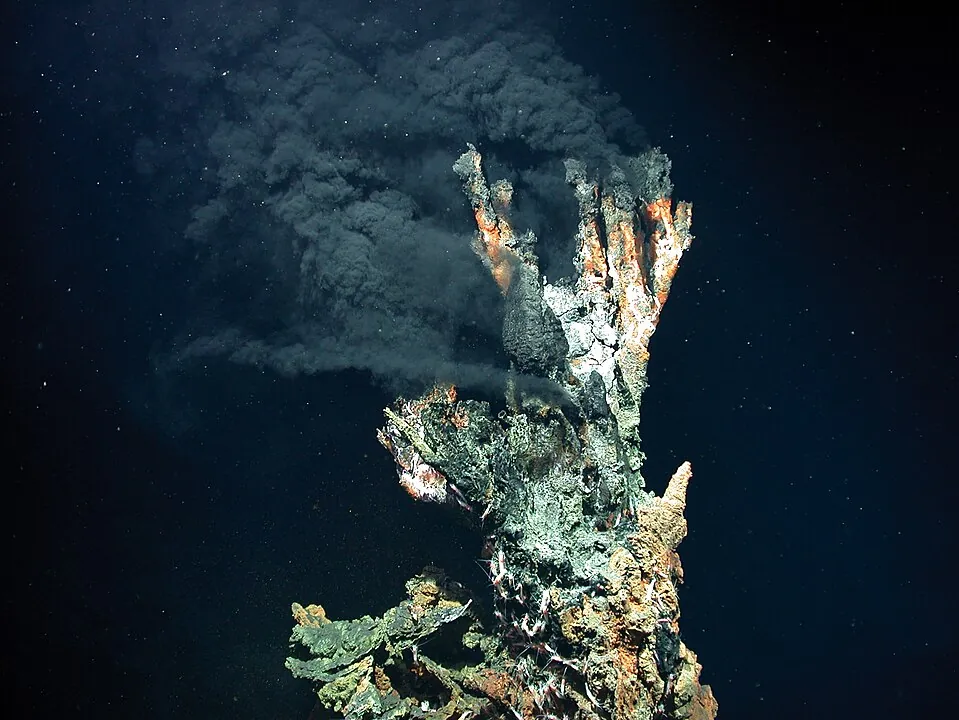
The 1977 discovery was hydrothermal vents: cracks in the sea floor where water heated by magma below seeps out. Two years later, scientists in Alvin found even hotter vents, "black smokers", where water at over 350 °C gushes out black with dissolved minerals. The giant tube worm (Riftia pachyptila) grows up to about 2 m long there. It has no mouth and no gut. Instead, its body is packed with bacteria that make food using chemical energy from the vent water, a process called chemosynthesis. The worm's red plume (red because of haemoglobin, like your blood) collects the chemicals the bacteria need. Food chains that start with chemistry instead of sunlight forced scientists to rethink what living things need.
How new species are named today
About 15 000 to 20 000 new species are described every year, most of them insects, and scientists estimate that most of Earth's species are still unnamed. Each new species gets a holotype: one preserved specimen, stored in a museum or herbarium, that defines the species name forever. The Australian Museum in Sydney holds millions of specimens.
Classification has also moved online. The Atlas of Living Australia combines over 100 million records of where Australian species have been seen, many submitted by members of the public through apps. Scientists can now share photos, DNA sequences and 3D scans of specimens instantly, rather than posting drawings by ship as Linnaeus did.
Test yourself
The three domains are
Domains sit above kingdoms.
What evidence led Carl Woese to propose archaea as a separate group?
Under a microscope they look like bacteria; their genetic chemistry is what sets them apart.
Two species have DNA that differs in only a few places. This suggests they
Fewer differences mean less time since they split from an ancestor.
Giant tube worms at black smokers get their food from
Chemosynthesis by bacteria living inside the worm.
Put these changes to classification in the order they happened.
Classification changes as new is found. New lets scientists explore more of the planet and find new . Comparing shows how closely related organisms are. Each new species is defined by a preserved specimen called a .
Using an example, explain how a new technology has changed the way living things are classified.
Gene sequencing let Carl Woese compare the genetic molecules of microorganisms. He found that some organisms that looked like bacteria had very different genes and chemistry. This evidence showed they were a separate group, the archaea, and led to the three-domain system (Bacteria, Archaea and Eukarya), which places a new level above kingdom.