 Coaching Centre
Asking scientific questions
Why curiosity drives science, simple and big questions, which questions science can test, spotting pseudoscience, and turning a prediction into an "If … then … because" hypothesis.
In 1981 the Australian scientist Tim Flannery climbed a mountain in Papua New Guinea he had climbed years before, and noticed the forest now grew further up the slope. One question, "Why is the forest moving uphill?", led him to spend the next forty years studying climate change. Most of science starts like that: someone notices something odd and refuses to ignore it.
Curiosity is a tool
Young kids ask "why?" constantly. Scientists never stopped. Long before the word "scientist" existed, people who studied nature were called natural philosophers (philosopher means "lover of knowledge"). By watching the sky carefully they built calendars, worked out that the Earth is round and measured its size, more than 2000 years ago.
Curiosity has two sources. Sometimes it comes from need: the first humans had to find out, by trial and error, which plants were food and which were poison. Sometimes it is just wanting to know: why is the sky blue? Why do fingers wrinkle in the bath? Both kinds have changed the world. Vaccines, antibiotics and the internet all began with someone's question.
Science is never finished. New technology lets us answer old questions in new ways. Microscopes first showed cells in the 1600s. Today scanning tunnelling microscopes can show individual atoms, something early scientists said would be impossible.
Simple questions and big questions
A simple question has a short, factual answer: a word, a number, a place. A big question asks how or why, and needs you to connect ideas to answer it. Both are useful. Simple questions collect facts; big questions build understanding, and you usually need lots of simple answers to tackle one big question.
| Simple question | Bigger version |
|---|---|
| Where do whales live? | What kind of environment do whales need to survive? |
| What do whales eat? | Where do whales fit in the ocean's food web? |
| How many humpbacks pass Sydney each winter? | Why has the humpback population recovered since whaling stopped? |
| What is the hottest day recorded in Sydney? | How is climate change affecting Sydney's summers? |
Questions science can answer
Not every question is a science question. Science can only answer questions where you can collect evidence: something you can observe or measure. A testable question is one you can answer by doing an experiment, changing one thing and measuring what happens.
- Testable: "Does the temperature of water change how fast sugar dissolves?" You can change the temperature and time the dissolving.
- Researchable but not testable in a school lab: "How far is the Moon from the Earth?" Scientists have measured it (by bouncing lasers off mirrors the Apollo astronauts left there), and you can look up their evidence.
- Not a science question: "Is chocolate ice cream the best flavour?" or "Should zoos exist?" These depend on opinions and values. Science can inform them (by measuring how zoo animals behave, for example) but can't decide them.
A good trick: if you can't imagine what you would measure to answer the question, it probably isn't testable yet. Many vague questions can be rewritten to be testable. "Do plants like music?" becomes "Does playing music for one hour a day change how tall bean seedlings grow in two weeks?"
Who asks the questions?
Scientists are all kinds of people, working in labs, hospitals, mines, farms, oceans, Antarctica and space. The 2023 NSW syllabus groups science into four main branches, and each asks its own kind of question.
| Branch | Studies | A question it might ask |
|---|---|---|
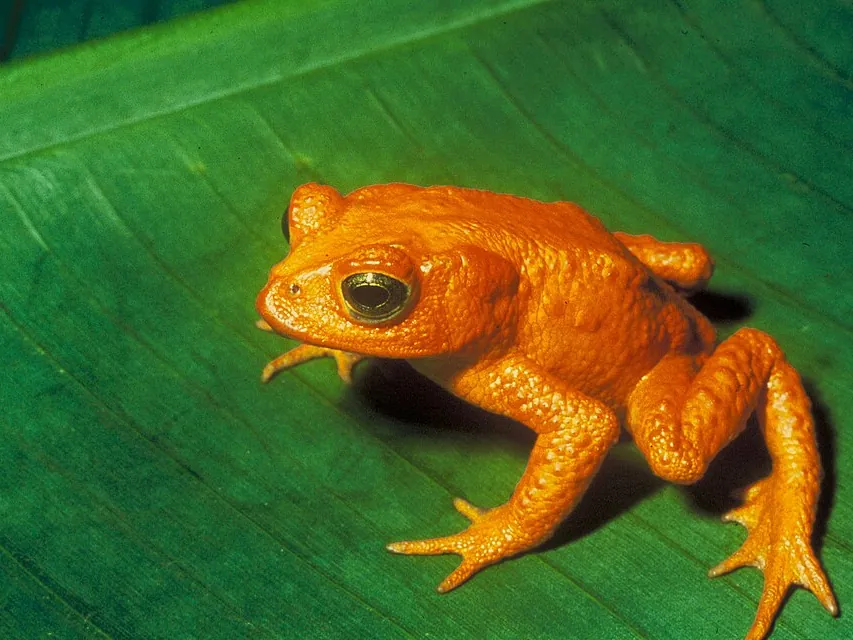
| Biology | Living things | Why are frogs disappearing faster than other animals? |
| Chemistry | Substances and how they react | Can we make plastic that breaks down in the ocean? |
| Physics | Forces, energy, light, electricity | How can solar panels turn more sunlight into electricity? |
| Earth and space science | The Earth, weather, the solar system and beyond | How can we predict cyclones earlier? |
Big questions often need several branches at once, so scientists work in teams. Studying the Great Barrier Reef needs marine biologists, chemists who measure ocean acidity, and physicists who model ocean temperatures.
Science or pseudoscience?
Pseudoscience ("pseudo" means false) uses scientific-sounding words without doing what makes science reliable. Horoscopes, "miracle" weight-loss patches and bracelets that claim to "balance your energy" are common examples. Here is how to tell the difference:
| Real science | Pseudoscience |
|---|---|
| Makes claims that could be proven wrong by a test | Claims are vague enough that they can never be proven wrong |
| Uses controlled, repeated experiments | Relies on stories, testimonials and "it worked for me" |
| Shares methods so others can repeat them | Keeps methods secret or "ancient" |
| Changes its ideas when new evidence appears | Never changes, whatever the evidence says |
From prediction to hypothesis
Scientists don't start experiments blindly. They use what they already know to make a prediction: what they think will happen. When the prediction is about cause and effect and includes a reason, it becomes a hypothesis.
A hypothesis is usually written as an "If … then … because …" statement:
Question: Does adding salt change the temperature at which water boils?
A hypothesis doesn't have to be right. If your results don't support it, you haven't failed. You have learned something, and you write a new hypothesis and test again. Some of science's biggest discoveries came from experiments that "went wrong": penicillin was found because mould ruined Alexander Fleming's bacteria plates.
- Pick a question, then choose the three parts of a hypothesis. The checker tells you which part is weak and why.
- Try building a bad hypothesis on purpose. What makes "then the plant will be better" untestable?
Test yourself
Which of these is a testable question?
You can change the drop height and measure the bounce height. The others are opinions or values, or too vague to measure.
Early scientists were called natural philosophers. "Philosopher" means
From the Greek philo (love) and sophia (wisdom or knowledge).
Which is a big question rather than a simple one?
It needs you to connect many facts to explain a process. The others have one-line answers.
Which is the best hypothesis?
It has a clear change (hours of light), a measurable effect (height in two weeks) and a reason.
A company says its bracelet "aligns your body's natural energy fields" and shows reviews from happy customers. This is most likely pseudoscience because
Vague claims plus stories instead of fair tests are the warning signs.
A student's results don't support her hypothesis. What should she do?
Unexpected results are useful evidence. Changing them is cheating, and ignoring them wastes what you learned.
A scientist studying how a volcano's gases change before an eruption is working mainly in
Volcanoes are part of Earth science (though chemists help analyse the gases).
Where does each question belong?
A question can be answered by changing one thing and measuring the effect. A is a prediction with a reason, written as "If … then … …". Claims that use scientific words but can't be tested are called . Experiments can a hypothesis, but new can always change our ideas.
"Do plants like music?" is not a testable question. Rewrite it as a testable question and explain what makes your version testable.
"Does playing music for 2 hours a day change how tall bean seedlings grow in 14 days?" This is testable because there is one thing I change (music or no music) and one thing I can measure with a ruler (the height of the seedlings), so I can compare the two groups.
A student asks: "Does the temperature of water change how fast a sugar cube dissolves?" Write a hypothesis for this investigation, and explain why a hypothesis that turns out to be wrong is still useful.
If the water temperature is increased, then the sugar cube will dissolve in less time, because water particles move faster when they are hotter and break the sugar apart more quickly. If the results don't support this, the hypothesis is still useful because the results are evidence: they tell us something about how sugar dissolves, and we can use them to write a better hypothesis and test it.