 Coaching Centre
Why we classify
What classification is, why scientists group living things, choosing good features to classify by, common names versus scientific names, and how classification developed from Aristotle to DNA.
Ask someone in Sydney, someone in London and someone in Boston to picture a "robin". You'll get three different birds. The Australian one has a red or pink chest, the English one has an orange face, and the American one is a thrush the size of a magpie-lark. Same word, three animals. Now imagine trying to write a scientific paper about "the robin".
What classification is
Classification is sorting things into groups based on their similarities and differences. You already do it all the time: a supermarket groups food into aisles, your phone groups apps into folders, and a library sorts books by subject so you can find one among thousands.
Scientists classify living things for four main reasons:
- To identify organisms. Once groups exist, you can work out what an unknown plant or animal is by checking which group's features it has.
- To communicate clearly. Every species gets one scientific name, so scientists anywhere in the world know exactly which organism is meant.
- To see similarities and differences. Grouping shows which organisms are built in the same way, which helps predict how a new species might live, what it eats or whether it is dangerous.
- To understand the history of life. Organisms that share many features usually share a common ancestor. Classification is partly a family tree.
Choosing good features
You can sort the same set of things in many ways. The skill is picking features, called criteria, that give useful groups. For living things the best criteria are structural features that every member of a species has throughout its adult life: a backbone, feathers, six legs, flowers, a cell wall.
Poor criteria are ones that change, vary between individuals, or depend on where the organism happens to be. "Is big" is a poor criterion: a baby blue whale is smaller than an adult shark, and a fairy fly (a wasp so small that 50 could fit in a millimetre) is still an insect. "Lives in water" is also weak. It would put dolphins with fish, and crocodiles with frogs.
- Choose a feature to split the twelve organisms. The tool sorts them into two groups and tells you whether the feature makes a good scientific criterion.
- Find a feature that puts the dolphin with the kangaroo, not the shark. Why does that grouping make more sense?
- Find the feature that splits off only the two organisms that make their own food.
Common names cause confusion
Common names are fine for everyday talk but they cause trouble in science:
- One name, several organisms. "Magpie" means a black-and-white Australian songbird here, and an unrelated crow-like bird in Europe. "Mopoke" is used for both the southern boobook (an owl) and the tawny frogmouth (not an owl at all). "Gum tree" covers hundreds of species.
- One organism, several names. The laughing kookaburra was once commonly called the "laughing jackass". Many fish have a different name in every state, and Aboriginal language groups each have their own names, so one species can have dozens.
- Misleading names. A starfish isn't a fish, a jellyfish isn't a fish, a koala "bear" isn't a bear and a silverfish is an insect.
That's why scientists give every species a two-part scientific name, in Latin form, that is used in every language. You'll learn how these names work in topic 2D.
How classification developed
Aristotle (Greece, about 340 BC) collected descriptions of more than 500 kinds of plants and animals. He split animals into those "with blood" and those "without" (insects, worms, shellfish) and arranged everything on a "ladder of life" from rocks at the bottom to humans near the top. His system was used for nearly 2000 years.
When European explorers began collecting thousands of unfamiliar species, Aristotle's groups couldn't hold them all. Andrea Cesalpino grouped plants by their fruits and seeds. John Ray argued that you need to observe an organism over its whole life before classifying it, and gave the word species its biological meaning. This mattered: a juvenile eastern blue groper is a 3 cm green fish, while the adult is over a metre long and blue, and early naturalists could easily have named them as two different fish.
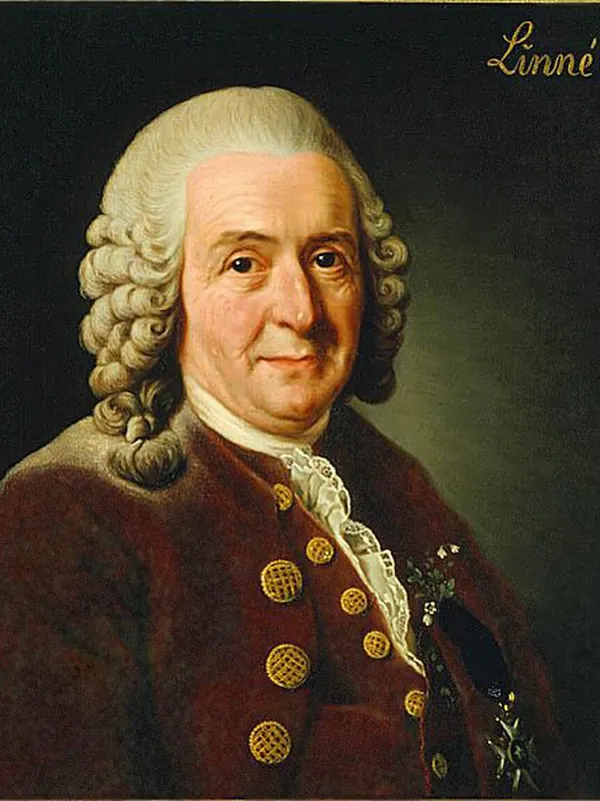
Then came Carl Linnaeus (Sweden, 1707–1778). Earlier scientists named organisms with long Latin descriptions; a plant might be called by a dozen words. Linnaeus used a ladder of ranks and a short two-word name for every species. His book Systema Naturae (10th edition, 1758) is still treated as the official starting point for animal names.
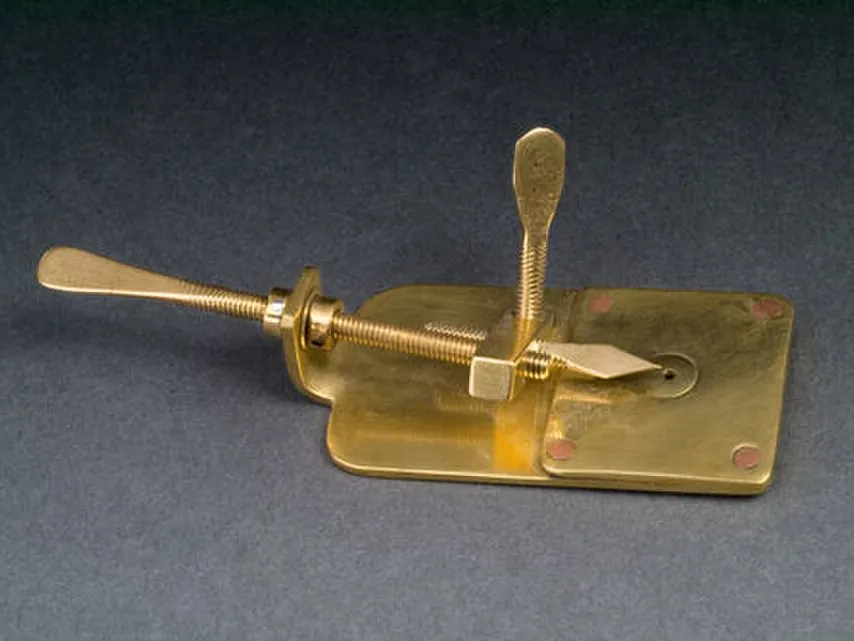
Microscopes opened a world nobody knew existed. In the 1670s the Dutch cloth merchant Antonie van Leeuwenhoek (say "LAY-ven-hook") built tiny single-lens microscopes and found "animalcules" swimming in pond water, and then in the plaque scraped from his own teeth. He was the first person to see bacteria. Single-celled organisms didn't fit "plant" or "animal", so new kingdoms had to be invented.
Today DNA lets scientists compare organisms gene by gene. That evidence has moved some species to new groups and created a new top level of classification, the domain (topic 2I).
Test yourself
Which is the best reason scientists use scientific names instead of common names?
Common names vary between places and languages; one scientific name is used everywhere.
Which feature is the most useful for classifying animals?
A backbone is a structural feature every member keeps all its adult life. Size changes with age, and habitat groups unrelated animals.
Van Leeuwenhoek's discovery changed classification because
Microorganisms didn't fit the old two groups, so new kingdoms were needed.
A juvenile and an adult eastern blue groper look so different that early naturalists might name them as two species. Which scientist's advice would avoid this?
Watching the whole life cycle shows the young and the adult are the same species.
Put these developments in the order they happened, earliest first.
Is each feature a good criterion for classifying living things?
is grouping organisms by their similarities and differences. Good criteria are features that stay the same in adults. Common names can be confusing, so every species has a name. The two-part naming system was introduced by . The invention of the revealed single-celled organisms, and today evidence is changing how some organisms are grouped.
Outline THREE reasons why scientists classify living things.
Classification lets scientists identify an unknown organism by matching its features to an existing group. It lets them communicate clearly, because each species has one scientific name used in every country. It also shows which organisms are similar and how closely related they are, which helps explain the history of life on Earth.
A student classifies animals into "lives on land" and "lives in water". Explain why this is a poor way to classify animals.
Where an animal lives is not a structural feature, so the groups would contain unrelated animals. Dolphins and whales would be grouped with fish even though they are mammals with lungs and hair, and frogs and crocodiles live in both places so they don't fit either group clearly.