 Coaching Centre
Fossil fuels and power stations
How coal, oil and natural gas formed, where they are found in Australia, coal seam gas, how a coal-fired power station turns chemical energy into electricity, the electricity grid, carbon dioxide and the enhanced greenhouse effect, and the move to electric vehicles.
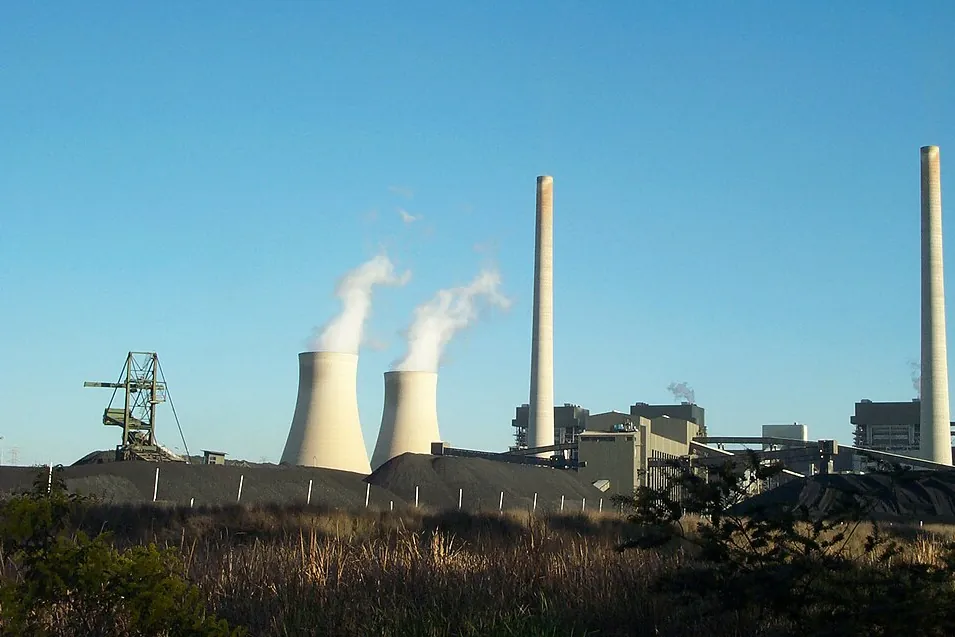
Flick a light switch in Sydney and, until very recently, the electricity almost certainly started as a lump of coal burnt in the Hunter Valley or on the shores of Lake Macquarie. Eraring, the biggest power station in Australia, can burn more than 20 000 tonnes of coal in a single day. That coal is made of plants that grew in swampy forests before the first dinosaurs.
How fossil fuels formed
Fossil fuels are coal, oil and natural gas. They are called fossil fuels because they are the remains of living things that died millions of years ago. They store chemical energy that the plants originally captured from sunlight.
- Coal formed from huge swamp forests. When the plants died they fell into waterlogged ground with little oxygen, so they didn't fully rot. They built up as peat, were buried under mud and sand, and over millions of years heat and pressure squeezed out water and gases, turning them into brown coal and then harder black coal, which has more energy per kilogram.
- Oil and natural gas formed mostly from tiny sea organisms (plankton). Their remains settled on the sea floor, were buried, and were slowly "cooked" by heat deep underground. Oil and gas are runny, so they move up through rock until they are trapped under a layer of rock they can't pass through.
Fossil fuels in Australia
Australia is one of the world's biggest exporters of coal and liquefied natural gas (LNG).
- Black coal is mined in the Hunter Valley and around Lithgow in NSW and in central Queensland. It is used in power stations, some types are used to make steel, and much of it is exported.
- Brown coal is mined in the Latrobe Valley in Victoria. It is wetter and gives less energy, so it's burnt in power stations right next to the mines.
- Natural gas is mainly methane. It is piped from gas fields in Bass Strait, off north-western Western Australia and in Queensland to homes (for cooking and heating), factories and power stations.
- Coal seam gas is methane trapped in coal seams. It is extracted by drilling wells and pumping water out of the coal, mainly in Queensland. Some farmers and communities oppose it because of possible effects on groundwater and farmland.
- Crude oil (petroleum) is a thick liquid separated in refineries into petrol, diesel, jet fuel, plastics and many chemicals. Australia now imports most of its fuels.
Inside a power station
- Coal is crushed to a powder and burnt in a boiler. Its chemical energy becomes heat.
- The heat boils water into high-pressure steam.
- The steam blasts through a turbine, a shaft with rows of angled blades (vanes), making it spin.
- The turbine turns a generator, where coils of wire spin near magnets, producing an electric current.
- Used steam is cooled back into water (the cooling tower gets rid of the waste heat) and pumped back to the boiler.
- A transformer raises the voltage so electricity can travel long distances along transmission lines with less energy lost. Near your home, transformers lower it again.
Only about a third of the coal's energy ends up as electricity. Most is lost as heat from the cooling towers.
- Start with black coal, then gas. What's the same, and what changes?
- Which energy sources still use a boiler and steam? Which skip the boiler?
- Which one doesn't need a turbine or generator at all?
The problem with burning fossil fuels
Burning fossil fuels releases carbon dioxide (CO₂), carbon that was locked underground for millions of years. Extra carbon dioxide in the atmosphere traps more heat, increasing the natural greenhouse effect. This enhanced greenhouse effect is warming the climate: Australia has warmed by about 1.5 °C since 1910. Burning coal also releases other pollutants, and mining changes the land.
Coal still supplies a large share of NSW's electricity, but its share is falling every year. Liddell power station closed in 2023, and Eraring is due to close in 2029. Gas produces about half as much CO₂ as coal for the same electricity and can be switched on quickly, so it is used to fill gaps.
Transport is another big source of CO₂. More people are buying electric vehicles (EVs), which have no exhaust; in 2025 about 13% of new cars sold in Australia were electric or plug-in hybrids. An EV is only as clean as the electricity used to charge it, so it does the most good on a grid powered by renewables.
Test yourself
Coal formed mainly from
Buried peat turned into coal under heat and pressure.
In a power station, the turbine is turned by
Steam from the boiler pushes on its blades.
The job of the generator is to change
Spinning coils near magnets make a current.
Coal seam gas is mostly
It's natural gas held in coal beds.
Burning fossil fuels adds to the enhanced greenhouse effect because it releases
Carbon stored for millions of years goes into the air.
Label the power station.
Put the steps of a coal-fired power station in order.
Plant material buried in swamps first becomes , then over millions of years becomes coal. Natural gas is mainly . In a power station, chemical energy becomes heat, then energy in the turbine, then energy in the generator.
Coal has been the main source of electricity in NSW for decades, but its use is falling. Describe how a coal-fired power station produces electricity, and give two arguments people use for and against continuing to burn coal.
In a coal-fired power station, coal is crushed and burnt in a boiler, turning its chemical energy into heat. The heat boils water to make high-pressure steam, which spins a turbine (kinetic energy). The turbine turns a generator, where coils spin near magnets to produce electricity, and a transformer raises the voltage so it can be sent along transmission lines. One argument for keeping coal is that it runs 24 hours a day no matter the weather, and Australia has large coal supplies, so it is reliable and supports jobs in places like the Hunter Valley. One argument against is that coal is non-renewable and burning it releases large amounts of carbon dioxide, which adds to the enhanced greenhouse effect and climate change. Renewable sources with batteries can now replace it without this pollution.