 Coaching Centre
Adaptations for survival
Structural, behavioural and physiological adaptations, with Australian examples (thorny devil, echidna, water-holding frog, eucalypts, banksias), fire-adapted plants, how adaptations arise through variation and natural selection, and living fossils like the Wollemi pine.
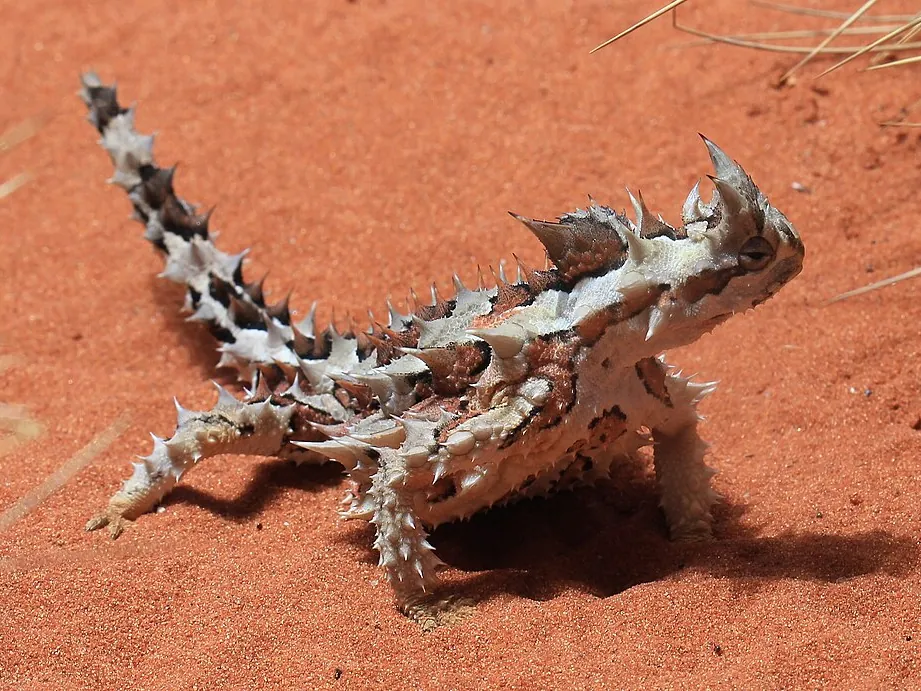
The thorny devil lives in the red sand deserts of central Australia, where rain might not fall for months. It never needs to find a pool to drink from. It just stands on damp sand, or in the dew, and water creeps up a network of tiny grooves between its scales, all the way to the corners of its mouth. Its whole skin works like a drinking straw.
What an adaptation is
An adaptation is a feature that helps an organism survive and reproduce in its environment. Because adaptations are built into the species, they are often the very features scientists use to classify and identify organisms.
Adaptations come in three types:
| Type | Meaning | Australian example |
|---|---|---|
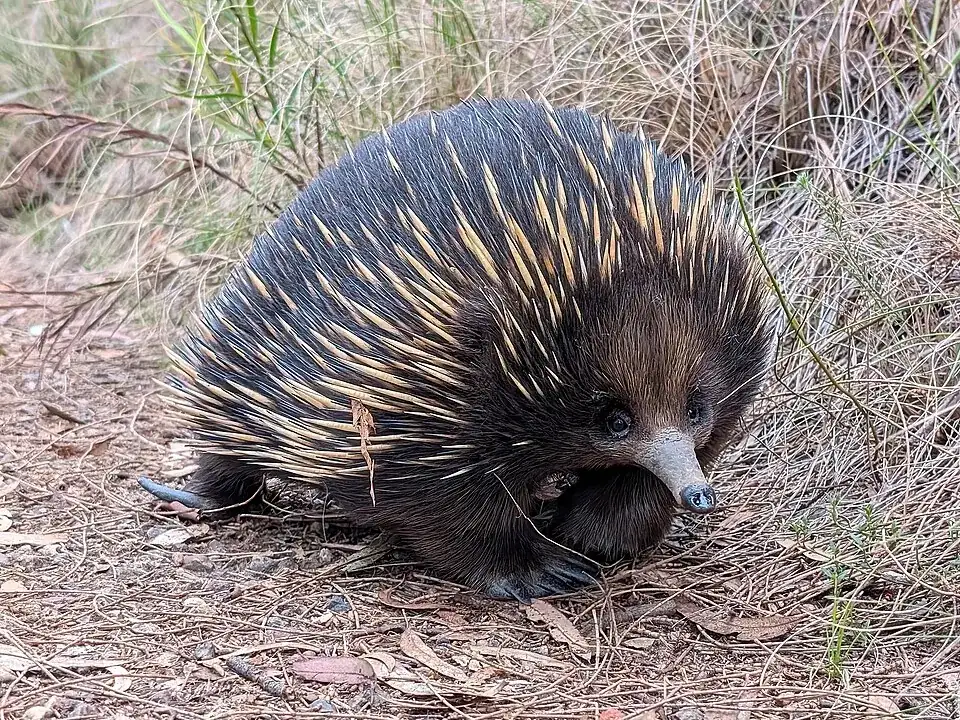
| Structural (physical) | A body part or its shape, size or covering | The echidna's spines, strong digging claws and long sticky tongue |
| Behavioural | Something the organism does | The bilby stays in its burrow by day and feeds at night, when the desert is cool |
| Physiological (functional) | A chemical or body process happening inside | Koalas have gut bacteria that break down tough, toxic gum leaves; the bilby makes very concentrated urine to save water |
Animal adaptations
The echidna digs into termite mounds and rotten logs with powerful claws. Its snout can smell prey and also detect tiny electrical signals from insects' muscles. Its sticky tongue flicks in and out up to 100 times a minute. It has no teeth; instead it crushes food between hard pads on its tongue and the roof of its mouth, helped by grit it swallows. Two kinds of hair, sharp spines for defence and soft fur for warmth, and a pouch where the egg and young puggle are carried while the mother keeps foraging, are all adaptations.
The thorny devil has more than water channels. Its spines make it hard to swallow, and a soft spiny lump on the back of its neck acts as a "false head": when threatened it tucks its real head between its front legs and offers the lump instead. It eats only small black ants, thousands in a meal, one at a time.
The water-holding frog survives in inland Australia, where rain is rare and unpredictable. After heavy rain it fills its bladder and the spaces under its skin with water, then burrows into the ground. It sheds layers of skin that harden into a waterproof cocoon and waits, barely using any energy, for years if necessary, until the next big rain. Then it digs out, feeds, mates and lays eggs fast, because the pools won't last.
Emperor penguins breed during the Antarctic winter, when it can be −40 °C with fierce winds. Males balance the single egg on their feet under a fold of warm skin for about two months, and huddle in groups of thousands, taking turns on the cold outside edge. Huddling is a behavioural adaptation; the thick fat and tightly packed feathers are structural.
Plant adaptations
Plants can't run from heat, drought or fire, so their adaptations are especially clever.
- Rainforest plants have shiny, waxy leaves with a pointed "drip tip" to shed water fast, and tall trees have buttress roots spreading like fins to stop them toppling in the shallow soil.
- Desert plants have small, rolled, spiky or hairy leaves that don't overheat and lose less water, deep roots, and thick stems that store water.
- Eucalypts have leaves that hang vertically, so the hot midday sun hits only their edges; a thick waxy cuticle; and oil glands (the oil deters insects and gives the bush its smell).
Built for fire
Many Australian plants don't just survive bushfire; some depend on it.
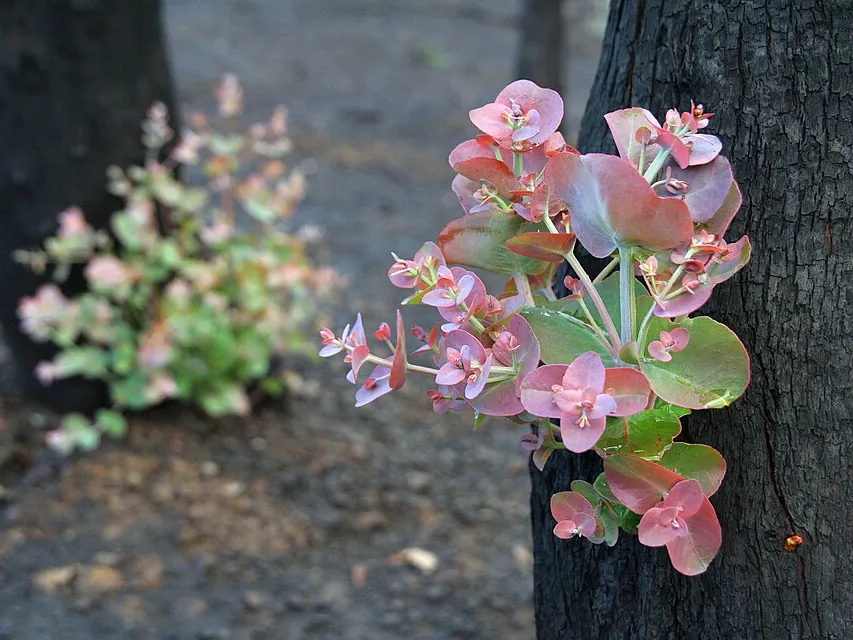
- Epicormic buds are dormant buds hidden under thick, insulating bark. After a fire burns off the leaves, they burst into shoots straight from the trunk and branches, so the tree looks "furry" with new growth within weeks.
- A lignotuber is a woody swelling at the base of the trunk, partly underground, full of stored food and buds. Even if the whole trunk dies, mallee eucalypts and many banksias regrow from it.
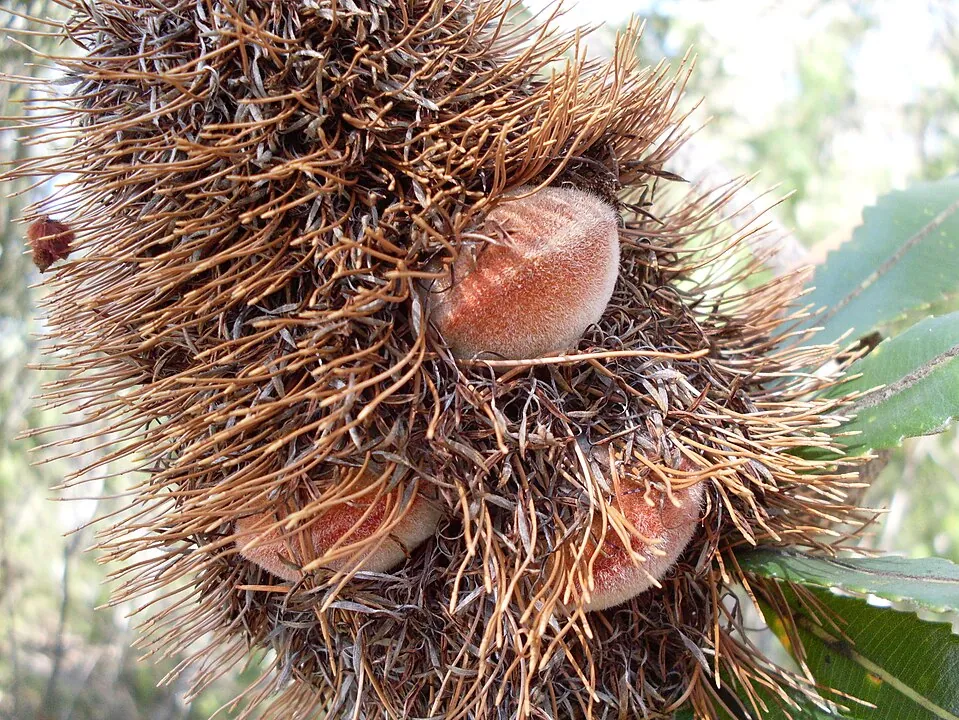
- Woody seed cases. Many banksias and some eucalypts hold their seeds in tough woody cones or capsules that only open after a fire's heat. The seeds then fall onto ash-rich soil with no competition and plenty of light.
Fire adaptation has a weakness. A banksia that relies on seeds may take five years or more to make its first cones. If fires come back too often, plants die before they can set seed and the species can disappear from that area. That's why fire managers, including Aboriginal rangers using cultural burning, think carefully about how often each patch of country should burn.
- Choose an environment, then pick one option for each feature to design an animal that could live there. Run a year and read why each feature helped or hurt.
- Get a full survival score in the desert. Which real Australian animals use the same features?
- Take your best desert animal and move it to the alpine snowfields. Which features suddenly become a problem?
How adaptations arise
An animal can't decide to grow a longer neck or thicker fur. Adaptations build up over many generations through natural selection:
Variation. Individuals in a population are all slightly different: some have slightly longer legs, thicker fur or better camouflage. Many of these differences are inherited.
Struggle. More young are born than can survive. Food, water and shelter run short, and predators take some.
Survival of the best suited. Individuals whose features suit the environment are more likely to survive and reproduce. ("Survival of the fittest" means best fitted to the environment, not strongest.)
Inheritance. They pass those features to their offspring. Over many generations, the helpful feature becomes common in the population.
This takes a long time, especially for species that breed slowly. If an environment changes faster than a species can adapt, through land clearing, introduced predators like foxes and cats, or climate change, the species can become extinct. Australia has lost more mammal species since 1788 than any other continent.
Test yourself
Possums come out at night and move around in trees. Feeding at night is
It's something the possum does.
What is the main job of a eucalypt's epicormic buds?
They lie protected under the bark and sprout after fire.
Why do some banksia populations disappear if fires happen every two or three years?
Seed-dependent banksias take years to mature; frequent fire kills them first.
In "survival of the fittest", fittest means
"Fit" as in "fits the environment".
Sort each adaptation by type.
Label the eucalypt's fire adaptations.
Put the steps of natural selection in order.
The bilby lives in the deserts of central Australia. It is nocturnal, lives in a deep burrow, has very large ears and produces very concentrated urine. Choose TWO of these features. For each, name the type of adaptation and explain how it helps the bilby survive.
Being nocturnal is a behavioural adaptation: by staying in its burrow during the day and feeding at night the bilby avoids the extreme daytime heat and loses less water. Producing very concentrated urine is a physiological adaptation: its kidneys get rid of wastes using very little water, which is important where there is almost no water to drink.
A student says: "Giraffes stretched their necks to reach high leaves, so their babies were born with longer necks." Explain what is wrong with this idea.
Stretching during an animal's life doesn't change the features it passes to its young. Instead, giraffes already varied in neck length. Those that happened to have longer necks reached more food, survived and had more offspring, which inherited long necks. Over many generations, long necks became common.