 Coaching Centre
Observation and inference
Using your senses and instruments to observe, qualitative and quantitative observations, the difference between an observation and an inference, and why inferences can change when new evidence turns up.
You walk in the front door after school and smell onions frying. That is an observation. "We're having onions for dinner" is an inference. It's probably right, but it isn't certain: maybe a neighbour is cooking, or someone made lunch. Scientists keep these two things carefully apart.
Observations
An observation is information you collect directly with your senses (sight, hearing, touch, smell) or with an instrument. In the lab you never use the fifth sense, taste, because anything on the bench could be contaminated.
Observations come in two types:
| Qualitative | Quantitative |
|---|---|
| Described in words: a quality | A number with a unit: a quantity |
| "The solution turned cloudy and pale blue." | "The temperature rose from 21 °C to 34 °C." |
| "The gas smelled like rotten eggs." | "The plant grew 3.5 cm in a week." |
| Usually from your senses, or a photo or video | Usually from an instrument: ruler, balance, thermometer, stopwatch |
Quantitative observations need units. "The plant grew 3" tells nobody anything: 3 leaves? 3 cm? 3 mm a day? Units also let you compare: 30 mm and 5 cm are hard to compare at a glance until you write them both in the same unit (3.0 cm and 5.0 cm).
Instruments don't just make observations more exact; they let us observe things our senses can't detect at all. A microscope shows cells, a thermometer detects a 0.5 °C change your hand would miss, and a Geiger counter detects radiation you can't sense in any way.
Inferences
An inference is an explanation or conclusion you draw from observations, using what you already know. It goes beyond what you directly saw.
| Observation | Possible inference |
|---|---|
| A house alarm is ringing. | Someone has broken in. (Or a cat set it off.) |
| Lemon juice tastes sour. | Lemons contain an acid. |
| The ground is wet and there are puddles. | It rained recently. (Or the sprinklers were on.) |
| A metal spoon in hot soup gets hot at the handle. | Heat travels through metal. |
| Bean plants given fertiliser B were 5 cm taller on average. | Fertiliser B helps beans grow. |
Notice that several inferences can fit the same observation. That's normal. To decide between them you collect more observations: look for a broken window, check whether the sprinklers ran. The more reliable your observations, and the more of them you have, the more confident your inference can be.
Some people are experts at this. Aboriginal trackers such as Yuendumu man Teddy Egan, who helped Northern Territory police find missing people and escaped prisoners, read the land with decades of knowledge: a bent grass stem, a scuff on a rock, which way the sand has slumped in a footprint. Each is a small observation; together they support a confident inference about who passed, when and which way they went.
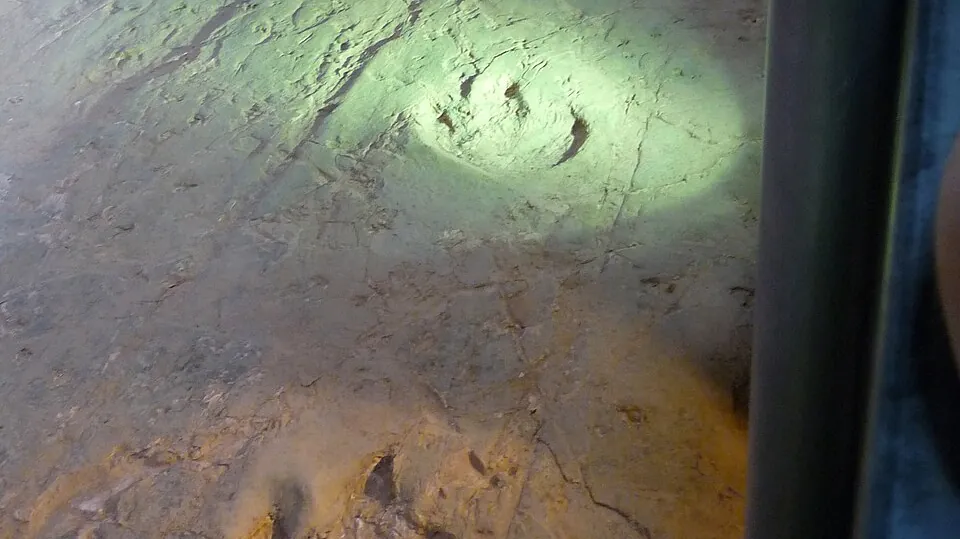
- The picture is revealed in three stages. At each stage, sort the statements into observations and inferences.
- Write down your own inference about what happened before you see the next stage. Does new evidence make you change it?
Inferences can change
Because inferences go beyond the evidence, new evidence can overturn them. Observations, if they were made carefully, stay true. This is one of the most important habits in science: hold your inferences loosely and be ready to change them.
Test yourself
Which is a quantitative observation?
A number with a unit. The last option isn't an observation at all.
Which is an inference?
"Means a gas is being made" explains the fizzing. It goes beyond what was seen.
Why is taste never used to make observations in a school lab?
Anything on a lab bench could carry chemicals.
"The plant grew 3." What is missing from this observation?
3 cm? 3 mm? 3 leaves? Units make quantitative observations meaningful.
The same observation can lead to different inferences. The best way to decide which inference is right is to
More evidence narrows down the possible explanations.
Sort each statement.
An is information gathered using the senses or instruments. A observation is described in words, while a observation uses numbers and . An is an explanation of an observation. Inferences can change when new is found.
A student drops a tablet into water. Write one qualitative observation, one quantitative observation and one inference the student could make.
Qualitative: the tablet fizzed and lots of small bubbles rose to the surface. Quantitative: the tablet completely disappeared after 48 seconds. Inference: the tablet is reacting with the water to produce a gas.
Explain why scientists are careful to keep observations and inferences separate when they record results.
Observations are what actually happened, so other scientists can trust them and check them. Inferences are explanations that might be wrong and might change when new evidence turns up. If the two are mixed together, other people can't tell which parts are facts and which are guesses, and can't reinterpret the results for themselves.