 Coaching Centre
Soil as a resource
What soil is made of, how soil forms from weathered rock, the soil profile, sand, silt, clay and humus, how well different soils hold water, living things in soil, and soil problems in Australia such as erosion, salinity and compaction, with ways to manage them.
A single teaspoon of healthy garden soil holds more living microbes than there are people on Earth, along with kilometres of fine fungal threads. Almost everything you ate today depended on soil. Yet in places it forms at only about a centimetre every few hundred years, and a single heavy storm on bare paddocks can wash that much away in an afternoon.
What soil is made of
Soil is a mixture. By volume, a good soil is roughly half solid material and half spaces filled with water and air:
- Mineral particles from broken-down rock, grouped by size: sand (largest, gritty), silt (smooth like flour) and clay (tiniest, sticky when wet).
- Humus: dark, decomposed remains of plants and animals. It holds water and nutrients like a sponge.
- Water and air in the spaces (pores) between particles. Roots need both.
- Living things: bacteria, fungi, earthworms, insects and plant roots. They break down dead material and recycle nutrients.
A soil with a good balance of sand, silt and clay, plus plenty of humus, is called loam. Gardeners love it.
How soil forms
Soil forms when rock is broken down by weathering: heating and cooling, water freezing in cracks, plant roots prying rocks apart, and rainwater slowly dissolving minerals. Over a very long time, the broken rock mixes with humus from living things. The mineral part is effectively non-renewable because it forms so slowly; the organic part can be renewed quickly, as dead leaves rot and gardeners add compost and manure.
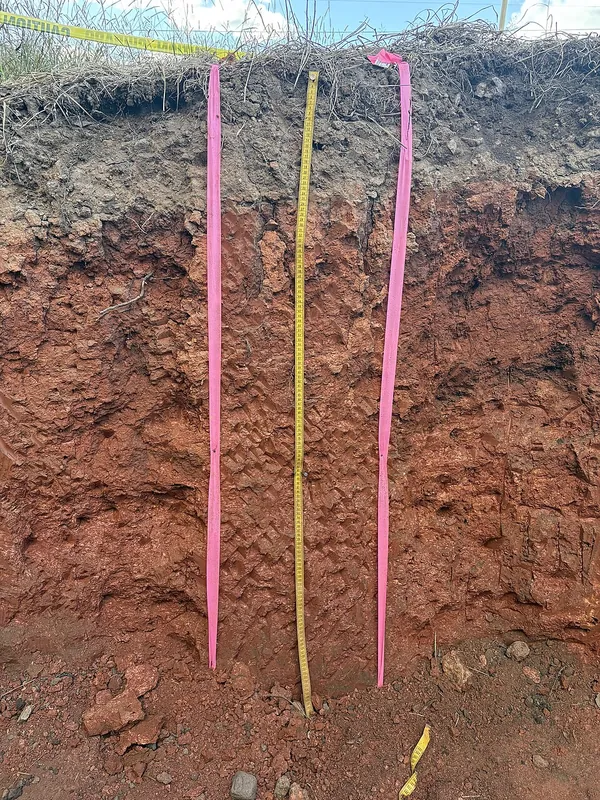
Dig down and you'll see layers called horizons. Together they make the soil profile.
Holding water
How well a soil holds water decides how well plants grow in it. Sand has big particles with big gaps, so water rushes straight through and the soil dries out quickly. Clay has tiny particles with tiny gaps; water soaks in very slowly, can sit on top, and the soil can become waterlogged and airless. Humus holds water while still letting the extra drain away.
- Predict which soil will drain fastest and which will hold the most water. Then pour.
- Which soil would a plant in a hot, dry summer prefer? Why?
- Why do gardeners dig compost into sandy soil and into clay soil?
Soil problems in Australia
Australian soils are mostly very old and naturally low in nutrients. Since European farming began, clearing and grazing have damaged large areas:
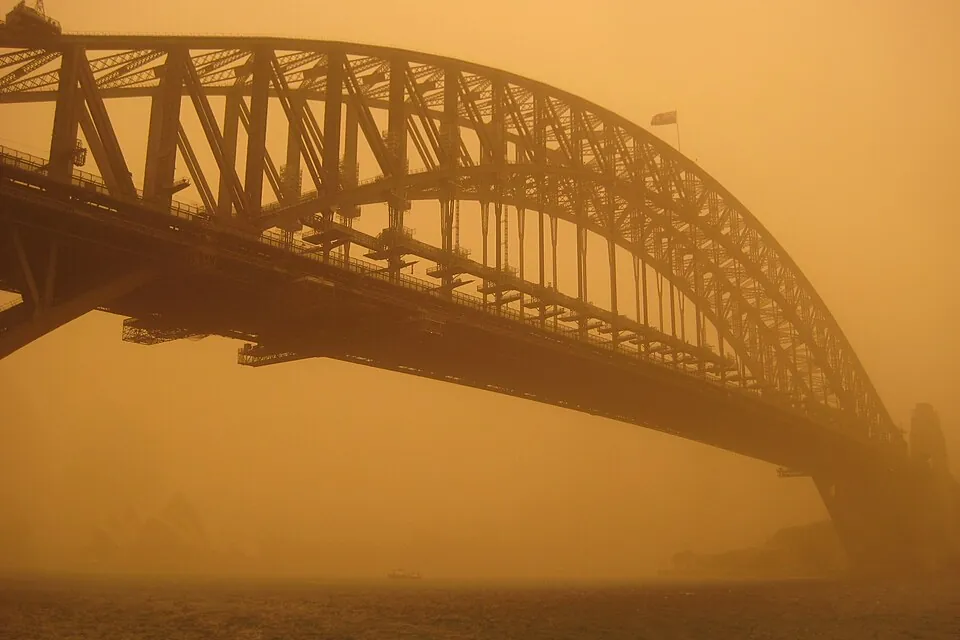
- Erosion: with no plants to hold it, topsoil is blown away by wind or washed away by rain. Dust storms, like the one that turned Sydney's sky orange in 2009, carry millions of tonnes of topsoil out to sea.
- Salinity: deep-rooted native trees were cleared and replaced with shallow-rooted crops, so the water table rose, bringing natural salt up to the surface. Salty soil kills most plants.
- Compaction: heavy machinery and hard hooves of sheep and cattle squash the soil, closing the pores so water and roots can't get in.
- Acidity and nutrient loss from repeated cropping and some fertilisers.
Farmers and Landcare groups (a movement that began in Australia in the 1980s and now has thousands of groups) fight back by planting trees and windbreaks, keeping ground covered with stubble or cover crops, sowing seeds without ploughing ("no-till" farming), moving stock before paddocks are bare, and fencing off creeks.
Test yourself
Humus is
It holds water and nutrients.
Which soil particles are smallest?
Clay feels sticky because the particles are so fine.
Water drains quickly through sand because
Bigger pores, faster drainage.
Clearing deep-rooted trees can cause salinity because
Trees had kept the water table low.
The topsoil layer is also called the
It has the most humus and roots.
Label the soil profile.
Damage or protection?
Rock is broken down into soil particles by . The layers in a soil are called . Soil that drains slowly and gets waterlogged is probably . Topsoil blown or washed away is called .
A student tested how much water passed through 100 g each of sand, clay and potting mix in 5 minutes. They collected 80 mL from sand, 10 mL from clay and 45 mL from potting mix. Explain these results and state which soil is best for most garden plants, with a reason.
Sand let the most water through (80 mL) because its particles are large, leaving large gaps that water flows straight through, so sand holds very little water. Clay let only 10 mL through because its particles are tiny and pack closely, so the gaps are very small and water drains extremely slowly; it would become waterlogged. Potting mix let through 45 mL because it contains a lot of humus, which soaks up and holds water like a sponge while the extra drains away. Potting mix is the best for most garden plants because it keeps water for the roots between waterings but still drains, so the roots also get the air they need.