 Coaching Centre
Newton’s first law and inertia
Forces and net force, Newton's first law of motion, inertia and mass, inertia in vehicles and seatbelts, why moving objects seem to stop on their own, circular motion and centripetal force, and the physics of the returning boomerang.
A magician whips a tablecloth out from under a full dinner setting and the plates barely move. It looks like a trick, but it's physics. The plates are simply doing what every object does: staying the way they are unless something makes them change.
Forces and net force
A force is a push or a pull that one object exerts on another. Force is a vector, measured in newtons (N). In Year 7 you drew force diagrams and saw that forces can be balanced or unbalanced. To predict motion, we add all the forces on one object as vectors to find the net force (or resultant force).
- If the forces are balanced, the net force is zero.
- If the forces are unbalanced, there is a net force in some direction.
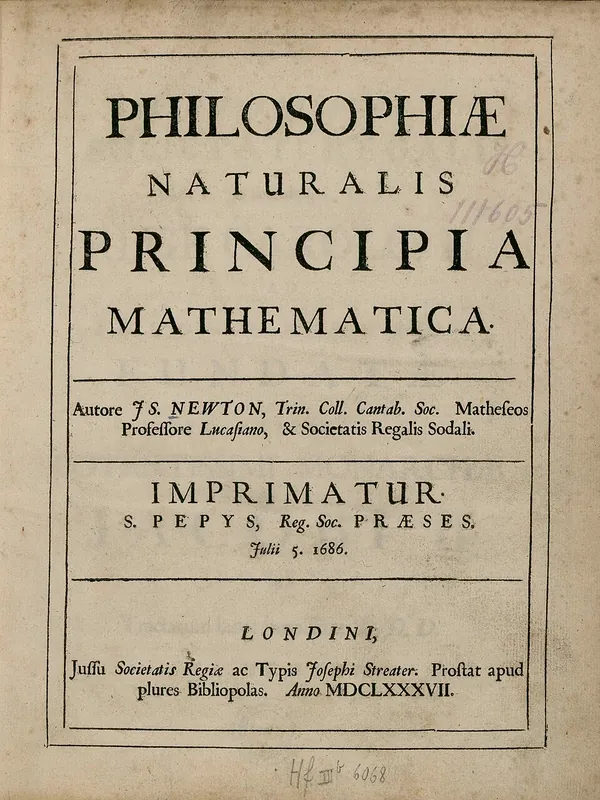
In 1687 the English scientist Isaac Newton published three laws that explain how forces affect motion, in a book now known as the Principia. They are still used to design cars, bridges and spacecraft today.
Newton's first law
Newton's first law: an object stays at rest, or keeps moving at a constant velocity (constant speed in a straight line), unless a net force acts on it.
This has two parts. A book on a desk stays at rest because its weight is balanced by the upward support force of the desk. And a puck sliding on smooth ice keeps going at almost the same speed in the same direction, because almost no net force acts on it. You do not need a force to keep something moving; you need a net force to change its motion: to start it, stop it, speed it up, slow it down or turn it.
This was a revolutionary idea. For nearly 2000 years people followed the Greek thinker Aristotle, who taught that moving objects naturally come to rest and need a constant push to keep going. Galileo and then Newton realised that objects only seem to stop "by themselves" because of forces we don't notice: friction and air resistance.
Inertia
Inertia is the tendency of an object to resist changes to its motion. The more mass an object has, the more inertia it has: a loaded truck is much harder to start, stop or turn than a bicycle. Newton's first law is sometimes called the law of inertia.
- Car stopping suddenly. The car is stopped by the brakes or a crash, but your body has no force on it yet, so it keeps moving forwards. A seatbelt supplies the backward force that stops you with the car. Loose objects on the back seat keep moving too, which is why they are dangerous in a crash.
- Bus taking off. The floor pushes your feet forwards, but your upper body tends to stay where it was, so standing passengers lurch backwards.
- Cornering. When a car turns left, your body tends to keep going straight, so you feel pushed to the right against the door. Really, the door is pushing you left, round the corner with the car.
- Head restraints. When a car is hit from behind, the seat pushes your body forwards but your head tends to stay put. A properly adjusted head restraint pushes your head forwards with your body and reduces whiplash.
Why do things slow down?
If you push a box across the floor and let go, it slows down and stops. This doesn't break the first law: friction was acting backwards the whole time. While you pushed, your force balanced friction. When you let go, friction became an unbalanced force, and the box decelerated. On a very smooth surface, such as an air-hockey table, a puck glides almost without slowing, which is much closer to Newton's ideal.
- In Drop from a moving trolley, set the speed to 4 m/s. The ball takes 0.51 s to fall 1.25 m, so it moves forwards 4 × 0.51 ≈ 2.0 m while falling. Let go about 2 m before the bin and score a hit.
- Turn on Show the straight-down guess. Many people expect the ball to drop straight down (the red line). Why is that wrong? What force would be needed to make the ball fall straight down?
- Try 2 m/s and 6 m/s. How far before the bin do you need to let go each time?
- Switch to Whirl and release. Before you press Let go!, predict the ball's path. Does it fly straight outwards or along the tangent?
Moving in a circle
If an object moves in a circle at a steady speed, its direction keeps changing, so its velocity is changing and it is accelerating. By Newton's first law, a net force must be acting, and it points towards the centre of the circle. This inward force is called a centripetal force. For a ball on a string, it is the pull of the string; for a car on a roundabout, it is friction between the tyres and the road; for the Moon, it is the Earth's gravity.
If that force disappears (the string breaks, or the road is icy), the object does what the first law says: it continues in a straight line at a tangent to the circle.
The returning boomerang
Aboriginal peoples have made and used boomerangs for many thousands of years. The oldest known Australian boomerangs, found preserved in a peat swamp at Wyrie Swamp in south-east South Australia, are about 10 000 years old. Most boomerangs were non-returning: heavier, flatter throwing sticks designed to fly fast and straight for hunting, and also used for digging, cutting, fire-making and as clapsticks in ceremony. Returning boomerangs were made in some regions and used for play, for practising throwing skill and for scaring flocks of birds into nets. Designs, names and uses differ from one Nation to another.
The physics of a returning boomerang is a beautiful use of circular motion. Each arm has a curved top and flatter underside, like an aircraft wing, and the two arms' leading edges face opposite ways so that both produce lift as the boomerang spins. It is thrown almost vertically, so the "lift" points sideways rather than up. This sideways force acts towards the centre of a circle, just like the string on a whirling ball, so the boomerang flies around a curved path and comes back. Spin also makes it behave like a gyroscope, slowly tilting it over as it flies, which keeps the sideways force pointing inwards. A well-made returning boomerang can fly a circle about 20 to 30 m across.
Test yourself
A spacecraft far from any planet switches off its engines. It will
With no net force, its velocity doesn't change (Newton's first law).
A passenger without a seatbelt hits the dashboard when a car stops suddenly because
Inertia: nothing slows their body until it hits something.
Which object has the most inertia?
Inertia depends on mass; the truck has the greatest mass.
A car drives around a roundabout at a constant 30 km/h. Which statement is correct?
Its direction is changing, so it accelerates towards the centre, driven by friction on the tyres.
A returning boomerang flies in a circle mainly because
Thrown nearly upright, the lift force points sideways and acts as a centripetal force.
Label the circular motion diagram.
Sort the situations.
Newton's first law says an object stays at rest or moves at constant unless a acts on it. The resistance of an object to changes in motion is called , and it increases with . To move in a circle, an object needs a force towards the .
Use Newton's first law to explain (a) why a passenger in a car feels pushed against the door when the car turns left, and (b) why an unrestrained package on the back seat is dangerous in a crash. Include the role of forces in each explanation.
Newton's first law states that an object stays at rest or keeps moving at a constant velocity unless a net force acts on it. (a) As the car turns left, the passenger's body tends to keep moving in a straight line because of its inertia. The car turns underneath them, so the door moves towards them and presses on them. That push from the door, directed to the left towards the centre of the turn, is the net force that makes the passenger change direction with the car. The feeling of being "thrown" outwards is just the body trying to continue straight. (b) In a crash the car stops very suddenly, but nothing acts on a loose package at first, so it keeps moving forward at the car's original speed. It then hits the seat, the windscreen or a person and is stopped over a very short distance, so the force involved is very large and can cause serious injury. This is why loose objects should be secured or kept in the boot.