 Coaching Centre
Evolution in action
Evolution that scientists have measured: the Grants' finches on Daphne Major, rabbits and myxomatosis, insecticide and antibiotic resistance, cane toads and Australian snakes, human-caused selection, and a long-running bacteria experiment.
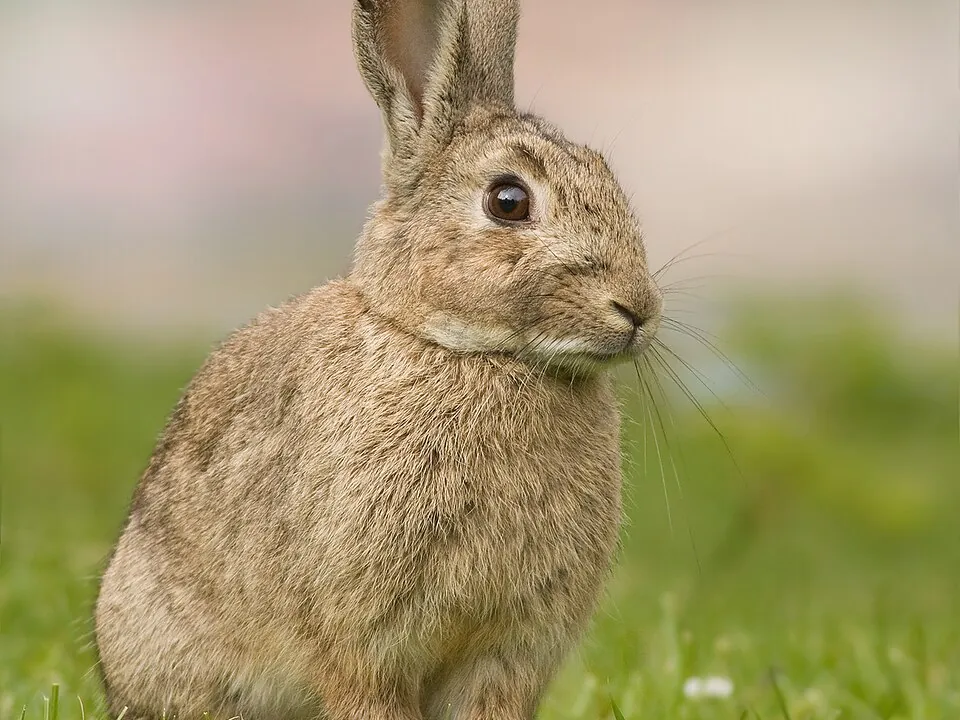
In 1950 the myxoma virus was released to control Australia's plague of rabbits. In the first outbreaks it killed more than 99% of infected rabbits, and the rabbit population crashed. Within about ten years, though, the rabbits had evolved resistance, and the virus itself had evolved to be less deadly. Evolution was happening fast enough to watch.
Darwin's finches, measured
Darwin thought natural selection was too slow to see. In 1973 Peter and Rosemary Grant began studying the medium ground finches on Daphne Major, a tiny Galápagos island. Every year for 40 years they caught, measured and ringed almost every bird, and recorded which birds survived and bred.
In 1977 a drought struck. The plants produced few seeds, and the small, soft seeds were eaten first. What was left were the large, hard seeds of a plant called Tribulus, which only birds with deep, strong beaks could crack. About 85% of the medium ground finches died, and the survivors had beaks about half a millimetre deeper on average than the population before the drought. Because beak depth is strongly inherited, their offspring also had deeper beaks. The Grants had measured evolution by natural selection in a single year.
Selection does not always push the same way. After very wet years with plenty of small seeds, smaller beaks did slightly better. In 2004–05, during another drought, a larger finch species that had arrived on the island in 1982 took most of the large seeds, and this time medium ground finches with smaller beaks survived better, eating the small seeds the bigger competitor ignored. The direction of selection depends on the environment.
- Press Drought year once. About what percentage of birds die, and how much deeper are the survivors' beaks on average? Compare with the Grants' 1977 results.
- Now press Normal year. Do the new chicks keep the deeper beaks? Why does it matter that beak depth is inherited?
- Start again and press Very wet year five times. What happens to the average beak depth, and why?
- Can a drought produce a bird with a deeper beak than any bird that existed before it? Explain what natural selection can and cannot do.
Resistance to poisons and drugs
Whenever people use a chemical to kill a pest or a pathogen, they create a strong selection pressure. If any individuals carry an allele that lets them survive, they leave the next generation.
- Insecticides. Spraying the insecticide DDT against malaria mosquitoes in Sri Lanka cut malaria from about 2.8 million cases in 1946 to just 17 in 1963. Spraying then stopped, malaria returned, and by the time spraying restarted many mosquitoes had evolved resistance, so DDT no longer worked well. Hundreds of insect species are now resistant to at least one insecticide.
- Antibiotics. In Year 9 you saw how bacteria such as golden staph evolve antibiotic resistance. Bacteria can reproduce every 20 minutes, so resistance can spread through a population quickly. Bacteria can also pass resistance genes directly to other bacteria, even of different species, on small loops of DNA called plasmids.
- Rabbit viruses. Rabbit haemorrhagic disease virus (calicivirus) escaped from a quarantine trial on an island off South Australia in 1995 and was officially released in 1996. Again it killed most rabbits at first, and again resistance has spread, so scientists keep testing new virus strains.
This is why doctors say to finish a course of antibiotics as prescribed and not to use them for viral infections, and why farmers rotate different pesticides. The goal is to avoid selecting for resistance.
Cane toads and the animals that meet them
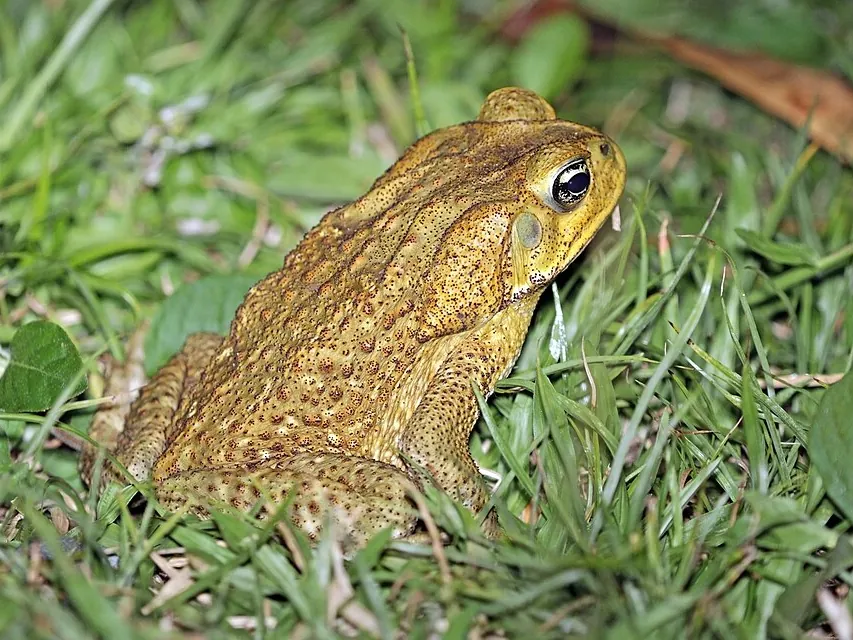
Cane toads were released in Queensland in 1935. In Year 8 you saw how they spread west. Researchers found that toads at the front of the invasion have longer legs and travel further each night than toads in older populations, because the fastest toads keep reaching new ground first and breed with each other there. The invasion front now advances about five times faster than it did in the 1940s.
Native animals are evolving too. Cane toads are highly poisonous, and a snake that swallows a large toad usually dies. In areas where toads have lived for decades, red-bellied black snakes and green tree snakes have evolved smaller heads relative to their bodies, so they cannot swallow a toad big enough to kill them, and black snakes have also become more resistant to the toxin.
Selection caused by people
Human activity is now one of the strongest selective forces on Earth:
- In Mozambique, ivory poaching during a civil war (1977–1992) killed most elephants with tusks. Tuskless females survived, and the proportion of tuskless females in Gorongosa National Park rose from about 18% to about half.
- Fishing that removes the biggest fish selects for fish that mature and breed at a smaller size.
- Lizards in cities have evolved stickier toe pads for climbing smooth walls, and some urban plants make different seeds from their country relatives.
An experiment that is still running
In 1988 the American biologist Richard Lenski set up 12 flasks of identical E. coli bacteria, and his team has transferred them to fresh food every day since, freezing samples as a "fossil record" that can be revived. After more than 75 000 generations, every population has evolved to grow faster in its flask. In 2003, in one flask, the bacteria evolved the ability to use citrate as food, something E. coli normally cannot do in the presence of oxygen. By reviving frozen samples, the team showed that it depended on earlier, chance mutations in that one population, so evolution could be replayed and studied step by step.
Test yourself
- After the 1977 drought on Daphne Major, the surviving medium ground finches had
Only deep-beaked birds could crack the large, hard seeds that remained.
- Why did the birds' offspring also have deeper beaks?
Selection changes the next generation only if the feature is inherited.
- In 2004–05, medium ground finches with smaller beaks survived better because
The direction of selection depends on the environment, including competitors.
- Why did DDT become less effective against mosquitoes?
The spray selected for alleles that were already present.
- Cane toads at the invasion front have longer legs than toads in older populations because
Faster-dispersing toads keep ending up together at the front.
- The proportion of tuskless female elephants in Gorongosa increased because
Hunting acted as a selective force.
Name each stage in the evolution of insecticide resistance.
Put the evolution of antibiotic resistance in order.
Peter and Rosemary studied finches on Daphne Major. In the 1977 drought, only birds with deep beaks could crack the hard seeds of . Bacteria can share resistance genes on small loops of DNA called . The virus released against rabbits in 1950 caused . Using a chemical to kill pests creates a strong selection .
A farmer sprays the same insecticide on a crop every year. After a few years it no longer controls the pest beetles. Explain why, and recommend two ways the farmer could slow this problem.
The beetle population varied: a few beetles happened to carry an allele that made them resistant to the insecticide, from a random mutation. Each time the crop was sprayed, beetles without the allele were killed, but resistant beetles survived and reproduced, passing the resistance allele to their offspring. The insecticide acted as a selection pressure, so each generation the frequency of the resistance allele rose, until most beetles were resistant and the spray stopped working. The insecticide did not cause the resistance; it removed the beetles that lacked it. To slow this, the farmer could rotate between insecticides that kill in different ways, so that beetles resistant to one are killed by another. The farmer could also use other controls, such as encouraging natural predators or rotating crops, and spray only when beetle numbers are high, which reduces the selection pressure.