 Coaching Centre
Combustion and corrosion
Reactions with oxygen: metal and non-metal oxides and acid rain, combustion of hydrocarbons as an oxidation reaction, charcoal, how iron rusts in a water drop, and how paint, tin, zinc, magnesium and stainless steel protect steel from corrosion.
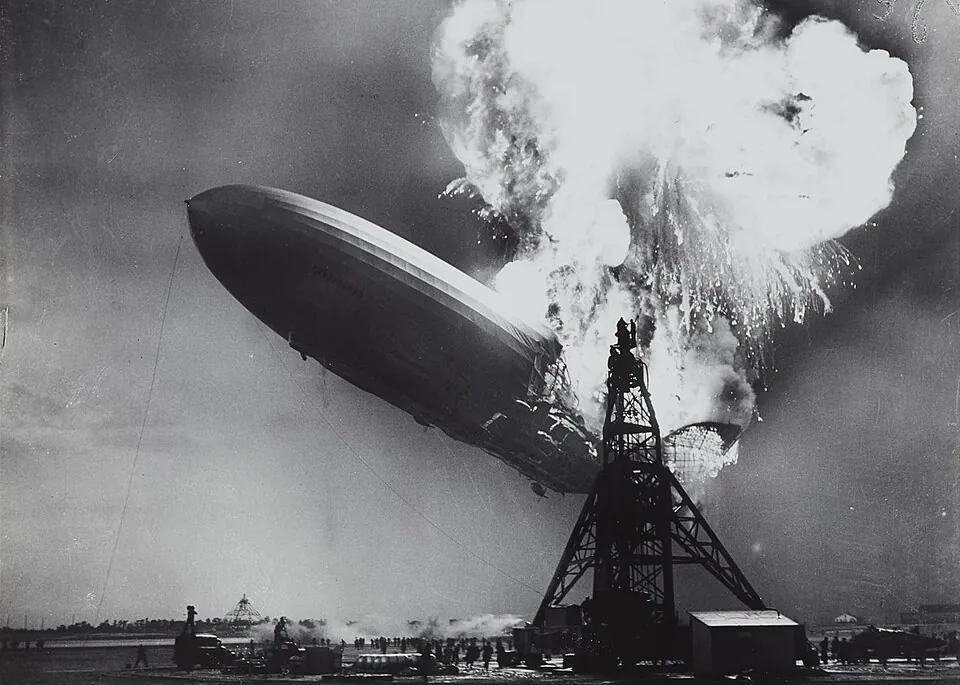
On 6 May 1937 the airship Hindenburg, the length of three jumbo jets, caught fire as it came in to land in New Jersey, USA. Its gas bags held about 200 000 cubic metres of hydrogen, and the whole ship burned in about half a minute. Thirty-six people died: 13 passengers, 22 crew and one worker on the ground. Hydrogen and oxygen react to form water, releasing enormous energy: 2H₂ + O₂ → 2H₂O. Airships today are filled with helium, which doesn't burn.
Reactions with oxygen
Oxygen is reactive and makes up 21% of the air, so reactions with oxygen are all around us. A reaction in which a substance gains oxygen is called an oxidation reaction. (In senior Chemistry you will extend this idea to the loss of electrons.)
Metals react with oxygen to form metal oxides, which are bases:
2Mg(s) + O₂(g) → 2MgO(s) (burns with a dazzling white light)
4Na(s) + O₂(g) → 2Na₂O(s) (a freshly cut surface tarnishes in seconds)
Non-metals react with oxygen to form non-metal oxides, many of which dissolve in water to make acids:
C(s) + O₂(g) → CO₂(g), then CO₂ + H₂O → H₂CO₃ (carbonic acid)
S(s) + O₂(g) → SO₂(g), which forms sulfurous and sulfuric acid in rain
Sulfur dioxide from burning coal and smelting sulfide ores, and nitrogen oxides formed in hot engines and power stations, are the main causes of acid rain. Clean rain already has a pH of about 5.6 because of dissolved carbon dioxide; acid rain can fall below pH 4.5.
Burning fuels
Combustion is a fast reaction with oxygen that releases energy as heat and light. Most fuels are hydrocarbons (compounds of hydrogen and carbon only), such as methane in natural gas, propane in LPG and octane in petrol. With plenty of oxygen, every carbon atom ends up in carbon dioxide and every hydrogen atom in water:
CH₄(g) + 2O₂(g) → CO₂(g) + 2H₂O(g) (complete combustion)
C₃H₈(g) + 5O₂(g) → 3CO₂(g) + 4H₂O(g) (propane in a barbecue)
When oxygen is short, some carbon only gets as far as poisonous carbon monoxide, or is left as soot. This is incomplete combustion, for example 2CH₄ + 3O₂ → 2CO + 4H₂O. Combustion is an oxidation reaction too: the fuel's carbon and hydrogen end up as non-metal oxides, just like the burning carbon and sulfur above.
Chapter 4 (4B) compares fuels by the energy they release, explains the yellow and blue Bunsen flames, and looks closely at carbon monoxide, soot and the other pollutants from burning. This page now turns to the slow reactions of metals with oxygen.
Corrosion and rust
Corrosion is the slow reaction of a metal with substances in its surroundings, such as oxygen, water, acids and salts. The corrosion of iron and steel is called rusting. It needs both water and oxygen, and it forms a flaky, reddish-brown solid, hydrated iron(III) oxide:
4Fe(s) + 3O₂(g) + 2xH₂O(l) → 2Fe₂O₃·xH₂O(s)
(The "x" shows that the amount of water in rust varies.) Rusting is an electrical process. Under a drop of water, iron atoms in the middle, where oxygen is scarce, lose electrons and dissolve as Fe²⁺ ions, leaving a pit. The electrons flow through the metal to the edge of the drop, where oxygen and water take them up. Rust forms where the two meet. Salt makes the water a much better conductor, which is why cars and bridges near the sea, or on roads salted against ice, rust faster.
Not all corrosion is harmful. Aluminium is more reactive than iron, but it is instantly coated with a thin, tough layer of aluminium oxide that sticks to the metal and stops further reaction. Copper roofs slowly turn green as a layer of copper carbonate and sulfate (a patina) forms and protects the metal beneath. Rust, in contrast, is crumbly and flakes off, exposing fresh iron underneath.
Protecting steel
- Barriers keep out water and oxygen: paint, oil or grease, plastic coatings and a layer of a less reactive metal such as tin (as in food cans). They only work while the barrier is unbroken.
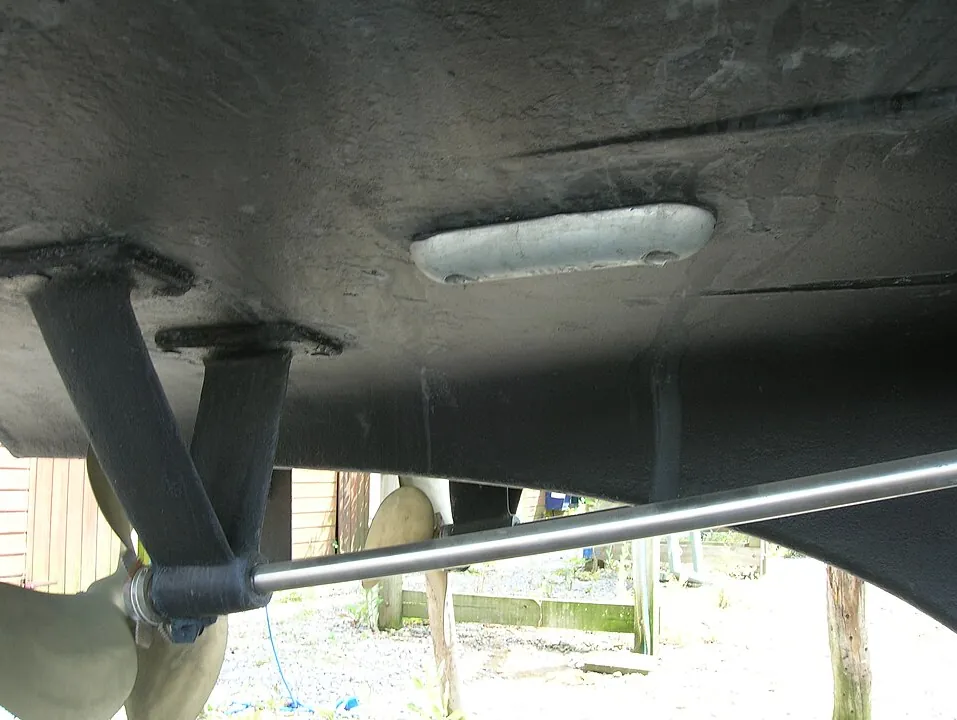
- Sacrificial protection uses a more reactive metal that corrodes instead of the iron. Steel coated with zinc is galvanised: even when scratched, the zinc gives up electrons in place of the iron, and its corrosion products help seal the scratch. Blocks of zinc or magnesium, called sacrificial anodes, are bolted to ship hulls, jetty piles and the insides of hot-water tanks, and replaced when they are used up.
- Alloying changes the metal itself. Stainless steel contains at least about 10.5% chromium, which forms a thin, self-repairing layer of chromium oxide on the surface.
- Run bare steel for 12 weeks in salt water, then in fresh water. How much difference does the salt make to the percentage rusted?
- Compare the scratched painted, tin-plated and galvanised samples after 12 weeks. Which one has the deepest pit, and why?
- Choose the magnesium block. What happens to the block, and why must it be replaced?
Test yourself
Which of these does NOT need oxygen to happen?
Thermal decomposition only needs heat; the others are reactions with oxygen.
Sulfur dioxide dissolves in rain to make the rain
Non-metal oxides are acidic.
A galvanised nail is scratched and left in salt water. It does not rust because
This is sacrificial protection.
Why doesn't aluminium corrode away like iron?
Its oxide layer seals the metal; rust flakes off.
Which equation shows magnesium burning?
Oxygen is diatomic, and MgO has one O per Mg.
Label what happens under a drop of water on iron.
How does each method protect steel?
Rust is hydrated iron(III) , and rusting needs both water and . makes rusting faster. Non-metal oxides such as sulfur dioxide dissolve in rain to form rain. Aluminium is protected by a thin layer of aluminium . Coating steel with is called galvanising.
A council is building a steel footbridge over a tidal creek near the sea. Explain why steel rusts faster here than in an inland town, and evaluate two ways the council could protect the bridge. Include a balanced equation for rusting.
Rusting is iron reacting with both oxygen and water: 4Fe(s) + 3O₂(g) + 2xH₂O(l) → 2Fe₂O₃·xH₂O(s). At a tidal creek the steel is wetted twice a day and is surrounded by air, so both are always available. Sea spray and tidal water also contain salt, which makes the water a much better conductor. Rusting works like a tiny electric cell, with iron losing electrons in one place and oxygen gaining them in another, so better conduction lets it happen much faster than in the drier, salt-free air of an inland town. One option is painting. Paint is cheap and keeps water and oxygen off the steel, but as soon as it is chipped the exposed steel rusts and rust can creep under the paint, so it needs regular inspection and repainting. A second option is galvanising the steel with zinc, or bolting magnesium or zinc anodes to parts in the water. Zinc is more reactive than iron, so it corrodes instead of the steel even when the coating is scratched; the limitation is that the zinc is slowly used up and anodes must be replaced. The best choice is galvanised steel with a paint layer over it, because the paint slows the loss of zinc and the zinc protects any scratches in the paint.