 Coaching Centre
Mendel and Punnett squares
Gregor Mendel's pea experiments, dominant and recessive alleles, genotype and phenotype, homozygous and heterozygous, using Punnett squares to predict monohybrid crosses, probability and ratios, and test crosses.
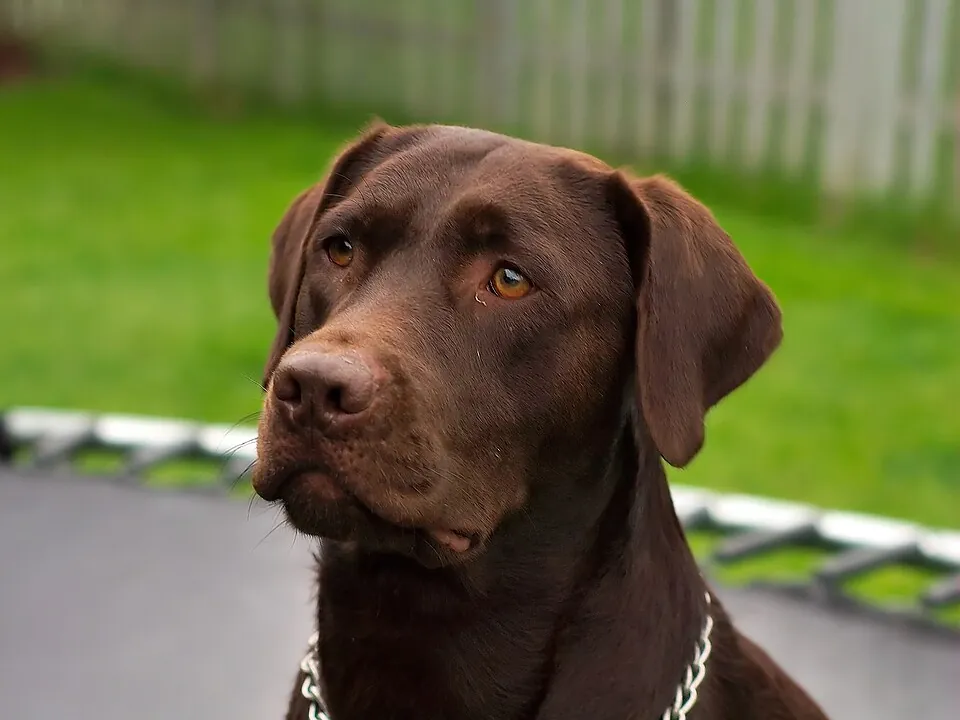
Two black Labradors have a litter of eight puppies, and two of them are chocolate brown. Neither parent, nor any grandparent the owners know of, was brown. Where did the brown come from? A monk solved this kind of puzzle with pea plants more than 150 years ago, without knowing that DNA existed.
Mendel's peas
Gregor Mendel was a monk at St Thomas's Abbey in Brno, now in the Czech Republic. Between 1856 and 1863 he grew and crossed about 28 000 pea plants in the monastery garden. He chose peas well: they grow quickly, have many offspring, normally self-pollinate (so he could breed pure-breeding lines), and show traits with two clear forms, such as round or wrinkled seeds, purple or white flowers, and tall or short stems. He studied seven such traits.
His key experiment for each trait went in two steps:
- He crossed pure-breeding round-seeded plants with pure-breeding wrinkled-seeded plants (the parental or P generation). All the offspring, the F1 (first filial) generation, had round seeds. The wrinkled trait seemed to have vanished.
- He let the F1 plants self-pollinate. In the F2 generation wrinkled seeds reappeared: 5474 round and 1850 wrinkled, a ratio of almost exactly 3 : 1. All seven traits gave about 3 : 1.
Mendel explained this with "factors" that come in pairs, that separate when gametes form, and where one can mask the other. He published in 1866, but almost nobody understood the significance. In 1900 three botanists independently rediscovered his work, and his factors became known as genes. Mendel is now called the father of genetics. In 1990 scientists found what the wrinkled-seed allele actually is: a stretch of extra DNA inserted into the gene for an enzyme that makes branched starch. Without the enzyme, the seeds hold more sugar, absorb more water while developing, and wrinkle as they dry.
The language of inheritance
- Alleles are versions of a gene, written as letters: a capital for the dominant allele (R, round), lower case of the same letter for the recessive allele (r, wrinkled).
- A dominant allele shows its effect whenever it is present. A recessive allele only shows its effect when there are two copies.
- The genotype is the pair of alleles an organism has: RR, Rr or rr.
- The phenotype is the characteristic that shows: round or wrinkled. Phenotype depends on genotype and, often, on the environment (1G).
- Homozygous means both alleles are the same (RR is homozygous dominant, rr is homozygous recessive). Pure-breeding organisms are homozygous.
- Heterozygous means the two alleles are different (Rr). A heterozygous organism with a recessive allele for a disease is a carrier.
Dominant does not mean "better" or "more common". It describes only what happens in a heterozygote. Huntington's disease is caused by a dominant allele, while the allele for blood group O is recessive yet is the most common blood group allele in Australia.
Punnett squares
A Punnett square, invented by British geneticist Reginald Punnett in about 1905, shows every way the parents' gametes can combine. Because the two alleles of a gene separate into different gametes (Mendel's law of segregation), each gamete carries just one allele. A cross that follows one gene is a monohybrid cross.
In Labradors, the allele for black coat (B) is dominant to the allele for chocolate (b). Two black Labradors have chocolate puppies. What are the parents' genotypes, and what proportion of puppies should be chocolate?
Chocolate puppies are bb, so each parent passed on a b. The parents are black, so each also has a B. Both are Bb.
Each parent makes gametes with B and gametes with b, in equal numbers.
| B | b | |
|---|---|---|
| B | BB black | Bb black |
| b | Bb black | bb chocolate |
Genotype ratio 1 BB : 2 Bb : 1 bb. Phenotype ratio 3 black : 1 chocolate. Each puppy has a 1 in 4 (25%) chance of being chocolate.
Real Labradors are a little more complicated. A second gene (E) decides whether any dark pigment reaches the hair at all: dogs with genotype ee are yellow whatever their B alleles. When one gene masks another like this it is called epistasis.
Ratios are probabilities
A 3 : 1 ratio does not mean that a litter of four will have exactly three black puppies and one chocolate. Each puppy is a separate event, like a coin toss: every one has a 1 in 4 chance of being chocolate, whatever its littermates are. A litter of eight could easily have zero, or four, chocolate puppies. Mendel's results matched 3 : 1 closely because he counted thousands of offspring. The larger the sample, the closer the observed ratio gets to the expected one.
The test cross
A black Labrador could be BB or Bb; you can't tell by looking. A breeder can find out with a test cross: mate the dog with a homozygous recessive (bb, chocolate) dog.
- If the black dog is BB, every puppy gets a B from it: all puppies black.
- If it is Bb, half the puppies get b from it: about half the puppies chocolate.
Even one chocolate puppy proves the parent is Bb. A litter of all-black puppies suggests BB, and the bigger the litter, the more confident you can be: for a Bb parent, the chance of eight black puppies in a row is (½)8, about 1 in 256.
- Cross two heterozygous Labradors. Breed several litters of 8. How often do you get exactly 2 chocolate puppies?
- Breed 1000. How close is the result to the expected 75% black?
- Switch to cystic fibrosis and cross two carriers (Ff × Ff). What is the chance each child has CF?
- Press Mystery test cross. Breed until you are confident, then guess the hidden genotype. How many offspring did you need?

Test yourself
In peas, purple flowers (P) are dominant to white (p). A plant with genotype Pp is
Two different alleles = heterozygous; the dominant P shows.
Pp is crossed with pp. What fraction of offspring are expected to have white flowers?
Gametes P, p × p, p give Pp, Pp, pp, pp.
Two tall pea plants produce 302 tall and 98 short offspring. The parents' genotypes were most likely
302 : 98 is about 3 : 1, the result of crossing two heterozygotes.
A test cross is a cross between an organism with the dominant phenotype and
The recessive parent can only pass on recessive alleles, so the unknown parent's alleles show directly in the offspring.
Two parents are both carriers of cystic fibrosis (Ff). Their first child has CF. What is the chance their second child will have CF?
Each pregnancy is independent: 1 in 4.
Label Mendel's cross.
Genotype or phenotype?
An allele that only shows its effect when two copies are present is . The alleles an organism has make up its . An organism with two identical alleles is . Mendel's first generation of offspring is called the generation. A cross that follows only one gene is a cross.
In guinea pigs, black fur (B) is dominant to white fur (b). A breeder has a black guinea pig and wants to know its genotype. Explain how she can find out, using Punnett squares to support your answer.
The black guinea pig could be BB or Bb. She should do a test cross: mate it with a white guinea pig, which must be bb. If the black guinea pig is BB, all its gametes carry B, so every offspring is Bb and black (B × b in all four boxes). If it is Bb, half its gametes carry b, so the Punnett square gives 2 Bb (black) and 2 bb (white): a 1 : 1 ratio. So if even one white baby is born, the parent must be Bb. If all the babies are black, the parent is probably BB, and the more babies there are, the more certain she can be: for a Bb parent, ten black babies in a row would happen only about once in a thousand litters of ten.