 Coaching Centre
Risk assessment
The difference between a hazard and a risk, rating risks with a likelihood and consequence matrix, the hierarchy of controls, safety data sheets, writing a risk assessment for your own investigation, and staying safe when working at home or in the field.
In January 2014, a teacher at a New York high school did a popular "rainbow" demonstration, pouring methanol onto metal salts to make coloured flames. Methanol vapour from the bottle caught fire, and a flash fire seriously burned a 16-year-old student. The same demonstration had injured students in other schools before. The US Chemical Safety Board investigated and urged schools to stop doing it with bulk flammable liquids. Nothing about it was unusual or exotic. That is exactly why a risk assessment matters: familiar activities feel safe.
Hazard and risk
A hazard is anything that could cause harm: hot glassware, a sharp blade, an acid, a slippery creek bank. A risk is the chance that the hazard actually causes harm, combined with how bad the harm would be. A bottle of concentrated acid locked in the prep room is a big hazard but a tiny risk to you; a hot plate on the bench next to your elbow is a smaller hazard but a much bigger risk. A risk assessment has three steps:
- Identify every hazard in your method, step by step.
- Assess the risk of each one: how likely is harm, and how serious would it be?
- Control the risk, starting with the most effective controls, then check that what's left is acceptable.
Rating risks with a matrix
Workplaces, including schools, rate risks on a matrix. You decide how likely the harm is (from rare to almost certain) and how bad the consequence would be (from insignificant, like a spill of water, to severe, like a permanent injury). Where they meet gives the risk level. A rare but severe event, like a snake bite on a field trip, can rate the same as a likely but minor one, like a small cut. Anything rated high or extreme must be controlled before you start, or the activity changed.
The hierarchy of controls
Not all controls are equal. The best ones remove the hazard or keep it away from people altogether; the weakest rely on everyone following rules and wearing equipment perfectly every time. Work down from the top:
- Eliminate the hazard: heat water on a hot plate instead of a Bunsen burner.
- Substitute something safer: dilute acid instead of concentrated, a 6 V battery instead of mains power.
- Engineering controls separate people from the hazard: fume cupboards, safety screens, guards on machines.
- Administrative controls change how people work: training, supervision, signs, limiting time in the sun.
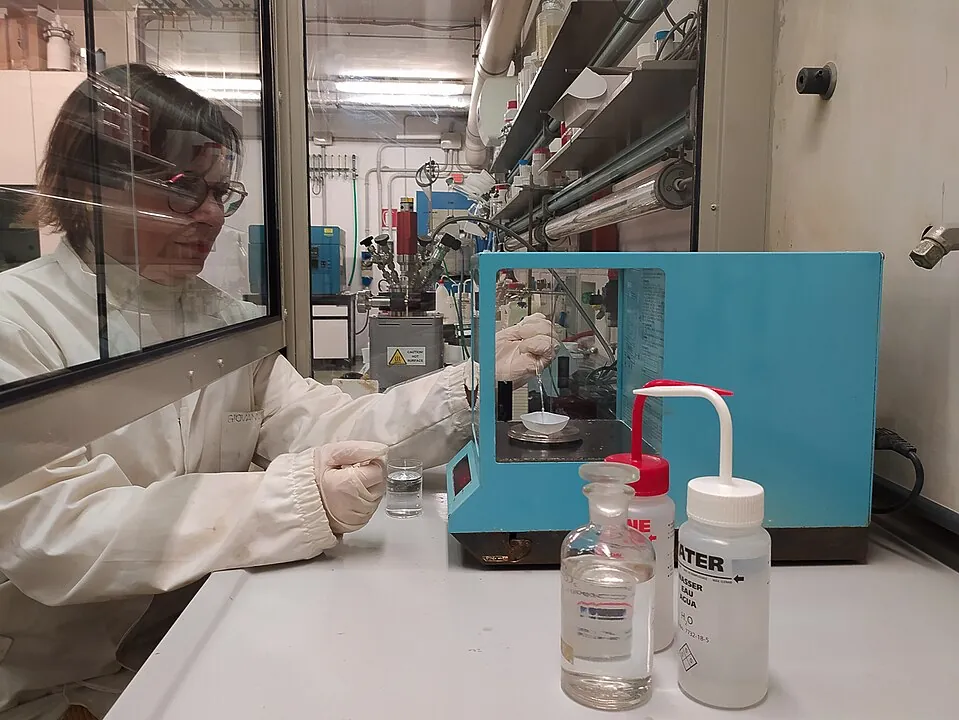
- Personal protective equipment (PPE): safety glasses, gloves, lab coats, enclosed shoes. Always use it where needed, but treat it as the last line of defence, not the whole plan.
Safety data sheets
Every hazardous chemical supplied in Australia must have a safety data sheet (SDS) from its manufacturer or supplier. It lists the hazards (with the pictograms you met in Year 7, 1C), safe handling and storage, what PPE to use, first aid, how to clean up a spill and how to dispose of it. Your school keeps SDSs for its lab chemicals; for household products, search the manufacturer's website for the Australian SDS. Read the SDS for every chemical in your method, even "harmless" ones like vinegar, bleach or drain cleaner, which can be dangerous in combination.
Writing your risk assessment
Write it as a table, with one row for each hazard. Be specific: "be careful" is not a control.
| Hazard | Risk (what could happen) | Rating | Control | Rating after |
|---|---|---|---|---|
| Hydrochloric acid (1 M) | Splash in the eyes when adding magnesium causes irritation or damage | Possible × moderate = high | Use 0.5 M acid and 10 mL volumes; add magnesium with tweezers; safety glasses; eyewash nearby | Unlikely × minor = low |
| Hydrogen gas produced | Gas ignites near a flame, causing a small explosion | Unlikely × moderate = medium | No flames on the bench; small amounts only; well-ventilated room | Rare × moderate = low |
| Glass test tube | Breaks if dropped, cutting skin | Possible × minor = medium | Use a test-tube rack; report and sweep up breakages with a brush and pan | Unlikely × minor = low |
Always include disposal (some solutions can go down the sink with plenty of water; heavy metals, solvents and cultures can't) and what to do in an emergency. Show it to your teacher and get it signed before you begin.
Working at home or in the field
Projects done outside the school lab have different hazards, and no teacher watching. Think about everyone affected: younger siblings and pets at home, members of the public in a park, and the environment (never pour chemicals down a stormwater drain, which goes straight to creeks). In the field, the Australian hazards are usually heat, sun, water, insects and snakes. Work with a partner, tell an adult where you'll be and when you'll be back, carry water and a phone, and check the weather and water levels first.
- Choose "Electrolysis of salt water". Rate the chlorine hazard yourself, then compare with the experts.
- Choose only "Wear safety glasses" for the chlorine. Why doesn't the risk change at all?
- For "Creek water fieldwork", which single control brings the falling-in risk down the most? Where is it on the hierarchy?
- For the snake bite, why do the controls lower the consequence rather than the likelihood?
Test yourself
Which is the most effective way to control the risk from a Bunsen flame when heating water to 60 °C?
Eliminating the flame is higher on the hierarchy than administrative controls or PPE.
A risk that is rare but would have a severe consequence
Both likelihood and consequence count. Plans such as first aid reduce the consequence.
Where would you find first aid and disposal information for a cleaning product?
The SDS covers hazards, handling, first aid, spills and disposal.
A fume cupboard is an example of
It physically separates people from the hazard.
Label the hierarchy of controls.
Order these controls from most to least effective.
Anything that could cause harm is a . The chance of harm combined with how bad it would be is the . Gloves and safety glasses are personal protective . Every hazardous chemical has a safety data . Replacing a hazard with something safer is called .
A student plans to test the pH of water from a local creek after heavy rain, wading into the middle to collect samples, then testing them at home on the kitchen table. Identify three hazards in this plan and, for each, assess the risk and propose a control that is as high on the hierarchy of controls as possible.
Falling into the creek. After heavy rain the water is fast, deep and murky and the banks are slippery, so falling in is likely and could be fatal: an extreme risk. The best control is elimination: never enter the water, and collect samples from the bank with a container taped to a long pole, waiting several days after rain until levels drop; work with an adult. Infection. Stormwater after rain often carries sewage overflows and animal waste, so skin contact with bacteria is likely, with a moderate consequence (gastro or infected cuts): a high risk. Avoiding sampling straight after rain reduces this, along with gloves, covering cuts and washing hands. Contaminating food areas at home. Testing on the kitchen table could spread bacteria to food: possible, with a moderate consequence. Substitute a safer location: test outside or on a dedicated tray away from food, then wipe down with disinfectant and dispose of samples on the garden, not the sink. With these controls each risk becomes low.