 Coaching Centre
Natural events across the spheres
How volcanic eruptions, earthquakes and tropical cyclones send effects through all four spheres: volcanic cooling and the Hunga Tonga eruption, liquefaction and tsunamis, how cyclones form, their structure, categories and storm surges, and how a warming climate is changing them.
On 15 January 2022 the undersea volcano Hunga Tonga–Hunga Ha'apai, in the South Pacific, produced the most powerful eruption measured in more than a century. Its plume shot 57 km up, higher than any recorded before. The blast sent a pressure wave around the world several times, and it was heard in Alaska, nearly 10 000 km away. Tsunamis crossed the Pacific, and so much sea water was flung into the stratosphere that it raised the water vapour there by about 10%. One event in the lithosphere had changed the hydrosphere, the atmosphere and the biosphere within hours.
You studied how earthquakes and volcanoes happen in Year 9 (Plate Tectonics) and how ecosystems recover from fire, floods and droughts in Year 8. This page follows natural events as they ripple through all four spheres, then looks closely at the event that affects more Australians than any other: the tropical cyclone.
One eruption, four spheres
- Lithosphere: lava and ash form new rock and landforms. Over centuries, weathered volcanic ash makes some of the most fertile soils on Earth, such as the red basalt soils of the Atherton Tableland and the Northern Rivers.
- Hydrosphere: ash chokes rivers; mudflows called lahars race down valleys; eruptions into the sea, or collapsing volcanic islands, cause tsunamis.
- Atmosphere: the biggest eruptions blast sulfur dioxide into the stratosphere, where it forms a haze of tiny sulfuric acid droplets (sulfate aerosols). These reflect sunlight, cooling the planet. Because the stratosphere barely mixes (7A), the haze lasts one to two years.
- Biosphere: forests are flattened and buried, but bare volcanic rock is soon colonised by lichens, mosses and then plants and animals, a process called primary succession.
The Pinatubo eruption gave scientists a natural experiment. Climate models had predicted how much the sulfate haze should cool the planet, and the measured cooling closely matched, which is one reason scientists trust these models (7G). Hunga Tonga was different: it released little sulfur but lots of water vapour, a greenhouse gas, so its overall effect was probably a very slight, temporary warming.
Earthquakes and tsunamis
Earthquakes also reach beyond the lithosphere. Shaking can turn waterlogged sand and silt into a liquid, a process called liquefaction; in the 2011 Christchurch earthquake, sand and water bubbled up through streets and buildings sank and tilted. Undersea earthquakes that lift the sea floor push up the whole column of water above, creating tsunamis. The 2011 Tōhoku tsunami in Japan travelled up to 10 km inland, damaged the Fukushima nuclear power station and carried millions of tonnes of debris into the Pacific. Some of it, along with the living things riding on it, reached North America years later.
Tropical cyclones
A tropical cyclone is a huge rotating storm that forms over warm tropical seas, with gale-force winds near its centre. The same storms are called hurricanes in the Atlantic and typhoons in the north-west Pacific. Cyclones form only when several conditions come together:
- Warm sea water, at least about 26.5 °C, to a depth of around 50 m. Evaporation supplies huge amounts of water vapour, and when the vapour condenses in the clouds it releases heat that powers the storm.
- Distance from the equator of at least about 5° of latitude, where the Coriolis effect is strong enough to set the air spinning. In the Southern Hemisphere cyclones spin clockwise.
- Low wind shear: winds that don't change much with height, so the storm can build straight up instead of being torn apart.
- Moist air through the lower atmosphere, and an existing low-pressure disturbance to start the process.
Moist air spirals in towards the centre and rises in a ring of towering thunderstorms, the eyewall, where the winds are strongest. At the very centre, air sinks, so the eye is calm and often clear. Spiral rainbands extend hundreds of kilometres outward. The Bureau of Meteorology rates cyclones from category 1 to 5 by their strongest wind gusts:
| Category | Strongest gusts | Typical damage |
|---|---|---|
| 1 | less than 125 km/h | Damage to trees, crops and caravans |
| 2 | 125–164 km/h | Minor house damage, power failures |
| 3 | 165–224 km/h | Some roof and structural damage |
| 4 | 225–279 km/h | Significant roofing and structural damage |
| 5 | 280 km/h or more | Extremely dangerous, widespread destruction |
- Start with a sea temperature of 25 °C and run the storm. Now try 29 °C. What is the smallest sea temperature that lets a cyclone form?
- Set the latitude to 2°S with warm water. Why doesn't the storm spin up?
- Grow a category 5 cyclone. Then switch to high wind shear and run it again. What happens?
- Make landfall with a category 4 storm. Why does it weaken, and what is the danger to the coast?
When a cyclone reaches the coast, its low pressure and onshore winds pile up sea water into a storm surge, which can flood low-lying land several metres above the normal tide. Storm surge, not wind, has caused most cyclone deaths worldwide. Overnight on Christmas Eve 1974, Cyclone Tracy destroyed about 70% of Darwin's buildings and killed 66 people; most of the city's people were evacuated, many of them by air. Australia's building codes for cyclone regions were rewritten as a result. In February 2011, category 5 Cyclone Yasi crossed the Queensland coast at Mission Beach with a storm surge of around 5 m near Cardwell; good warnings and evacuations meant no one died directly from the storm.
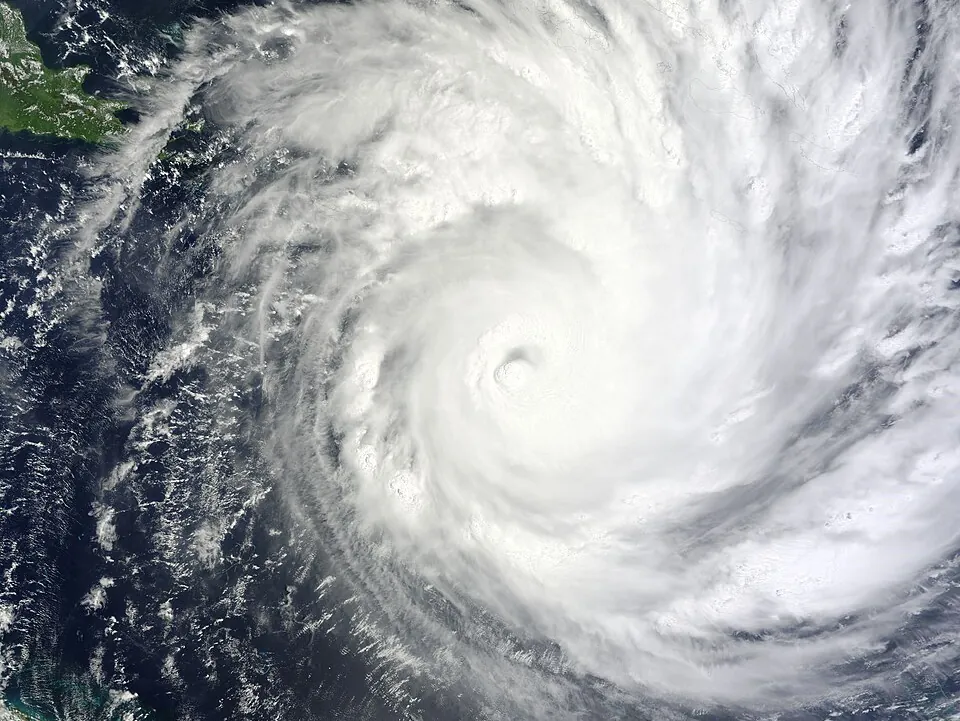
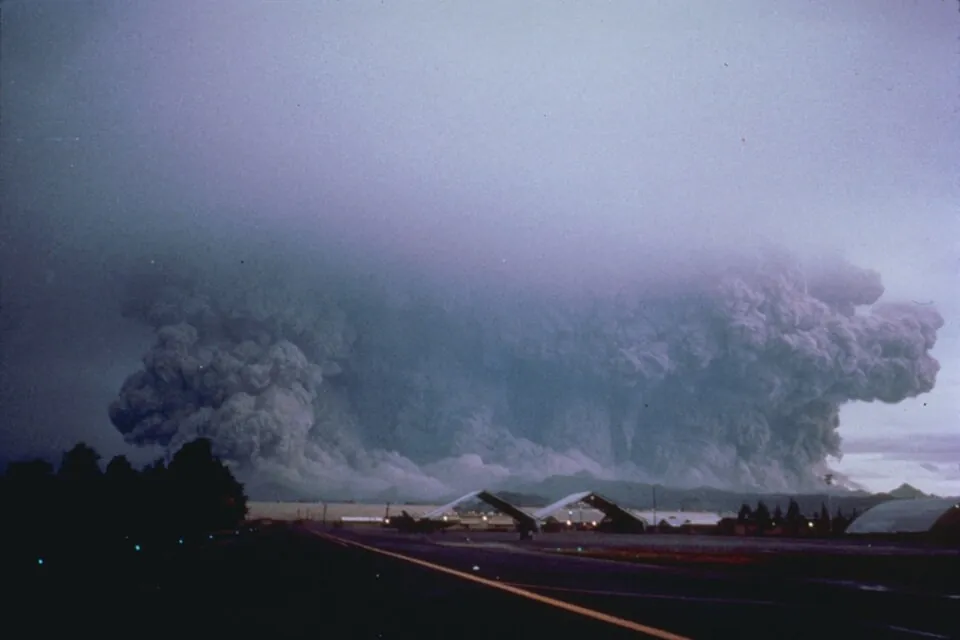
How a cyclone affects each sphere:
| Sphere | Effects of a cyclone |
|---|---|
| Atmosphere | Moves huge amounts of heat from the ocean surface into the upper atmosphere and towards the poles; extreme winds and rain |
| Hydrosphere | Storm surge, big waves, flooding rivers; mixes the ocean, bringing cooler water to the surface behind the storm |
| Lithosphere | Beach and dune erosion, landslides, sediment washed into rivers and onto reefs |
| Biosphere | Broken coral, stripped forests, drowned animals; but also fills inland wetlands and rivers, triggering breeding |
Cyclones in a warming world
Warmer oceans contain more energy and warmer air holds more water vapour, so scientists expect the strongest cyclones to become more intense and to drop more rain. The State of the Climate 2024 report notes that fewer tropical cyclones have formed in the Australian region since 1982, and projections suggest fewer cyclones overall in future, but a larger proportion of severe ones. Rising sea levels (7H) also mean every storm surge starts from a higher base.
Test yourself
Large volcanic eruptions can cool the whole planet because
The haze of tiny droplets reflects incoming sunlight back to space.
Which is NOT needed for a tropical cyclone to form?
Cyclones need to be at least about 5° from the equator.
A cyclone weakens after it crosses the coast mainly because
Without evaporation from warm water, there is no heat to drive it.
Waterlogged soil behaving like a liquid during an earthquake is called
Shaking makes the grains lose contact with each other.
Label the parts of a tropical cyclone.
Which sphere is mainly affected?
The calm centre of a cyclone is the . The strongest winds are in the . In the Southern Hemisphere, cyclones spin . Sea water pushed onto the coast by a cyclone is a storm . A volcanic mudflow is called a .
Describe how a severe tropical cyclone crossing the Queensland coast affects each of the Earth's four spheres. Include at least one effect that could be beneficial.
In the atmosphere, the cyclone brings destructive winds over 225 km/h and torrential rain, and moves a huge amount of heat from the tropical ocean into the upper atmosphere. In the hydrosphere, its low pressure and onshore winds push up a storm surge that floods low-lying coastal land, while the heavy rain floods rivers; the churning winds also mix the ocean, bringing cooler water to the surface. In the lithosphere, waves and surge erode beaches and dunes, and heavy rain triggers landslides and washes soil into rivers. In the biosphere, forests are stripped, corals are broken by waves and smothered by sediment washed off the land, and homes and farms are damaged. Some effects are beneficial: the rain refills dams, recharges groundwater and floods inland wetlands, triggering breeding of fish, frogs and waterbirds, and the cooler water left behind can reduce coral bleaching.