 Coaching Centre
Responding to global change
How the world and Australia are responding to climate change and other global problems: international agreements from Montreal to Paris, the carbon budget, Australia's emissions and targets, ways to cut emissions in each sector, waste and plastics in global systems, e-waste, and bringing species back from the brink.
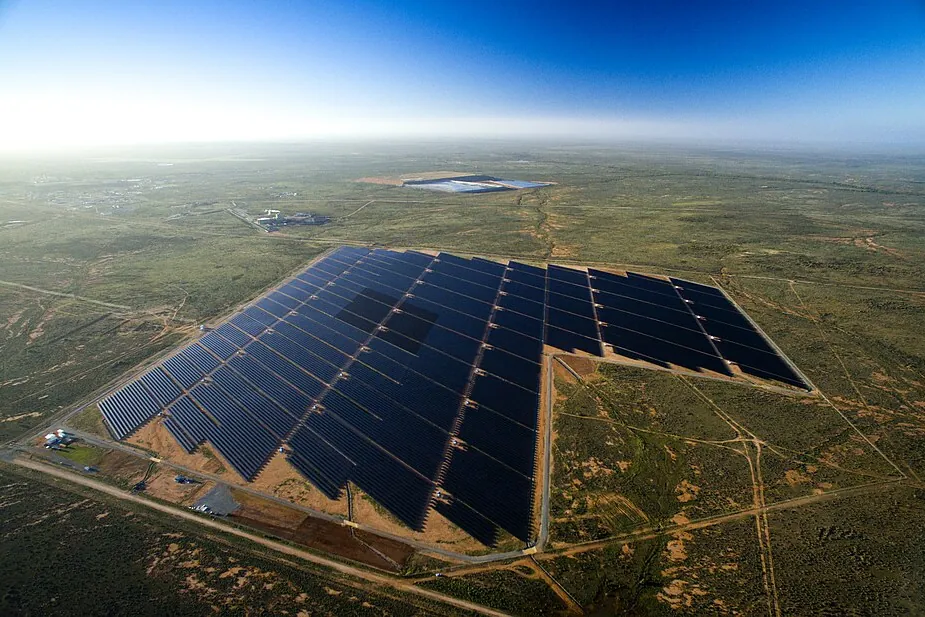
In 2010 about one Australian house in fifty had solar panels on the roof. By 2025 more than four million rooftops had them, roughly one house in three, the highest rate of any country. On sunny spring middays, rooftop solar now supplies most of the electricity in some states, and coal power stations have had to learn to turn down. Big systems can change much faster than people expect.
Working together
The atmosphere and oceans belong to everyone, so no country can fix a global problem alone. If one country cuts its pollution while others don't, it bears the cost and everyone shares the benefit, so global problems need global agreements. The best example is the Montreal Protocol, which phased out the CFCs that were destroying the ozone layer (you studied the chemistry in 4E). Every country in the world has signed it, and the ozone layer is on track to recover by around the 2060s.
- UN Framework Convention on Climate Change (1992): agreed at the Rio Earth Summit; countries promised to prevent "dangerous" interference with the climate. Its yearly meetings are called COPs.
- Kyoto Protocol (1997): set binding targets for developed countries only. Australia ratified it in 2007.
- Paris Agreement (2015): almost every country agreed to keep warming "well below 2 °C" and to try to limit it to 1.5 °C. Each country sets its own target (its "nationally determined contribution") and must update it every five years with more ambition.
- Kigali Amendment (2016) to the Montreal Protocol: phases down HFCs, the replacements for CFCs, which don't harm ozone but are powerful greenhouse gases.
- COP28 (2023): for the first time, countries agreed to "transition away from fossil fuels in energy systems".
The carbon budget
Because CO₂ lasts for centuries, warming depends on the total amount ever emitted. That means there is a limited "carbon budget" left for any temperature goal.
From the start of 2025, the budget for a 50% chance of staying at 1.5 °C was only about 130 billion tonnes of CO₂, around three years of current emissions. The budget for 2 °C is several times larger. This is why scientists say global emissions need to fall roughly by half by the 2030s and reach net zero (any remaining emissions balanced by removals, such as growing forests) around mid-century.
Australia's emissions and targets
Australia produces about 1% of the world's emissions, but per person they are among the highest in the world, mainly because of coal-fired electricity, long driving distances, livestock and mining. Australia is also one of the largest exporters of coal and gas, whose emissions are counted in the countries that burn them. Under the Climate Change Act 2022, Australia's targets are to cut emissions to 43% below 2005 levels by 2030 and reach net zero by 2050. In 2025 the government added a 2035 target of 62–70% below 2005.
By 2024 emissions were about 440 million tonnes of CO₂-equivalent, roughly 28% below 2005, mostly thanks to less land clearing and more renewable electricity. Renewables supplied about 40% of Australia's electricity in 2024, and the national goal is 82% of the main grid by 2030.
- Which single lever cuts the most emissions? Why is electricity such a big target?
- Set electric cars to 100% with renewables at 40%, then at 100%. Explain the difference.
- Find a combination that meets the 2030 target. Which changes did you rely on, and how realistic are they by 2030?
- Agriculture is the hardest sector to cut. What happens to its share of the total as the other sectors shrink?
Caring for Country
First Nations land and sea management is one of Australia's most important environmental responses. Indigenous Protected Areas now make up about half of the National Reserve System, Australia's network of protected land, and Indigenous ranger groups manage fire, weeds, feral animals and threatened species across millions of hectares. You looked at savanna burning, which cuts emissions and earns carbon credits, in Year 9 (3H), and at First Nations clean energy projects in Year 9 (6G).
Waste in global systems
Many of the things we throw away travel through all four spheres. Plastics break into microplastics that drift on currents (7B), enter food webs and have been found from the deep sea to Antarctic snow. On Lord Howe Island, scientists studying flesh-footed shearwaters found that chicks fed plastic by their parents developed scarred, damaged stomachs. In 2023 they named this new disease plasticosis. Organic waste rotting in landfill produces methane, which is why councils now collect food and garden waste for composting, and many landfills capture their methane to generate electricity.
E-waste (old phones, computers and appliances) is one of the fastest-growing kinds of waste. It contains toxic metals such as lead and mercury, but also gold, silver, copper and rare earth elements. A tonne of old phones contains far more gold than a tonne of typical gold ore, so recycling e-waste ("urban mining") protects the lithosphere and biosphere and creates jobs.
Back from the brink
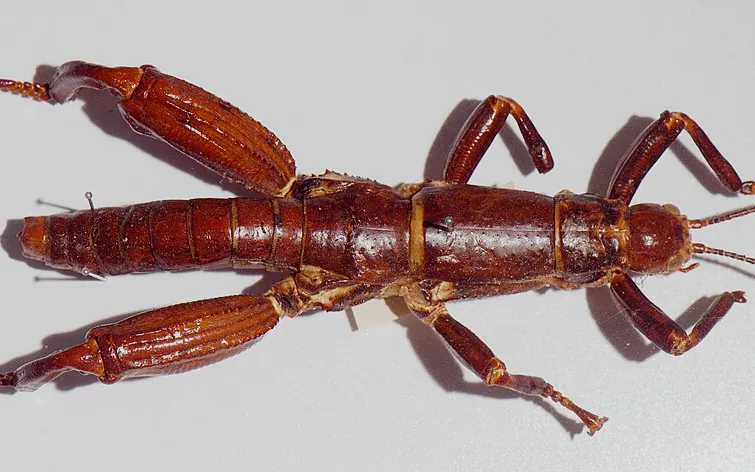
Responses can work. The Lord Howe Island stick insect, a large, flightless phasmid as long as your hand, was wiped out on Lord Howe Island after black rats came ashore from a shipwreck in 1918. In 2001 a small population was rediscovered clinging to a single shrub on Ball's Pyramid, a sea stack 23 km away. Melbourne Zoo bred thousands from just a few insects, and after an eradication program removed the rats and mice from Lord Howe Island in 2019, scientists began preparing to return the insects to their home.
Test yourself
The Paris Agreement aims to keep global warming
Agreed by almost every country in 2015.
Global problems such as climate change need international agreements mainly because
No country can solve it alone.
"Net zero" emissions means
Emissions minus removals equals zero.
Australia's 2030 target is to reduce emissions to
Set in the Climate Change Act 2022. (82% is the renewable electricity goal.)
Name each agreement on the timeline.
Put these events in order, earliest first.
The total amount of CO₂ that can still be emitted for a temperature goal is the carbon . Cutting emissions is called . The disease of seabird stomachs caused by plastic is . Recovering valuable metals from old electronics is called urban . The 1987 agreement that protected the ozone layer is the Montreal .
Evaluate the claim: "If every country simply copied the approach of the Montreal Protocol, climate change would be solved within a few decades."
The Montreal Protocol worked because the problem was relatively narrow. CFCs were made by a small number of companies for a few uses such as refrigerators and aerosol cans, and cheaper substitutes were soon available. The science was clear, the ozone hole was a visible warning, every country signed, and richer countries helped poorer ones switch. Some of these lessons do apply to climate change: the Paris Agreement copies the idea of every country taking part and strengthening its targets over time, and the Kigali Amendment uses the Montreal system to phase down HFCs. But climate change is much harder. CO₂ comes from almost everything we do: electricity, transport, industry, farming and land clearing. Replacing the world's power stations, vehicles and industrial plants takes decades and huge investment, and countries such as Australia earn a lot from fossil fuel exports. CO₂ also stays in the air for centuries, so even after emissions stop, the warming already caused remains, and the carbon budget for 1.5 °C is nearly used up. So the claim is too optimistic: copying Montreal's cooperation is essential, but solving climate change will take a much broader and longer transformation, together with adaptation to the change that can no longer be avoided.