 Coaching Centre
Science solving health problems
How germ theory was discovered and tested, from Pasteur's swan-neck flasks and Koch's anthrax experiments to vaccines, pasteurisation, hygiene, sewage treatment and the fight against potato blight, plus how vaccines protect whole communities through herd immunity.
In the 1840s, in a Vienna hospital, about one in ten mothers who gave birth on the doctors' ward died of "childbed fever". On the ward run by midwives, far fewer died. A young doctor, Ignaz Semmelweis, noticed that the doctors often came straight from cutting up dead bodies to deliver babies. He made them wash their hands in chlorine solution, and deaths dropped to around 1 in 100. Most doctors still refused to believe him, because nobody yet knew that invisible germs could cause disease.
Germ theory
For most of history, people blamed disease on bad air ("miasma"), bad luck or the gods. Microbes had been seen under the microscope since Antonie van Leeuwenhoek in the 1670s, but no one linked them to illness. Many people believed that living things such as maggots and mould could appear on their own from rotting matter, an idea called spontaneous generation.
Germ theory is the idea that many diseases are caused by microorganisms, or pathogens, that pass from one person to another. It took a series of careful experiments in the 1800s to prove it.
Pasteur's swan-neck flasks
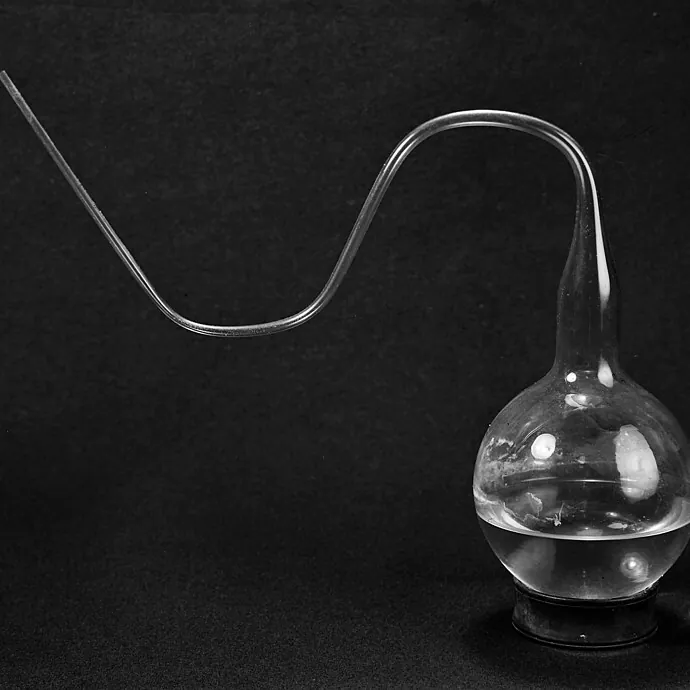
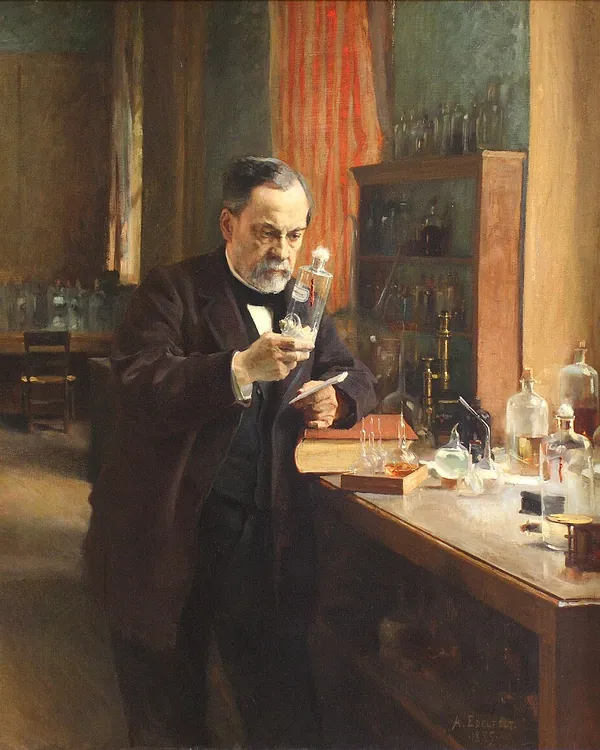
In 1862, the French chemist Louis Pasteur tested spontaneous generation. He boiled meat broth in flasks to kill any microbes. Some flasks had straight necks; others had long necks bent into an S shape like a swan's neck. Air could get into both, but in the swan-neck flasks, dust and microbes settled in the bend and couldn't reach the broth.
The straight-neck broth soon went cloudy and rotted. The swan-neck broth stayed clear for months, and some of Pasteur's original flasks are still clear today. When he snapped off a swan neck, the broth quickly rotted. Microbes didn't appear from nowhere; they came from the air. Pasteur used this to invent pasteurisation: heating food just enough to kill most microbes without cooking it.
Koch proves germs cause disease
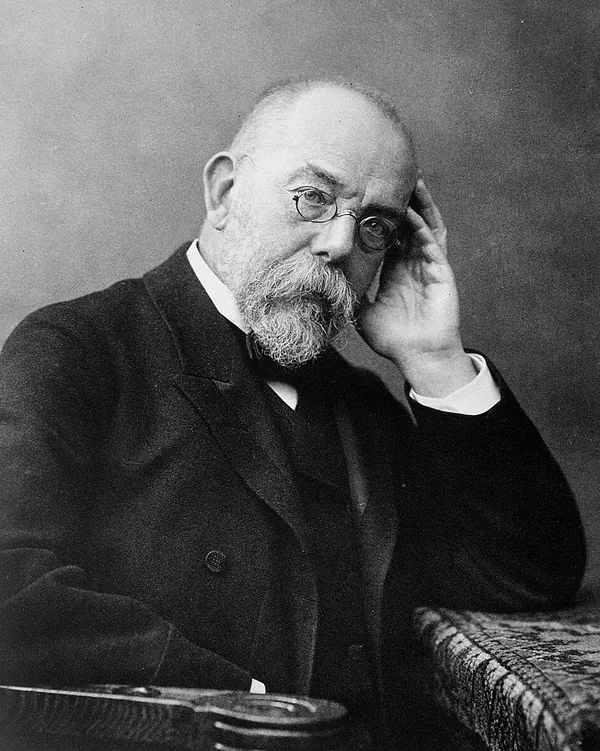
In 1876, the German doctor Robert Koch studied anthrax, a deadly disease of cattle and people. He found the same rod-shaped bacteria in the blood of every animal that died of anthrax, grew them in the lab away from any animal, then injected them into healthy mice, which caught anthrax. He then found the same bacteria in the sick mice. For the first time, someone had proved that one particular microbe causes one particular disease. Koch went on to discover the bacteria that cause tuberculosis (1882) and cholera (1883), and his step-by-step method, now called Koch's postulates, is still used to identify new pathogens.
Vaccines
In 1796, the English doctor Edward Jenner noticed that milkmaids who had caught cowpox, a mild disease, never got smallpox, which killed about a third of people who caught it. He scratched pus from a cowpox sore into a boy's arm, then later exposed him to smallpox. The boy didn't get sick. The word vaccine comes from the Latin vacca, meaning cow.
Pasteur later showed that weakened germs could be used to make vaccines. In 1885 a nine-year-old boy, Joseph Meister, was brought to him after being badly bitten by a rabid dog. Rabies is almost always fatal once symptoms appear, so Pasteur and his colleague Émile Roux gave the boy a course of injections made from weakened rabies material. Joseph survived. Rabies is caused by a virus, too small to see with the microscopes of the time, which travels along nerves to the brain. It still kills about 59,000 people a year, mostly in Asia and Africa, almost all from dog bites. Australia is free of rabies thanks to strict quarantine, although a related bat lyssavirus is found here, which is why you should never handle bats.
A vaccine contains a harmless version or part of a pathogen. Your white blood cells learn to recognise it and make antibodies against it. If the real pathogen ever arrives, your immune system remembers it and destroys it before you get sick. Smallpox was declared wiped out worldwide in 1980, thanks to vaccination. It is the only human disease ever eradicated.
Herd immunity
Vaccines don't just protect the person who gets them. Some people can't be vaccinated: newborn babies, people having cancer treatment, people with certain allergies. If enough of the people around them are immune, a disease can't find enough people to spread through, and it dies out. This is called herd immunity (or community immunity).
How many people need to be immune depends on how contagious the disease is. Measles is one of the most contagious diseases known: one case can infect 12 to 18 unvaccinated people, so about 95% of people must be immune to stop it.
- Choose measles with 30% vaccinated and release a case. How many people catch it? How many babies?
- Raise vaccination to 70%, then 95%, and try again. At what level does the outbreak fizzle out?
- Switch to flu. Why can it be stopped with a lower vaccination rate than measles?
- Explain why a parent who vaccinates their child is also protecting a newborn baby down the street.
Science in everyday health
| Problem | What science contributed |
|---|---|
| Hygiene: diseases spread by hands, coughs and sneezes | Once germ theory was accepted, handwashing, antiseptics (Joseph Lister began using carbolic acid to clean wounds and instruments in 1867), sterilised instruments and covering coughs became normal. Handwashing with soap is still one of the cheapest, most effective ways to prevent infections. |
| Clean water and sewage: cholera, typhoid and other gut infections spread through water contaminated with faeces | In 1854 John Snow mapped cholera deaths in London and traced them to one water pump. Modern sewage treatment separates solids, uses microbes to break down waste, and disinfects the water before releasing it. Algae in treatment ponds add oxygen by photosynthesis and absorb nutrients like phosphates and nitrates, which would otherwise cause algal blooms in rivers. |
| Food preservation: microbes spoil food and cause food poisoning | Pasteurisation heats milk and juice to 72 °C for at least 15 seconds, giving refrigerated milk a shelf life of 2 to 3 weeks. UHT (ultra-heat treatment) heats to about 140 °C for a few seconds, so long-life milk lasts months unopened without a fridge. Refrigeration, canning, drying and salting all work by slowing or killing microbes. |
| Potato blight: in the Irish Famine of 1845–1849, a fungus-like pathogen destroyed the potato crop. About 1 million people died and another million emigrated, many to Australia | Almost all Irish potatoes were one variety, so they were all equally vulnerable. Scientists identified the pathogen, worked out the damp conditions it needs, developed sprays and bred resistant varieties using wild potatoes from South America. Today the genes for resistance have been identified and used to develop resistant plants. |
Test yourself
What did Pasteur's swan-neck flask experiment show?
Air reached both flasks, but only broth that microbes could reach went bad.
Robert Koch is famous for
He showed anthrax bacteria cause anthrax.
A vaccine works by
Your immune system "remembers" the pathogen and responds quickly next time.
Milk is pasteurised by heating it to about
Enough to kill most harmful microbes without cooking the milk.
Why does measles need a higher vaccination rate than flu for herd immunity?
The more contagious a disease, the more people must be immune to stop it spreading.
Why did potato blight destroy almost all of Ireland's potatoes?
Lack of genetic variety meant every plant was equally vulnerable.
Put these discoveries in time order.
How does each one protect health?
Germ theory says many diseases are caused by . used swan-neck flasks to show microbes come from the air, and proved that bacteria cause anthrax. A vaccine makes white blood cells produce . When most of a population is vaccinated, protects those who can't be vaccinated.
Explain why Pasteur's swan-neck flask experiment was a fair test, and what conclusion it supported.
Pasteur changed only one thing: whether microbes from the air could reach the broth (straight neck versus swan neck). Everything else was kept the same. Both flasks contained the same broth, both were boiled first to kill any microbes already in it, and both were open to the air, so nobody could argue that the broth needed air to "come alive". They were kept in the same conditions for the same time.
Only the straight-neck broth went cloudy, while the swan-neck broth stayed clear, and when the swan neck was broken off, that broth also rotted. This supported the conclusion that microbes don't appear by spontaneous generation; they come from other microbes carried in the air.