 Coaching Centre
Rocks and minerals
The difference between rocks and minerals, mineral properties (colour, lustre, streak, hardness, cleavage and more), the Mohs scale, using a key to identify minerals and rocks, and why properties decide how we use them.
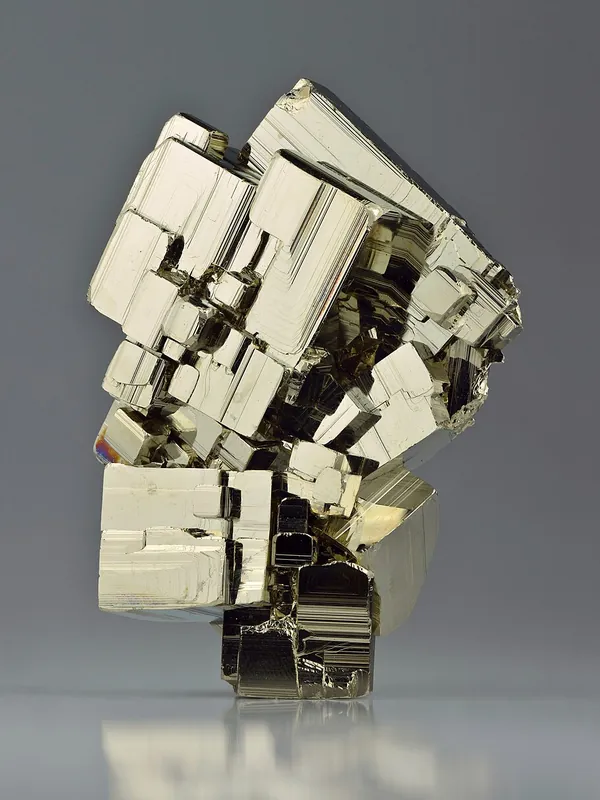
Fool's gold (pyrite) has tricked prospectors for centuries. It's shiny and gold-coloured, but scrape it across a rough white tile and it leaves a greenish-black line. Real gold leaves a gold line. That one simple test can save you from a very disappointing trip to the bank.
What is a mineral?
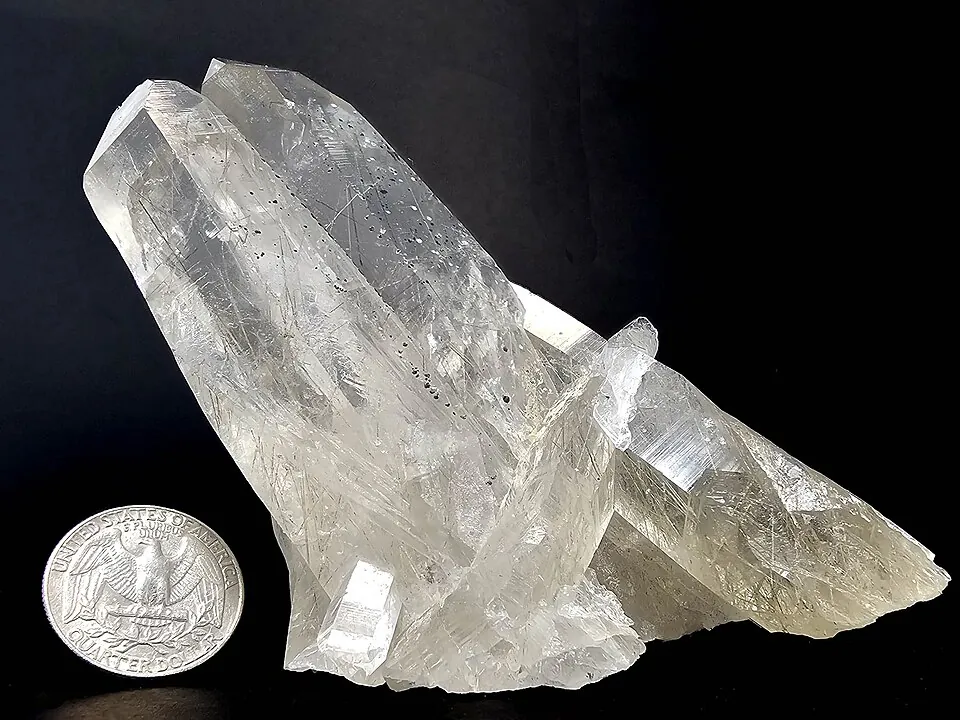
A mineral is a naturally occurring solid with a definite chemical composition and an orderly internal arrangement of atoms (a crystal structure). Quartz, for example, is always silicon dioxide (SiO2), with its atoms arranged in the same repeating pattern, which is why quartz crystals have six sides.
A rock is a solid mixture of one or more minerals (or, occasionally, natural glass or organic material, as in obsidian and coal). Granite is a mixture of quartz, feldspar and mica; limestone is made almost entirely of one mineral, calcite. So rocks are made of minerals, and minerals are made of elements.
About 6000 different minerals are known, but a few dozen make up almost all rocks. The most common minerals in the crust are the feldspars (roughly half the crust), followed by quartz. Quartz is so hard and so resistant to chemical weathering that it survives when other minerals are broken down, which is why most beach sand is quartz.
Identifying minerals
Geologists identify minerals by testing their physical properties:
- Colour is the first thing you notice, but it is unreliable. Tiny amounts of impurities change it: pure quartz is colourless, but quartz can also be purple (amethyst), pink (rose quartz) or smoky grey.
- Lustre is the way the surface reflects light: metallic (like polished metal), glassy, pearly, silky, greasy or dull/earthy.
- Streak is the colour of the mineral's powder, seen by scraping it on an unglazed white tile (a streak plate). Streak is much more reliable than colour. Haematite can look silver-grey, black or red, but its streak is always red-brown.
- Hardness is how easily a mineral is scratched, measured on the Mohs scale (below).
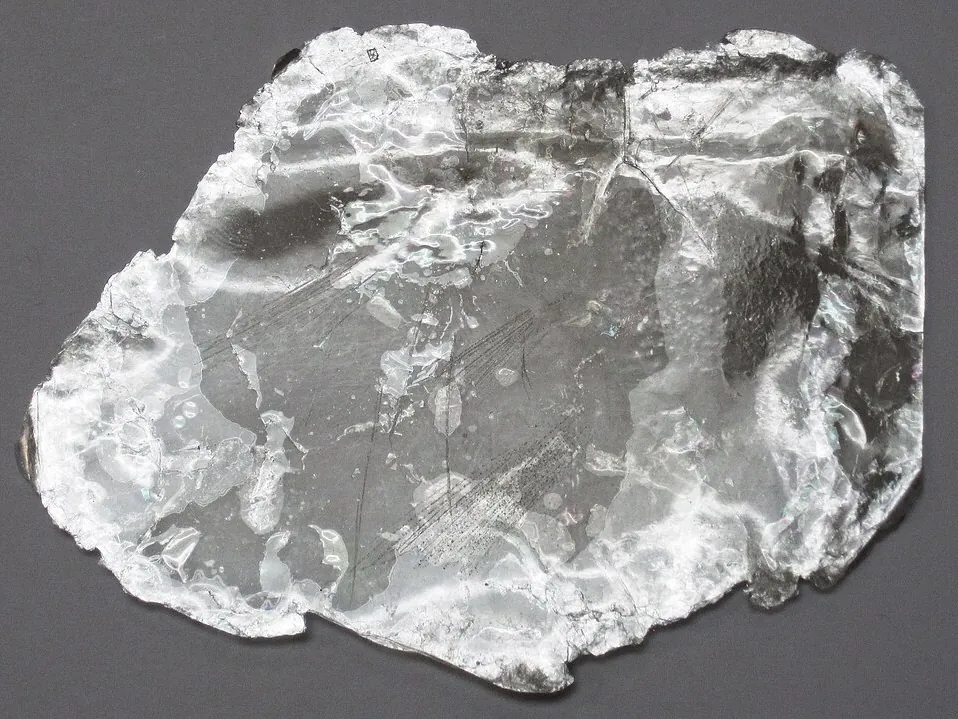
- Cleavage and fracture. Minerals with cleavage break along flat, smooth planes where the bonds between atoms are weakest. Mica peels into thin sheets (one cleavage); halite and galena break into cubes (three cleavages at right angles). Minerals with no cleavage, such as quartz, fracture into uneven or curved surfaces.
- Crystal shape: cubes (halite, pyrite, galena), six-sided columns (quartz), flat sheets (mica).
- Density: galena and gold feel surprisingly heavy for their size.
- Special properties: magnetite is magnetic; calcite fizzes in dilute acid and a clear piece shows a double image; fluorite glows under ultraviolet light; talc feels soapy.
The Mohs hardness scale
In 1812 the German mineralogist Friedrich Mohs chose ten minerals and ranked them by which scratches which. A mineral scratches anything softer than itself and is scratched by anything harder. The scale only tells you the order, not how much harder: diamond (10) is about four times as hard as corundum (9).
| Hardness | Mineral | Everyday comparison |
|---|---|---|
| 1 | Talc | Crumbles under a fingernail; used in talcum powder |
| 2 | Gypsum | Scratched by a fingernail; used in plasterboard |
| 2.5 | Fingernail | |
| 3 | Calcite | Scratched by copper (about 3.5) |
| 4 | Fluorite | Scratched easily by a steel nail |
| 5 | Apatite | Your teeth are made of a kind of apatite |
| 5.5 | Glass, steel knife or nail | |
| 6 | Orthoclase feldspar | Scratches glass |
| 6.5 | Steel file, streak plate | |
| 7 | Quartz | Scratches steel easily |
| 8 | Topaz | |
| 9 | Corundum | Rubies and sapphires are corundum; used in sandpaper |
| 10 | Diamond | Hardest natural mineral; used on cutting tools |
- Test unknown A. Which single test identifies it straight away?
- Find two specimens that look alike but have different streaks.
- Find a mineral harder than the streak plate. What happens when you try to streak it?
- Identify all twelve. Which tests were most useful overall?
A simple key for common minerals
| Lustre | Hardness | Other clues | Mineral |
|---|---|---|---|
| Metallic | 2.5 | Silver-grey cubes, very heavy, grey streak | Galena (lead ore) |
| 6 | Black, strongly magnetic, black streak | Magnetite (iron ore) | |
| 5.5–6.5 | Silver-grey to red, red-brown streak | Haematite (iron ore) | |
| 6–6.5 | Brassy yellow cubes, greenish-black streak | Pyrite | |
| 3.5–4 | Brassy yellow, greenish-black streak, tarnishes purple | Chalcopyrite (copper ore) | |
| Non-metallic | 1 | Soapy feel, white or pale green | Talc |
| 2 | White, scratched by fingernail, one cleavage | Gypsum | |
| 2–2.5 | Peels into thin flexible sheets | Mica | |
| 2.5 | Colourless cubes, dissolves in water | Halite (rock salt) | |
| 3 | Fizzes in acid, breaks into slanted blocks | Calcite | |
| 4 | Often purple or green, glows under UV | Fluorite | |
| 6 | Pink or white, two cleavages at right angles | Feldspar | |
| 7 | Glassy, no cleavage, six-sided crystals | Quartz |
Identifying rocks
Rocks are harder to identify than minerals because they are mixtures. Ask these questions, in this order:
- Can you see crystals or grains? Interlocking crystals suggest an igneous or metamorphic rock. Rounded or broken grains stuck together suggest a sedimentary rock.
- Are there layers or bands? Layers of different grain sizes and fossils suggest sedimentary rock. Wavy bands of lined-up minerals (or a sheen of mica) suggest metamorphic rock.
- How big are the grains or crystals? This helps tell granite from rhyolite, or conglomerate from sandstone from shale.
- Does it fizz with acid? If so, it contains calcite: limestone or marble.
- Holes? Glassy? Gas holes mean pumice or scoria; glassy with curved fractures means obsidian.
Properties decide uses
We choose rocks and minerals for jobs because of their properties. Granite is used for benchtops because it is hard, resists scratches, heat and most chemicals, and takes a high polish. Slate is used for roof tiles because it splits into thin waterproof sheets. Marble is used for sculpture because it is soft enough to carve but strong. Quartz is used in watches and electronics because a quartz crystal vibrates at a very steady rate when electricity is applied; a typical quartz watch stays accurate to within about 15 seconds a month.
Test yourself
The streak of a mineral is
Seen by scraping it on a streak plate.
A mineral scratches glass (5.5) but is scratched by a steel file (6.5). Its hardness is about
Between 5.5 and 6.5.
A colourless mineral fizzes when dilute acid is dropped on it. It is most likely
Calcite is calcium carbonate.
Mica peels into thin sheets because it has
It breaks along one set of weak planes.
Which is a rock rather than a mineral?
Granite is a mixture of minerals.
Why is colour an unreliable way to identify a mineral?
Quartz can be clear, purple, pink or grey.
Classify each rock from its description.
Order these minerals from softest to hardest.
The way a mineral's surface reflects light is its . Breaking along flat, smooth planes is called . The Mohs scale measures . Magnetite can be identified because it is . The most common mineral in beach sand is .
A student finds two shiny, gold-coloured mineral samples and thinks both are gold. Describe three tests that would show whether either sample is pyrite, and the result you would expect for each mineral.
1. Streak test: rub each sample on an unglazed white streak plate. Gold leaves a golden-yellow streak; pyrite leaves a greenish-black streak.
2. Hardness test: try to scratch each sample with a steel nail and try to scratch glass with it. Gold is soft (about 2.5–3) and is easily scratched or dented by the nail. Pyrite is hard (about 6–6.5); the nail won't scratch it, and it can scratch glass.
3. Density or heft: compare samples of similar size. Gold is extremely dense (about 19 times as heavy as the same volume of water) and feels very heavy; pyrite is only about 5 times as dense as water. Pyrite also often forms perfect cubes and shatters when hit, whereas gold bends and flattens.