 Coaching Centre
Chemistry in the kitchen
The chemical reactions of cooking, including browning, baking soda and baking powder, fermentation by yeast and bacteria, food additives, and how First Nations Australians used physical and chemical processes to make toxic plant foods safe.
A slice of bread turns golden-brown in the toaster because of a reaction between sugars and proteins that makes hundreds of new flavour and colour molecules. It's the same reaction that browns a steak, roasts coffee beans and gives a crust its smell.
Cooking is chemistry
A kitchen is a chemistry lab with nicer smells. Cooks heat, mix, dissolve, filter and measure, just like chemists. Many cooking steps are physical changes (melting butter, chopping onions, dissolving sugar), but the ones that change flavour and texture are chemical:
- Browning (the Maillard reaction). When food is heated above about 140 °C, sugars react with proteins to make brown colours and rich flavours. That's why toast, roast potatoes and the crust of bread taste so different from their raw ingredients.
- Caramelisation. Heating sugar on its own breaks its molecules down into new, brown, sweet and slightly bitter compounds: caramel.
- Cooking eggs and meat. Heat makes the long protein molecules unravel and bond to each other, so runny egg white sets solid.
Processed foods also contain food additives, chemicals that keep food safe, stable and appealing: preservatives, antioxidants (which slow down reactions with oxygen that make food go stale), emulsifiers, colourings and flavourings. In Australia each additive has a code number on the label, such as 300 for vitamin C (used as an antioxidant).
Baking soda and baking powder
Baking soda (also called bicarb soda) is the compound sodium hydrogen carbonate, NaHCO3. Cakes rise because it releases bubbles of carbon dioxide gas, which get trapped in the batter and expand in the heat. It can do this in two ways:
- With an acid, such as buttermilk, yoghurt, lemon juice or vinegar, it reacts straight away: acid + sodium hydrogen carbonate → a salt + water + carbon dioxide.
- When heated above about 80 °C, it decomposes: sodium hydrogen carbonate → sodium carbonate + water + carbon dioxide (2NaHCO3 → Na2CO3 + H2O + CO2).
The sodium carbonate left over from heating alone tastes bitter and soapy, because it is a base. So recipes that use baking soda usually include an acidic ingredient. Baking powder solves the problem by mixing baking soda with a dry acid (plus some starch to keep it dry). Once wet and heated, the two react together. Self-raising flour is just plain flour with baking powder added.
Fermentation
Fermentation is a process in which microorganisms such as yeast and bacteria break down sugars without needing oxygen (it is anaerobic), releasing energy for themselves and making useful products.
Yeast is a single-celled fungus. It ferments glucose into ethanol (alcohol) and carbon dioxide:
glucose → ethanol + carbon dioxide C6H12O6 → 2C2H5OH + 2CO2
In bread, the carbon dioxide forms bubbles in the stretchy dough, which makes it rise; the small amount of ethanol evaporates in the oven, and the heat kills the yeast. In brewing, the ethanol is the point. Yeast is alive, so it works best at around body temperature and is killed above about 55 °C.
Other foods are fermented by bacteria. In yoghurt and cheese, bacteria ferment lactose (milk sugar) into lactic acid, which makes the milk thicken and taste tangy. Vinegar is made when bacteria turn ethanol into acetic acid. Soy sauce, kimchi, sauerkraut and sourdough bread are all fermented foods.
- Bake a loaf with no raising agent, then with each raising agent. Which rises most?
- With yeast, find the best proving temperature. What happens at 60 °C? At 10 °C?
- Why does baking soda on its own rise only in the oven?
- Remove the sugar. How does that affect the yeast?
Making toxic foods safe
Some important Australian plant foods are poisonous when raw. First Nations peoples developed processing methods, passed down over thousands of years, that use physical and chemical changes to make them safe to eat.
- Cycad (zamia) seeds are rich in starch but contain toxins that can cause serious illness. Depending on the region, the seeds were cracked and sliced, then leached by soaking in running water for days or weeks so the toxins dissolved away (a physical process), or stored for months to ferment, letting microbes break the toxins down (a chemical process). The safe flour was then made into cakes and cooked.
- Black bean (Moreton Bay chestnut) seeds were roasted, sliced, soaked in water for a long time to remove toxins, then pounded into flour.
- Seeds of grasses and wattles were ground into flour on grindstones and cooked into damper-like cakes in hot ashes. Grinding is physical; baking is chemical.
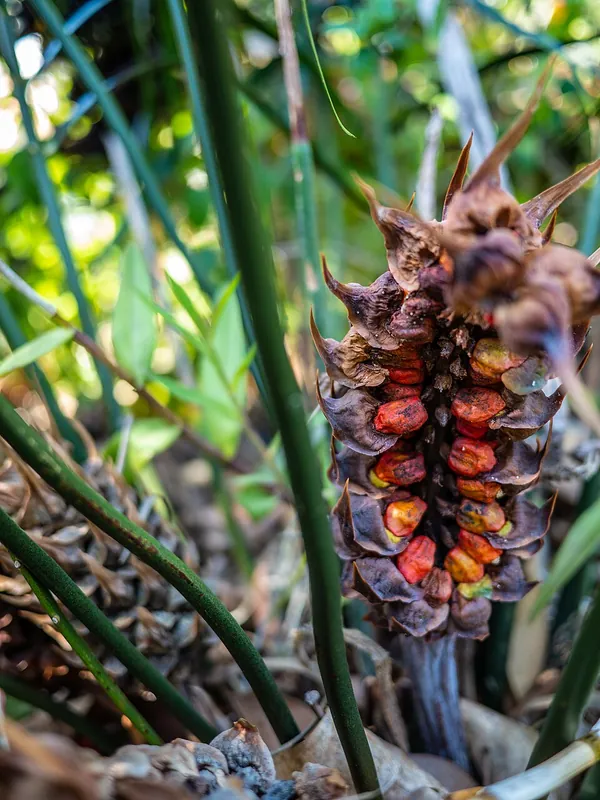
Archaeologists have found evidence of cycad processing in Australia going back thousands of years. Getting it wrong meant poisoning, so this was careful, tested knowledge.
Test yourself
The gas that makes cakes and bread rise is
Raising agents and yeast all produce CO₂.
The products of fermentation by yeast are
glucose → ethanol + carbon dioxide
Why do recipes with baking soda usually include an acid such as buttermilk?
Heated soda alone leaves bitter sodium carbonate.
Fermentation is described as anaerobic because it
"An" means without, "aerobic" means with air.
Yoghurt is made when bacteria convert milk sugar into
Lactic acid thickens milk and makes it tangy.
Soaking sliced cycad seeds in running water for days removes toxins mainly by
The toxins dissolve in the water and are carried away.
Kitchen changes: physical or chemical?
The chemical name for baking soda is sodium hydrogen . When heated, it and releases carbon dioxide. Yeast is a single-celled . Fermentation by yeast produces carbon dioxide and . The browning of food when sugars react with proteins is called the reaction.
A baker leaves one bowl of bread dough in a warm kitchen and puts another in the fridge. Predict and explain the difference after one hour, referring to fermentation.
The dough in the warm kitchen will rise much more than the dough in the fridge. Yeast is a living fungus that ferments the sugars in the dough: glucose → ethanol + carbon dioxide. The carbon dioxide gas forms bubbles that get trapped in the stretchy dough and make it rise.
Fermentation is a set of chemical reactions controlled by the yeast's enzymes, and these work much faster at warm temperatures, close to body temperature. In the cold fridge the yeast's reactions are very slow, so it makes much less carbon dioxide in an hour and the dough hardly rises. Given many hours, though, the fridge dough would still slowly rise, because the yeast isn't dead, just slow.