 Coaching Centre
Heat transfer
How heat moves by conduction, convection and radiation, conductors and insulators, why dark surfaces absorb more radiation, how a vacuum flask works, and how animals and buildings control heat transfer.
On a 40 °C day the metal seatbelt buckle in a parked car can burn you, while the fabric seat right next to it only feels warm. They have been in the same sun for the same time and are at almost the same temperature. The difference is how quickly each one passes heat into your skin.
Heat always flows from hot to cold
Heat is energy being transferred because of a difference in temperature. It always flows from a hotter object to a colder one, until they reach the same temperature. A cold drink doesn't "give out cold" to your hand: your hand gives heat to the drink.
Heat can move in three ways: conduction, convection and radiation. A pot on a campfire shows all three at once.
Conduction
In conduction, heat passes through a material from particle to particle. Particles at the hot end vibrate faster and bump into their neighbours, passing the energy along. The material itself doesn't move.
Metals are excellent conductors because they contain free electrons that carry energy quickly through the metal. Materials that conduct heat poorly are insulators: wood, plastic, glass, wool and especially trapped air. Most good insulators work by trapping air in small pockets: think of a puffer jacket, foam cups, home ceiling batts, or the fluffed-up feathers of a bird on a cold morning.
This explains the seatbelt buckle. Metal conducts heat into your skin much faster than fabric does, so it feels hotter even at the same temperature. On a cold morning, a metal railing feels colder than a wooden bench for the same reason.
Convection
Liquids and gases (fluids) can carry heat by moving. When part of a fluid is heated, its particles spread out, so it becomes less dense and rises. Cooler, denser fluid sinks to take its place, gets heated, and rises in turn. This circulating flow is a convection current.
Convection explains why heaters work best near the floor and air conditioners near the ceiling, why the top shelf of an oven is hottest, and why sea breezes blow in from the ocean on hot afternoons. Glider pilots and wedge-tailed eagles ride rising columns of warm air called thermals without flapping.
Radiation
Radiation is heat transferred by electromagnetic waves, mainly infrared radiation. It needs no particles at all, so it can travel through empty space. That's how the sun's energy crosses 150 million kilometres of vacuum to reach Earth.
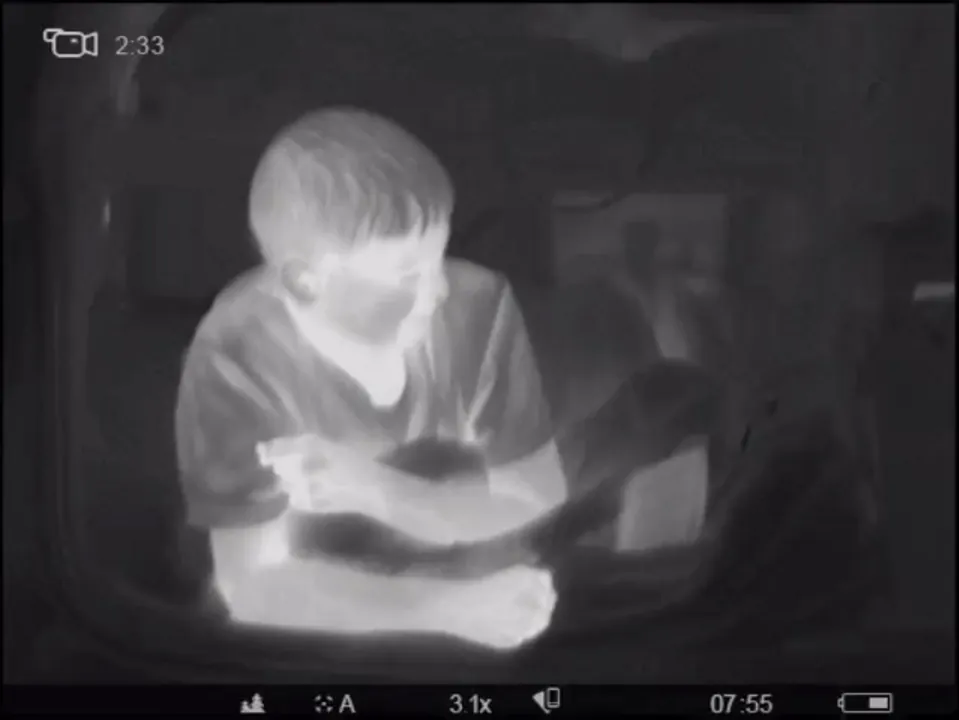
Everything gives off some infrared radiation; hotter objects give off more. Thermal imaging cameras detect it, which is how firefighters find people in smoke and how vets spot inflamed joints in horses.
The surface of an object matters a lot. Dark, dull surfaces absorb and give off radiation well. Light, shiny surfaces reflect it. That's why houses in hot parts of Australia often have white roofs, why emergency blankets are shiny, and why a black car gets so much hotter than a white one.
- Conduction: heat each rod and watch the wax pins. Rank the materials from best to worst conductor.
- Why would a saucepan have a copper base but a wooden or plastic handle?
- Convection: watch the particles. Now heat from the top instead. Why does the flow nearly stop?
- Radiation: which can heats up fastest? Move the lamp further away. What happens to the heating rate?
Stopping heat transfer: the vacuum flask
A vacuum flask (often called a Thermos) keeps hot drinks hot and cold drinks cold for hours by blocking all three methods of heat transfer.
| Part | What it stops |
|---|---|
| Vacuum between the walls | Conduction and convection: there are no particles to pass the heat along. |
| Silvered (shiny) walls | Radiation: the shiny surfaces reflect infrared back towards the drink. |
| Stopper | Convection of warm air out of the top, and evaporation. It's made of plastic or cork, which are poor conductors. |
Heat transfer and living things
Reptiles such as bearded dragons can't make much of their own body heat. In the morning they bask in the sun to absorb radiation, and press their bellies on warm rocks to gain heat by conduction. In the midday heat they move into shade or burrows. Kangaroos lick their forearms, where blood vessels run close to the skin, so evaporation cools the blood. Emperor penguins huddle in tight groups to reduce the surface area they lose heat from.
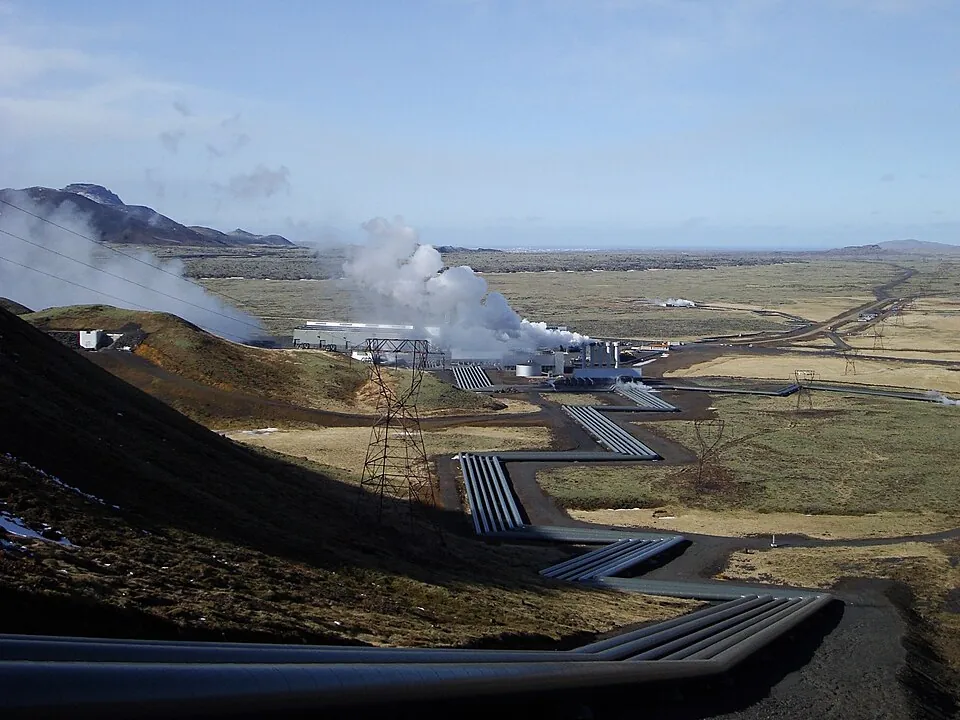
People use heat transfer on a much larger scale. In Iceland, which sits on a volcanic hot spot, hot water from deep underground heats almost every home and produces about a quarter of the country's electricity. This is geothermal energy.
Test yourself
How does heat from the sun reach Earth?
Space is a vacuum, so only radiation can cross it.
Which material is the best conductor of heat?
Metals conduct heat well, and copper is one of the best.
Why is a room heater best placed near the floor?
Warm air rises and cooler air sinks to be heated.
Which surface would absorb radiation from a heat lamp fastest?
Dark, dull surfaces are the best absorbers.
A metal spoon in a hot drink heats up mainly by
Heat passes along the solid metal particle to particle.
In a vacuum flask, the vacuum reduces heat transfer by
No particles means no conduction or convection; the silvering handles radiation.
Label how heat is moving in each part of the picture.
Label the vacuum flask.
Which method of heat transfer is mainly at work?
Heat always flows from to cold. Wool and trapped air are good . In a convection current, warm fluid because it is less dense. Heat travels through space by . A surface reflects radiation.
Emergency space blankets are thin sheets of shiny plastic. They are wrapped around marathon runners at the end of a race. Explain how a space blanket reduces heat loss, referring to at least two methods of heat transfer.
A runner's body is warmer than the air around them, so they lose heat. The shiny surface of the blanket reflects infrared radiation given off by the body back towards the runner, so less heat is lost by radiation. The blanket also traps a layer of air next to the body and stops wind blowing it away. This reduces convection, because warm air can't rise and be replaced by cooler air, and still air is a poor conductor of heat. Together these slow the rate of heat loss so the runner's body temperature doesn't drop too quickly after the race.