 Coaching Centre
Medical technology and treating disease
How technology and biotechnology improve health: prosthetics, IVF and ultrasound, genetically modified bacteria that make insulin, and the different options for treating kidney failure, heart disease and diabetes, with the ethical questions they raise.
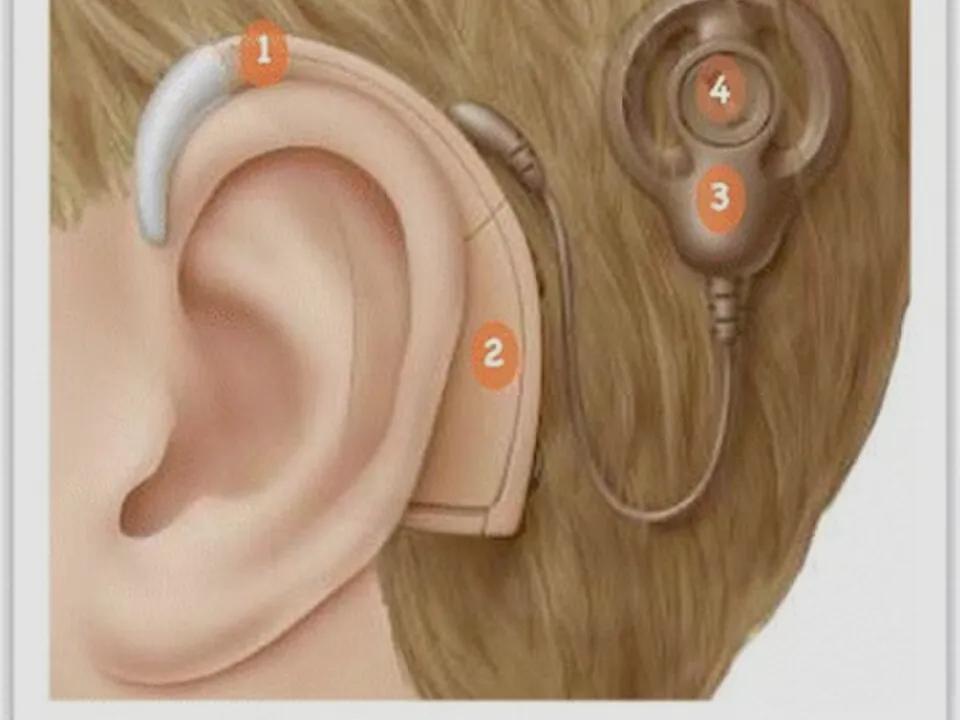
In 1978, a team in Melbourne led by Professor Graeme Clark implanted the first multi-channel cochlear implant, a "bionic ear" that turns sound into electrical signals sent straight to the hearing nerve. Its first user, Rod Saunders, had lost his hearing in a car accident. When it was switched on, he heard sound again. Today more than a million people around the world have cochlear implants, and many children who were born deaf now hear and speak.
Technology and biotechnology
Technology means using scientific knowledge to make tools, machines and devices that solve problems. Biotechnology means using living things, or parts of them, to make useful products. Traditional biotechnology includes using yeast to make bread and bacteria to make cheese and yoghurt. Modern biotechnology uses our understanding of DNA to change living things on purpose.
Artificial limbs and joints
A prosthesis is an artificial body part. Modern artificial legs are made of titanium and carbon fibre, which are strong, light and don't corrode. Running blades store energy like a spring as the runner lands and release it as they push off. The most advanced bionic arms respond to nerve signals: surgeons reconnect the nerves that once controlled the missing arm to muscles in the chest or upper arm, and sensors on the skin pick up the signals when the person thinks about moving their hand.
Artificial hip and knee joints, made of metal, ceramic and tough plastic, replace joints destroyed by arthritis. They usually last 15 to 25 years.

Technology and reproduction
About 1 in 6 couples have trouble having a baby. Assisted reproductive technology (ART) is any procedure that helps. In in vitro fertilisation (IVF), "in glass", the woman takes hormones so several eggs mature at once. The eggs are collected with a fine needle and mixed with sperm in a dish in the lab. When an embryo has developed for a few days, it is placed in the woman's uterus. The first IVF baby, Louise Brown, was born in England in 1978. Australia's first, Candice Reed, was born in Melbourne in 1980, and Australian scientists have been world leaders in IVF ever since. Today roughly 1 in 18 babies born in Australia is conceived through IVF or other ART.
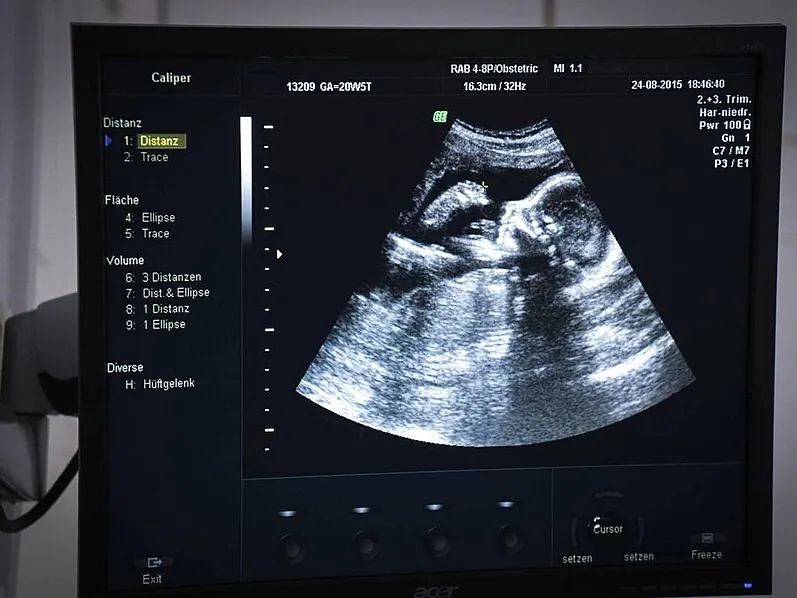
Ultrasound scans send very high-pitched sound, far above human hearing, into the body. The echoes from different tissues are turned into a moving picture of the baby, its heartbeat and its organs. Ultrasound is safe because it uses sound, not X-rays. Tests that sample the fluid around the baby or cells from the placenta use a needle into the uterus, which carries a small risk to the pregnancy, so a blood test from the mother that picks up the baby's DNA is now often used first.
Genetic modification
Scientists can now move a gene from one species into another, making a genetically modified organism (GMO). The first big medical success was insulin. In 1978, the human gene for insulin was put into bacteria. The bacteria read the gene and make human insulin, which is harvested from huge fermentation tanks. Before this, insulin for people with diabetes was extracted from the pancreases of pigs and cows from abattoirs, which was expensive and caused reactions in some people.
Other examples include crops that resist insect pests or disease, and "golden rice", which makes beta-carotene (used by the body to make vitamin A) to fight a deficiency that causes blindness in children in poorer countries. People raise concerns about GMOs: genes spreading to wild plants, effects on insects, and big companies owning the rights to seeds. Each GM product in Australia must be assessed by government regulators before it is approved.
Treating kidney failure
You can live a normal life with as little as 20% of normal kidney function, but below about 10 to 15%, wastes like urea build up and become life-threatening. Common causes include diabetes and high blood pressure, which damage the nephrons. There are several options:
| Option | How it works | Pros and cons |
|---|---|---|
| Prevention | Healthy diet with less salt, drinking enough water, not smoking, controlling blood pressure and blood glucose. | Cheapest and best, but only works before serious damage is done. |
| Haemodialysis | A machine filters the blood, usually 3 times a week for 4 to 5 hours each session. | Keeps people alive for years, but is time-consuming and tiring and is not as good as a real kidney. |
| Peritoneal dialysis | Fluid is run into the abdomen through a tube; wastes diffuse into it from blood vessels in the lining and it is drained out. Done at home each day or overnight. | More freedom, but must be done every day and carries an infection risk. |
| Transplant | A kidney from a living donor (people can live well with one kidney) or from someone who has died. | Best long-term result, but there aren't enough donors and the patient must take drugs for life to stop their immune system rejecting the kidney. |
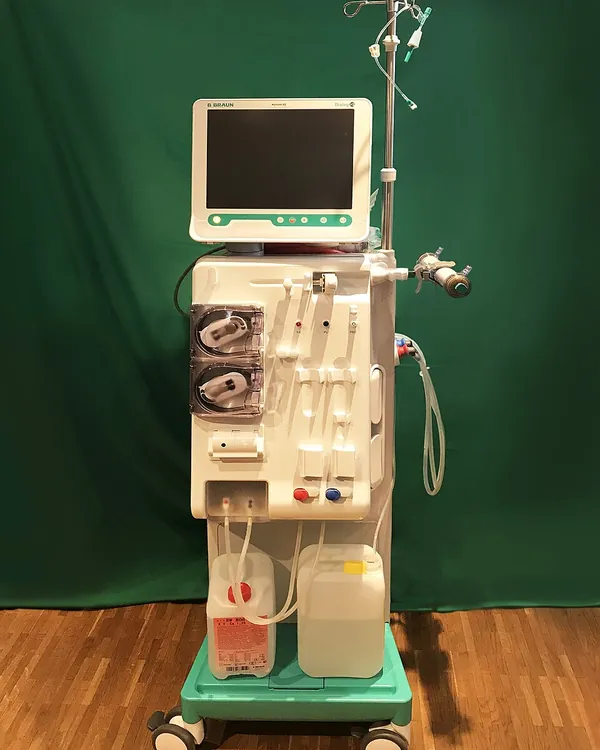
The dialyser works by diffusion. Blood flows on one side of a thin membrane with tiny pores and fresh dialysis fluid flows the other way on the other side. Urea and extra salts are at a high concentration in the blood and a low concentration in the fluid, so they diffuse out. Blood cells and proteins are too big to pass through. The fluid contains the right amount of glucose and useful salts, so those aren't lost.
Treating heart disease
Coronary heart disease is one of the leading causes of death in Australia. The heart muscle has its own blood supply, the coronary arteries. Fatty deposits called plaque (made partly of cholesterol) can build up inside them, narrowing them. If an artery is blocked, or a piece of plaque breaks off and causes a clot, the heart muscle beyond it is starved of oxygen and begins to die. This is a heart attack.
- Prevention: not smoking, regular exercise, a healthy diet low in saturated fat and salt, a healthy weight and controlling blood pressure and cholesterol.
- Medicines: drugs that lower cholesterol and blood pressure, or thin the blood to prevent clots.
- Stents: a tiny mesh tube is pushed into the narrowed artery through a blood vessel in the wrist or groin and expanded with a balloon to hold it open. No open surgery is needed.
- Bypass surgery: a healthy blood vessel from the patient's leg or chest is sewn around the blockage, so blood takes a detour.
- Pacemakers send electrical pulses to keep the heartbeat regular; artificial valves replace damaged ones.
- Transplant: replacing the whole heart with one from a donor who has died.
The first human heart transplant was done in 1967 by Dr Christiaan Barnard in Cape Town, South Africa. The patient, Louis Washkansky, lived for 18 days before dying of pneumonia, because the drugs that stopped his immune system rejecting the heart also left him unable to fight infection. Better anti-rejection drugs developed in the 1980s changed everything: today most heart transplant patients live more than 10 years. Because there are far too few donor hearts, scientists are working on alternatives. Genetically modified pig hearts were transplanted into two patients in the USA in 2022 and 2023; each lived about six weeks to two months. In 2024–25, an Australian man lived for more than 100 days with a titanium artificial heart called BiVACOR, invented by Australian engineer Daniel Timms, until a donor heart became available.
Treating diabetes
About 1.5 million Australians have been diagnosed with diabetes, and many more have it without knowing. In diabetes the body can't control the amount of glucose in the blood.
- Type 1 (about 1 in 10 cases) usually starts in childhood. The immune system destroys the cells in the pancreas that make insulin. It can't be prevented and needs insulin for life.
- Type 2 (most cases) usually develops in adults, but increasingly in young people. The body still makes insulin but doesn't respond to it properly. It is strongly linked to being overweight and inactive, and can often be prevented or delayed with exercise and a healthy diet.
- Start with no diabetes. Describe what happens to blood glucose after each meal and why it comes back down.
- Switch to type 1 with no insulin. What happens to the blood glucose? Why were cells starving even though there was lots of glucose in the blood?
- Give insulin, then try too little and too much. Which is more immediately dangerous?
- Turn on afternoon sport with the right dose. Why might someone with diabetes need a snack before training?
Before insulin was discovered in 1921 by Frederick Banting and Charles Best in Canada, type 1 diabetes was a death sentence. Today, many people with type 1 diabetes wear a continuous glucose monitor (a sensor under the skin that reads glucose every few minutes and sends it to a phone) and an insulin pump. Some systems link the two, automatically adjusting the insulin dose, a step towards an "artificial pancreas".
Test yourself
In IVF, fertilisation happens
"In vitro" means "in glass". The embryo is later placed in the uterus.
How do bacteria make human insulin?
This is genetic modification.
Urea leaves the blood in a dialysis machine by
Urea moves from high concentration (blood) to low concentration (fluid).
A stent is used to
The mesh tube props the artery open so blood can flow.
Which is the main problem in type 1 diabetes?
The immune system destroys the insulin-making cells.
Why did Louis Washkansky die only 18 days after his heart transplant?
Suppressing the immune system stops rejection but makes infections dangerous.
Label the dialysis machine.
Technology or biotechnology?
Heart disease is caused by fatty building up in the arteries. A narrowed artery can be held open with a . In type 1 diabetes, the pancreas can't make . People with kidney failure can be treated with or a .
A 55-year-old with kidney failure lives 400 km from the nearest hospital. Evaluate the treatment options available to them.
Haemodialysis would keep the patient alive, but it usually needs 4 to 5 hours in a dialysis centre three times a week. Travelling 800 km return three times a week is impossible, so they would have to move closer to the hospital, which would disrupt their life, work and family.
Peritoneal dialysis can be done at home every day, using the lining of the abdomen as the filter. It suits someone in a remote area much better, though they would need training, regular supplies and check-ups, and there is a risk of infection, which is more dangerous far from a hospital.
A kidney transplant gives the best long-term result: the person no longer needs dialysis and usually lives longer with a better quality of life. However, there are not enough donor kidneys and waiting can take years unless a family member can donate. They would also need to take anti-rejection drugs for life.
The best plan is probably peritoneal dialysis at home while they are placed on the transplant waiting list, and to check whether a relative is a compatible living donor. They should also control their blood pressure and diet to protect any remaining kidney function.