 Coaching Centre
Flowers and sexual reproduction
Why sexual reproduction matters, meiosis and gametes, the parts of a flower, self- and cross-pollination, how flowers attract particular pollinators, fertilisation, fruits and seed dispersal.
Some Australian orchids pull off one of the strangest tricks in nature. Their flowers look and smell like a female wasp. Male wasps arrive, grab the flower and try to fly off with it, and in the struggle they get a packet of pollen stuck to their backs. When they're fooled again by the next orchid, they deliver it. The orchid gets pollinated without offering a single drop of nectar.
Why bother with sex?
Vegetative reproduction is quick and easy, so why do most plants also produce flowers and seeds? The answer is variation. In sexual reproduction, the offspring get a mix of DNA from two parents, so every seed is slightly different. If the climate changes or a new disease arrives, some of those offspring may have the features they need to survive. A field of clones has no such backup.
Seeds have another advantage: they can travel. Carried by wind, water or animals, they let plants spread into new areas, sometimes hundreds of kilometres away.
Meiosis: making sex cells
Sexual reproduction needs special sex cells called gametes. In flowering plants the male gamete is inside the pollen grain, and the female gamete is the ovum (egg cell, plural ova) inside an ovule.
If gametes were made by mitosis, each would have a full set of chromosomes, and the offspring would end up with double. So gametes are made by a different type of cell division called meiosis. Meiosis has two divisions and produces four cells, each with half the number of chromosomes, one from each pair.
When a male and female gamete join in fertilisation, the full number of chromosomes is restored in the first cell of the new plant, the zygote. From then on, the zygote grows by mitosis.
| Mitosis | Meiosis | |
|---|---|---|
| Purpose | Growth, repair, asexual reproduction | Making gametes for sexual reproduction |
| Number of divisions | One | Two |
| Cells produced | Two | Four |
| Chromosomes in each new cell | Same as the parent (full set) | Half of the parent (one from each pair) |
| Genetically | Identical to the parent | Each one different |
Inside a flower
A flower is a plant's reproductive organ. Its job isn't to look pretty for us; it's to get pollen from one flower to another.
- Sepals: small leaf-like parts that protected the flower when it was a bud.
- Petals: often brightly coloured or scented to attract animals. Nectar is made at their base.
- Stamen (male part) = anther, which makes pollen by meiosis, held up on a stalk called the filament.
- Carpel (female part) = sticky stigma that catches pollen, a stalk called the style, and the ovary at the bottom containing ovules. Each ovule holds an ovum made by meiosis.
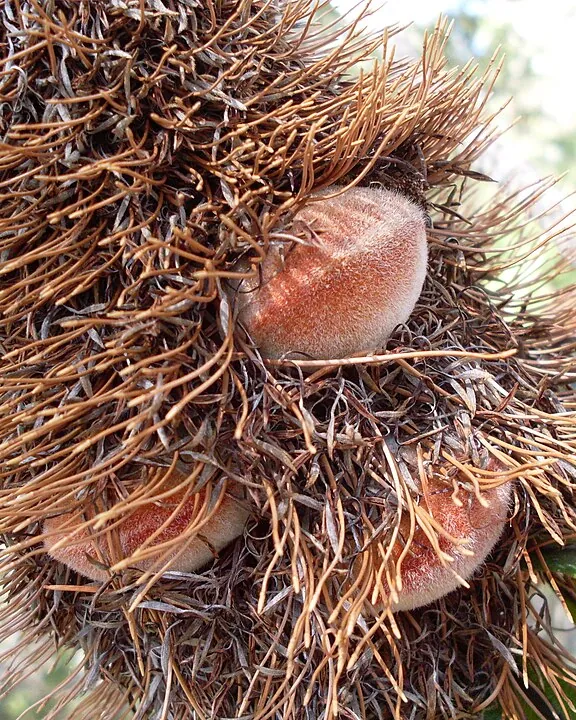
Many Australian "flowers" aren't one flower at all. A wattle ball, a bottlebrush spike, a waratah and a banksia cone are each a cluster of dozens or hundreds of tiny flowers. A bottlebrush's "bristles" are actually its stamens.
Pollination
Pollination is the transfer of pollen from an anther to a stigma.
- Self-pollination: pollen lands on the stigma of the same flower or another flower on the same plant. It's reliable but produces less variation.
- Cross-pollination: pollen is carried to a flower on a different plant of the same species. It produces more variation. Many plants prevent self-pollination by ripening their anthers and stigmas at different times.
Pollen is carried by wind or by animals. Flowers have evolved to suit their pollinator, and you can often guess the pollinator just by looking at the flower.
- Design a flower that a honeyeater would visit. What colour and shape did you need? Why doesn't it need a scent?
- Now attract a moth. Which settings had to change?
- Make a flower that smells of rotting meat. Who turns up, and why would a plant want them?
- Design a wind-pollinated flower. Why would it be a waste for it to have big petals and nectar?
| Animal-pollinated flowers | Wind-pollinated flowers | |
|---|---|---|
| Petals | Large and brightly coloured | Small, dull or none |
| Scent and nectar | Usually present | None |
| Pollen | Sticky or spiky, in smaller amounts | Light, smooth, made in huge amounts |
| Anthers and stigma | Inside the flower, where the animal brushes them | Hang outside the flower; feathery stigmas catch pollen from the air |
| Examples | Grevillea, bottlebrush, banksia, kangaroo paw | Grasses, wheat, rice, she-oaks |
Hay fever is mostly caused by wind-pollinated plants. Ryegrass pollen is the main culprit in south-eastern Australia, and on rare occasions a thunderstorm can break the grains into tiny particles that get deep into the lungs. In November 2016, "thunderstorm asthma" in Melbourne sent thousands of people to hospital in a single night.
Fertilisation, fruits and seeds
Pollination is not the same as fertilisation. After a pollen grain lands on the stigma, it grows a pollen tube down through the style to an ovule. The male gamete travels down the tube and fuses with the ovum. That's fertilisation, and it produces a zygote.
After fertilisation:
- the zygote divides by mitosis to become an embryo
- each ovule becomes a seed, with a tough coat and a food store for the embryo
- the ovary swells to become the fruit, which protects the seeds and helps spread them
- the petals, stamens and style wither and fall off.
In a pea pod, each pea is a seed (a fertilised ovule) and the pod is the fruit (the ovary). By that definition, tomatoes, cucumbers, capsicums and pumpkins are all fruits.
Seeds are spread (dispersed) away from the parent so the young plants don't compete with it:
- Wind: light seeds with wings or fluffy parachutes (dandelions, thistles, and the papery winged seeds of many eucalypts).
- Animals eating fruit: the seeds pass through the gut and land in a pile of fertiliser. Cassowaries spread the seeds of over 200 rainforest plants, some too big for any other animal to swallow.
- Animals carrying hooks: burrs catch on fur and socks.
- Water: floating fruits like coconuts and mangrove seedlings.
- Ants: many wattle seeds have a fatty attachment that ants carry home, burying the seed safely underground.
- Bursting: some pods dry, twist and flick their seeds out.
Test yourself
Where is pollen made?
Anthers sit on filaments; together they form the stamen.
A plant cell has 24 chromosomes. How many will be in each of its gametes?
Meiosis halves the number of chromosomes.
Which flower is most likely pollinated by a honeyeater?
Birds see red well, have a poor sense of smell, and need lots of nectar.
After fertilisation, the ovary becomes the
Ovules become seeds; the ovary becomes the fruit around them.
Why do many plants try to avoid self-pollination?
Mixing DNA from two different plants gives more variation.
A seed with a fluffy parachute is most likely dispersed by
The parachute catches the air like a sail.
Label the parts of the flower.
Put the steps of sexual reproduction in a flowering plant in order.
How is each seed or fruit dispersed?
Gametes are made by . The transfer of pollen from an anther to a is called . A pollen then grows down the to the ovary. When the male gamete fuses with the ovum, it is called , and the first cell of the new plant is the .
Compare the flowers of a grass with the flowers of a grevillea, and explain how each is suited to the way it is pollinated.
A grass is wind-pollinated, while a grevillea is pollinated by birds such as honeyeaters. Grass flowers are tiny and dull with no petals, scent or nectar, because they don't need to attract animals. Grevillea flowers are bright red and curved into tubes full of nectar, which attracts honeyeaters, who see red well and need lots of energy.
Grass makes enormous amounts of light, smooth pollen, because almost all of it blows away and is wasted. Its anthers hang outside the flower in the wind, and its feathery stigmas stick out to catch pollen from the air. A grevillea makes less, stickier pollen, and its long style places the stigma and anthers exactly where they brush the bird's head as it feeds, so pollen is carried directly to the next flower.