 Coaching Centre
Plant growth, repair and cloning
Mitosis, where plants grow (meristems and the zones of a root tip), growth rings, how plants respond to light and gravity, repair and galls, vegetative reproduction and how people clone plants by cuttings, grafting and tissue culture.
Every Cavendish banana you've ever eaten came from a plant that is a clone of a few plants grown in England in the 1830s. Banana plants grown for food don't make seeds, so growers plant pieces cut from existing plants. That makes them all genetically identical, which is great for getting the same banana every time, and terrible when a disease arrives that can kill one of them, because it can kill all of them.
Mitosis: one cell becomes two
Plants survive being grazed, trampled, burnt and chewed by insects. They can do this because their cells can divide to make new ones. Cell division for growth and repair happens by mitosis.
The instructions for building every part of a cell are stored in DNA inside the nucleus. Before a cell divides, it copies all of its DNA. The DNA then coils up tightly into chromosomes, which become visible under a microscope. The copies are pulled to opposite ends of the cell, and the cell splits in two.
The two daughter cells are genetically identical to the parent cell. After dividing, new cells usually become specialised for one job: a xylem cell, a guard cell, a root hair. Many specialised cells lose the ability to divide. Cells that keep the ability to divide and can become different types are called stem cells.
Where plants grow
An animal grows all over, but a plant only grows in particular places. Clusters of dividing cells at the tips of every root and shoot are called apical meristems. That's where a plant gets longer.
- The root cap protects the tip as it pushes through soil, wearing away and being replaced constantly.
- In the zone of cell division (the meristem), small cells with large nuclei divide by mitosis.
- In the zone of elongation, the new cells take in water and stretch, which pushes the tip forward through the soil.
- In the zone of maturation, the cells become specialised: some grow root hairs, others become xylem and phloem.
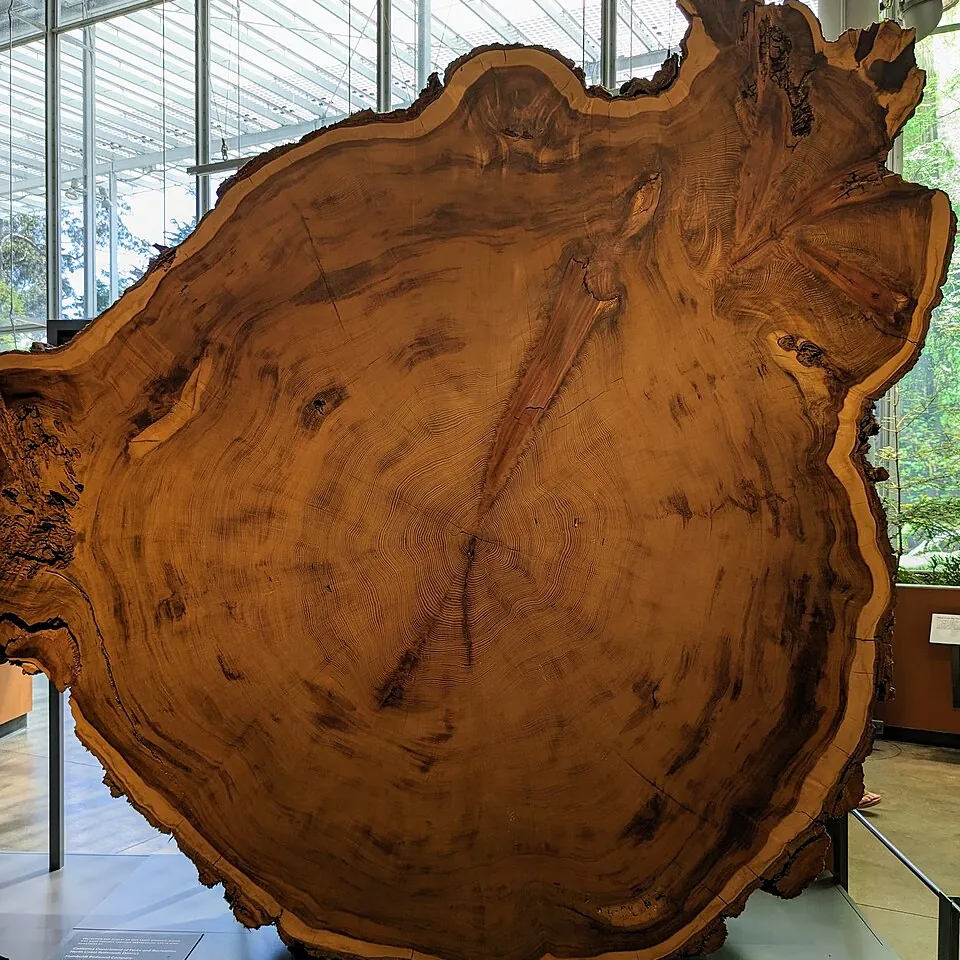
Woody plants also grow wider. A thin ring of dividing cells just under the bark adds a new layer of xylem (wood) on the inside every year. In a wet year with plenty of growth, the new layer is thick; in a drought it's thin. These layers are the growth rings you see in a cut stump.
- In "Watch it grow", drag the year from 1960 to 2025. Does the carved heart move up as the tree gets taller? Why not?
- Switch to "Read the rings". Find the narrowest ring. Tap it: which year was it, and what happened that year?
- Find the dark scar near the bark. What caused it, and how did the tree survive?
- Scientists use rings in very old trees to find droughts from hundreds of years ago. How could they check that a ring really matches a particular year?
Responding to the environment
Plants can't walk towards light or water, but they can grow towards them. A growth response to a direction is called a tropism.
- Phototropism: shoots grow towards light. A plant hormone called auxin collects on the shaded side of the stem and makes those cells stretch more, so the stem bends towards the light. That's why houseplants lean towards a window.
- Gravitropism (geotropism): roots grow down with gravity and shoots grow up against it, so a seed knows which way to grow no matter how it lands.
- Thigmotropism: a response to touch, such as a pea tendril curling around a stick.
Plants also respond to seasons. Lengthening days in spring trigger cell division for new leaves and flower buds, and many Australian plants respond to smoke or heat by germinating after a fire.
Repair and galls
When a branch breaks or bark is scraped off, cells around the wound divide to seal it over, a bit like a scab. After a bushfire, epicormic buds under the bark and lignotubers at the base of many eucalypts burst into growth, rebuilding the canopy from dormant cells (you saw these in Chapter 1).
Sometimes cell division is triggered by an attacker. Some wasps, insects, fungi and bacteria cause plant cells to divide out of control, forming lumps called galls. A gall walls off the intruder, though in many cases it also gives the insect larva a safe home to grow in.
Vegetative reproduction
Because mitosis makes identical cells, a piece of a plant can grow into a whole new plant that's a clone of its parent. This kind of asexual reproduction in plants is called vegetative reproduction. No flowers or seeds are involved.
| Structure | What it is | Examples |
|---|---|---|
| Runners (stolons) | Stems that grow along the ground and put down new plantlets | Strawberry, couch grass |
| Rhizomes | Underground stems that send up new shoots | Ginger, bamboo, many grasses |
| Tubers | Swollen underground stems with buds ("eyes") | Potato |
| Bulbs | Short stems wrapped in fleshy leaves; split into new bulbs | Onion, garlic, tulip |
| Corms | Swollen stem bases that can be divided | Gladiolus, taro |
| Suckers | Shoots that grow up from roots | Many wattles, blackberry |
| Plantlets | Tiny plants on leaves or stems that drop off | Mother of millions (a pest weed) |
Vegetative reproduction is fast and needs no partner or pollinator. That's why weeds like blackberry and mother of millions spread so aggressively. The downside is that every plant is identical, so a disease or a change in the environment that harms one will harm them all.
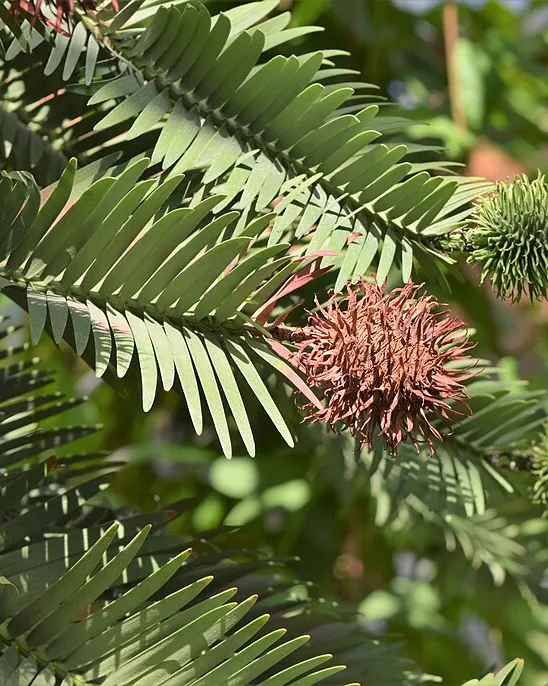
Australia's Wollemi pine shows the risk of relying on cloning. Fewer than 100 adult trees survive in the wild, in one hidden gorge in the Blue Mountains, discovered by a national parks officer exploring a canyon in 1994. They often reproduce by sprouting new trunks from their base, and the wild trees are almost genetically identical, so a single disease could kill them all. During the 2019–20 bushfires, firefighters were flown in to set up sprinklers and save them.
Cloning plants on purpose
People have been cloning plants for thousands of years to keep the good ones exactly as they are:
- Cuttings: a piece of stem is planted in moist soil or water and grows roots.
- Grafting and budding: a shoot or bud of a good variety is joined onto the roots (rootstock) of a hardy plant. Almost every apple, orange and avocado tree is grafted. One tree can even carry several varieties.
- Layering: a branch is bent to the ground or wrapped in moist moss until it grows roots, then cut free.
- Tissue culture: a few cells are grown on sterile jelly with nutrients and hormones, producing thousands of identical plantlets. It's used to multiply rare plants, including the Wollemi pine, a "living fossil" found in 1994 with fewer than 100 trees left in the wild.
Test yourself
Mitosis produces
Each daughter cell gets a full, identical copy of the DNA.
Where does a root get longer?
Cells divide in the meristem and then stretch in the zone of elongation.
A narrow growth ring most likely shows
Less water means less photosynthesis and a thinner layer of new wood.
A houseplant bends towards a window. This is called
"Photo" means light. Auxin makes the shaded side grow faster.
A potato is an example of a
It's a swollen underground stem with buds called eyes.
What is the biggest disadvantage of growing a crop entirely from clones?
No genetic variation means no plants with natural resistance.
Label the zones of the root tip.
Put the stages of mitosis in order.
Natural or done by people?
Plants grow by cell division called , which happens in clusters of cells called at the tips of roots and shoots. New cells then become for particular jobs. Woody plants add a layer of each year, forming growth . Shoots bend towards light because the hormone makes the shaded side grow faster.
Someone carves their initials into a gum tree 1.5 m above the ground. Explain where the initials will be in 30 years, and why.
The initials will still be about 1.5 m above the ground. A tree only gets taller at the tips of its branches, where cells in the apical meristems divide by mitosis. The part of the trunk that was carved is already formed, so it doesn't move upwards. However, the trunk does grow wider each year as a new ring of wood is added just under the bark, so the carving will slowly stretch sideways, and bark may grow over its edges.