 Coaching Centre
Chemistry in nature
Photosynthesis and respiration as chemical reactions, the test for starch and for carbon dioxide, chemical weathering by oxidation and acids, limestone caves, acid rain, the pH scale and acid sulfate soils.
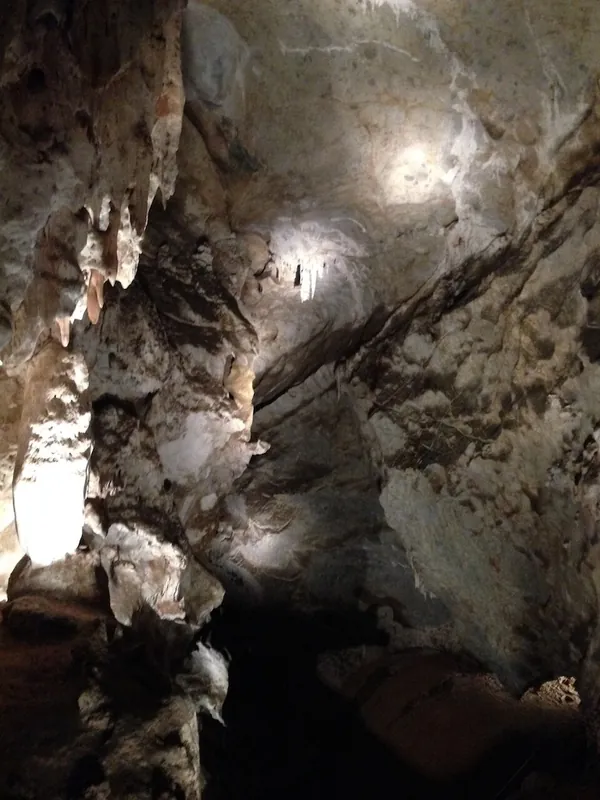
The Jenolan Caves in the Blue Mountains were carved out of solid limestone by rainwater. Not by force: by chemistry. Rain is very slightly acidic, and over hundreds of thousands of years it dissolved tunnels and caverns through the rock.
Photosynthesis
Photosynthesis is the chemical reaction plants, algae and some bacteria use to make their own food. It happens inside chloroplasts, which contain the green pigment chlorophyll. Chlorophyll absorbs red and blue light and reflects green, which is why leaves look green.
carbon dioxide + water → glucose + oxygen 6CO2 + 6H2O → C6H12O6 + 6O2
Light energy and chlorophyll are needed, but they are not reactants: light supplies the energy, and the chlorophyll isn't used up. Photosynthesis is endothermic: energy from sunlight is stored as chemical energy in glucose. Plants turn much of the glucose into starch to store it, so testing a leaf for starch tells you whether it has been photosynthesising.
Respiration
Cellular respiration is the reaction that releases energy from food in every living cell, in plants as well as animals. It happens in mitochondria:
glucose + oxygen → carbon dioxide + water C6H12O6 + 6O2 → 6CO2 + 6H2O
Respiration is exothermic; the energy released powers your muscles, nerves and growth, and keeps you warm. Its overall equation is the reverse of photosynthesis, but in cells both are long chains of many smaller reactions controlled by enzymes.
Don't confuse respiration with breathing. Breathing is the physical process of moving air in and out of your lungs. It delivers the oxygen your cells need for respiration and removes the carbon dioxide it makes. You can show that exhaled air contains extra carbon dioxide by gently blowing through a straw into limewater: it turns milky.
Chemical weathering
Weathering is the breakdown of rock where it sits. Mechanical (physical) weathering breaks rock into smaller pieces without changing what it's made of, for example when water freezes and expands in cracks, or tree roots push rocks apart. Chemical weathering changes the minerals in the rock into new substances. The two main kinds are:
- Oxidation. Iron-bearing minerals react with oxygen and water to make iron oxides, much like rust. The new minerals are weaker, so the rock crumbles, and they colour it red, orange or yellow. Much of Australia's red soil and the red rock of Uluṟu get their colour this way.
- Acids. Rainwater dissolves a little carbon dioxide from the air, making a weak acid called carbonic acid. Normal rain has a pH of about 5.6. Carbonic acid reacts with calcium carbonate, the main mineral in limestone and marble, turning it into a substance that dissolves and washes away. This is how limestone caves form. When the dissolved mineral later comes out of solution as water drips from a cave roof, it slowly builds stalactites and stalagmites.
Acid rain and the pH scale
The pH scale measures how acidic or basic a solution is. Pure water is neutral, pH 7. Lower numbers are acidic (lemon juice is about pH 2); higher numbers are basic (baking soda solution is about pH 8–9).
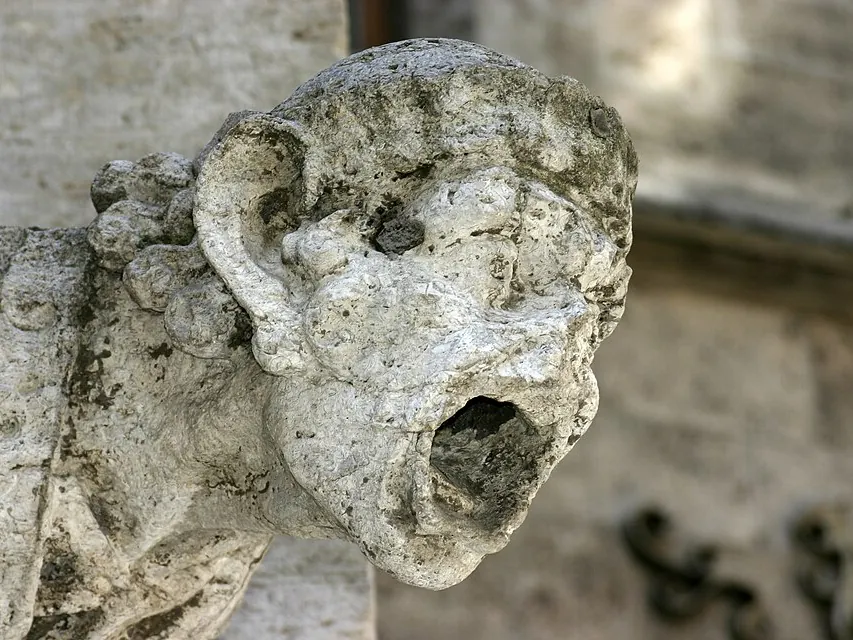
Burning coal and oil releases sulfur dioxide and nitrogen oxides, which dissolve in clouds to form sulfuric acid and nitric acid. Rain with a pH below about 5 is called acid rain. It speeds up the weathering of limestone and marble buildings and statues, damages forests and makes lakes too acidic for fish:
calcium carbonate + nitric acid → calcium nitrate + water + carbon dioxide
Since the 1970s, laws limiting sulfur in fuels and requiring power stations to clean their exhaust have greatly reduced acid rain in Europe and North America. Australia has relatively little acid rain, partly because most Australian coal is low in sulfur.
- Add acid to each rock. Which ones fizz? What do they have in common?
- Switch to the statue. Compare 100 years of normal rain (pH 5.6) with acid rain (pH 4.2).
- Why are gravestones in old cemeteries often harder to read if they're marble rather than granite?
Test yourself
The reactants of photosynthesis are
Light provides energy but isn't a reactant.
Cellular respiration takes place in the
Every living cell has mitochondria.
Iodine solution turns blue-black on a leaf. This shows the leaf contains
It is the standard starch test.
Which rock fizzes when dilute acid is dropped on it?
Marble is calcium carbonate, which reacts with acid to make CO₂.
Normal rain is slightly acidic because
pH about 5.6 even in clean air.
The red colour of many Australian rocks and soils comes from
A kind of natural rusting.
Label the two processes.
Which process?
The green pigment that absorbs light is . Respiration releases from glucose. Rock breaking down where it sits is called . Limestone and marble are made of calcium . Rain with a pH below about 5 is called acid .
Compare photosynthesis and respiration. Include the word equations, where each happens, whether each is exothermic or endothermic, and which organisms carry out each one.
Photosynthesis: carbon dioxide + water → glucose + oxygen. Respiration: glucose + oxygen → carbon dioxide + water. The overall equations are the reverse of each other: the products of one are the reactants of the other.
Photosynthesis happens in chloroplasts, which contain chlorophyll. It is endothermic: it absorbs light energy and stores it as chemical energy in glucose. Only plants, algae and some bacteria can photosynthesise.
Respiration happens in the mitochondria of every living cell. It is exothermic: it releases the energy stored in glucose for the cell to use. All living things respire, including plants, which respire day and night while photosynthesising only in the light.