 Coaching Centre
Ecosystems and the biosphere
The biosphere and the Earth's four spheres, what an ecosystem is, biotic and abiotic factors, habitats, populations and communities, and the things ecosystems do for people, from clean water to pollination.
In 1991, eight people sealed themselves inside Biosphere 2, a giant glass building in the Arizona desert, to see if they could live in a home-made ecosystem for two years. Within months the oxygen started to fall. The soil was so rich in compost that its microbes were using up the air faster than the plants could replace it. They had to pump oxygen in from outside. It turns out that keeping an ecosystem in balance is much harder than it looks.
The biosphere
Earth can be thought of as four overlapping spheres:
- the atmosphere: the air
- the hydrosphere: all the water, in oceans, rivers, ice and clouds
- the lithosphere: the rocks and soil of the crust
- the biosphere: every living thing, and every place where life is found
The biosphere is where the other three meet. It reaches from birds and insects drifting kilometres up in the air to bacteria living in rock more than a kilometre underground and around vents on the deep ocean floor. Living things keep linking the spheres together: plants pull water out of the soil and breathe it into the air, and shellfish lock carbon from the ocean into their shells, which eventually become limestone.
The biosphere is far too big to study all at once, so ecologists break it into smaller units called ecosystems.
What is an ecosystem?
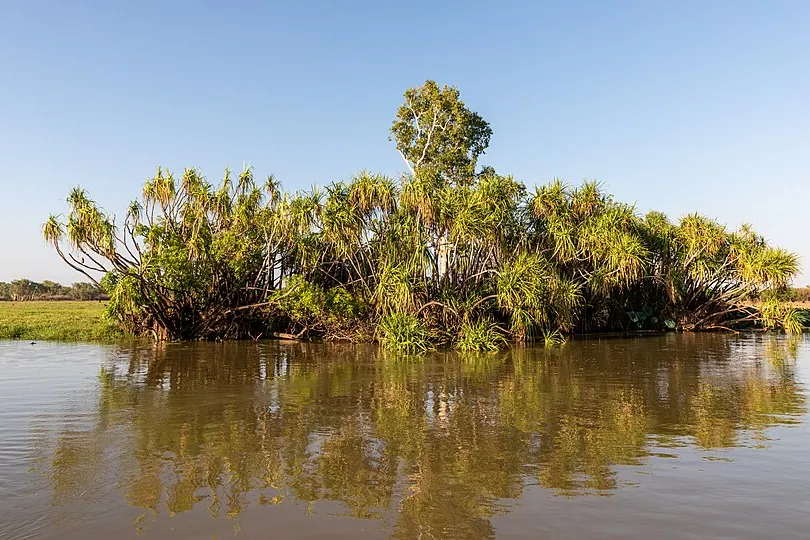
An ecosystem is all the living things in an area, the non-living conditions around them, and all the ways they affect each other. A Kakadu wetland, a rock pool at Bondi, a rotting log and the inside of a cow's stomach are all ecosystems. Size doesn't matter. What matters is that it's a set of living things interacting with each other and with their surroundings.
The parts of an ecosystem are sorted into two kinds of factors:
- Biotic factors are the living parts and the things living things do: plants, animals, fungi and microbes, and interactions such as eating, competing for space, pollinating and spreading disease.
- Abiotic factors are the non-living conditions: sunlight, temperature, water, rainfall, wind, soil type, oxygen levels, salt levels and pH (how acidic something is).
The two affect each other all the time. Rainfall decides what plants can grow. In turn, plants shade the ground, keep the soil cooler and moister, and stop it washing away.
- Tap everything in the picture. Which things are biotic and which are abiotic?
- Why might mud be a tricky one to classify?
- Switch between Population, Community and Ecosystem. What gets added at each step?
- Pick one abiotic factor and predict what would happen to two living things if it changed a lot.
Habitats, populations and communities
Ecologists use a set of words for different levels of life, from one living thing up to the whole planet:
- An organism is one individual living thing.
- A population is all the members of one species living in the same area, such as all the barramundi in one billabong.
- A community is all the populations of different species living together in that area.
- An ecosystem is the community plus its abiotic surroundings.
The place where an organism lives is its habitat. A good habitat supplies everything a population needs: food, water, shelter, a suitable temperature and pH, minerals, and places to breed. If a habitat stops meeting those needs, the population has to move or it dies out. That's why a drought or a new dam can wipe out a frog population that has lived in the same creek for thousands of years.
What ecosystems do for us
People are part of ecosystems too, and we depend on them completely. Healthy ecosystems give us, for free, things that would cost a fortune to replace:
- Oxygen. Plants and algae release oxygen in photosynthesis. Animals (including us) and most other organisms use it in respiration and give back carbon dioxide.
- Clean water. Roots slow down flowing water and trap mud and some pollution. Filter feeders such as oysters, mussels and sea anemones strain tiny particles out of the water as they feed. One oyster can filter more than 100 litres a day.
- Pollination. Bees, other insects, birds and bats carry pollen from flower to flower so plants can make seeds. Around three-quarters of the world's main food crops depend at least partly on animal pollinators.
- Food, timber, fibres and medicines, and healthy soil to grow them in.
Test yourself
Which of these is an abiotic factor?
Salt level is a non-living condition. The other three are living things or interactions between living things.
All the grey kangaroos living in one national park are a
One species in one area is a population.
The biosphere is best described as
The biosphere includes every ecosystem on the planet.
Which pair shows a biotic factor affecting an abiotic factor?
The trees (living) are changing the soil (non-living). In the other three the abiotic factor affects the living thing.
A habitat no longer provides enough water for a population of frogs. The most likely result is that the frogs
When a habitat stops meeting a population's needs, the population must move or it dies out.
Name each level of ecology.
Biotic or abiotic?
All the members of one species in an area form a . All the different species living together form a . The community plus its non-living, or , surroundings is an . The place where an organism lives is its .
Imagine all the bee species in an area of farmland disappeared. Predict and explain two effects this would have on the ecosystem and one effect on people.
Without bees, many flowering plants would not be pollinated, so they would produce fewer seeds and the next generation of those plants would shrink. Animals that rely on those plants for fruit, seeds or nectar would then have less food, and birds and other animals that eat bees would lose a food source, so their populations would fall too. For people, crops that need pollinating, such as almonds, apples and pumpkins, would produce much less food, making it scarcer and more expensive.