 Coaching Centre
Fossils
What fossils are, the conditions under which they form, kinds of fossils (body, mould and cast, trace, amber, petrified), how palaeontologists study them, and famous Australian fossil sites.
In the Kimberley region of Western Australia, palaeontologists found a 380-million-year-old fish fossil with a tiny embryo still attached to its mother by an umbilical cord. Named Materpiscis ("mother fish"), it is the oldest known example of an animal giving birth to live young.
What is a fossil?
A fossil is the preserved remains or traces of a living thing from the distant past, usually more than 10 000 years old. Scientists who study fossils are called palaeontologists. Fossils are our main evidence of what lived on Earth before humans, how living things have changed over time, and what past environments were like.
Kinds of fossil
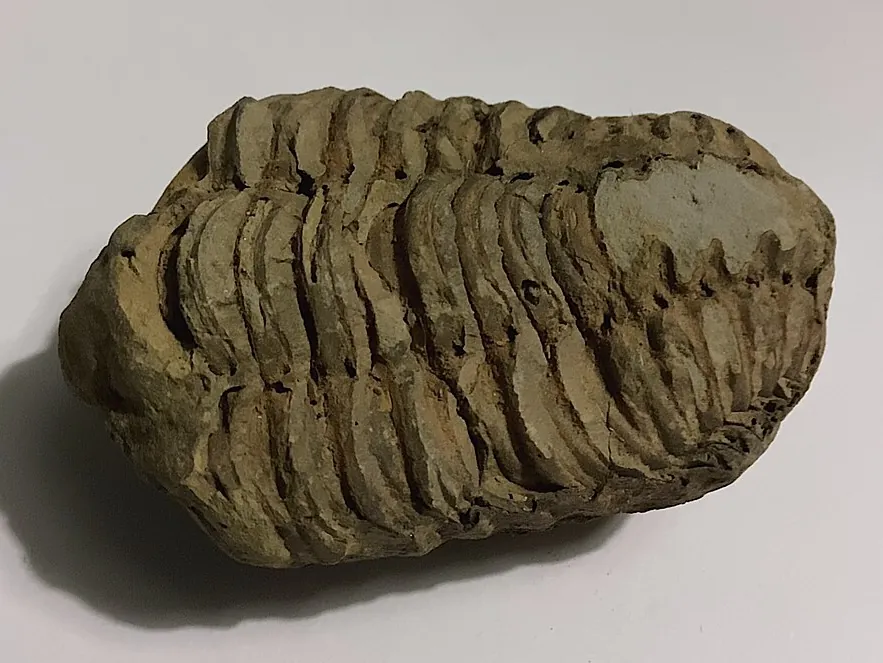
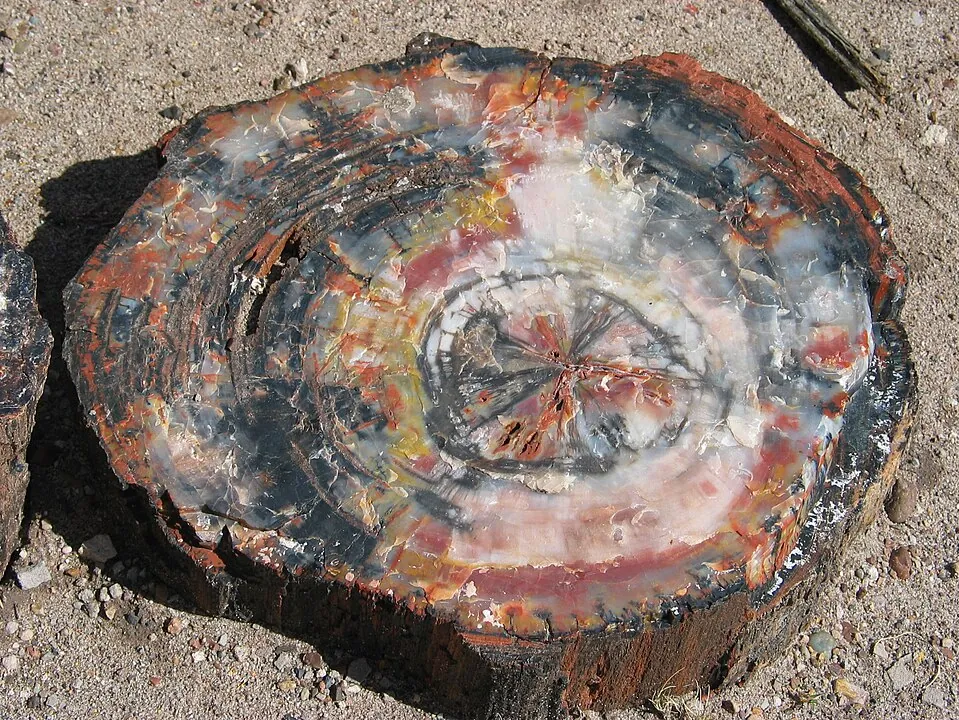
- Body fossils are parts of the organism itself, usually hard parts such as bones, teeth, shells and wood. Often, groundwater carrying dissolved minerals soaks into the buried remains, filling the tiny spaces or slowly replacing the original material, making a stone copy. Wood turned to stone like this is petrified wood. At Lightning Ridge in NSW, some bones and shells have been replaced by opal.
- Moulds and casts. If a buried shell dissolves away, it leaves a hollow mould in the rock. If the mould later fills with minerals or sediment, it forms a cast with the shell's shape.
- Trace fossils are signs of an organism's activity rather than its body: footprints, burrows, bite marks, nests and fossilised droppings (coprolites). They show behaviour, such as how fast a dinosaur walked or whether animals moved in groups.
- Imprints and carbon films: soft leaves, feathers or bodies pressed into fine mud can leave a thin outline or a black film of carbon.
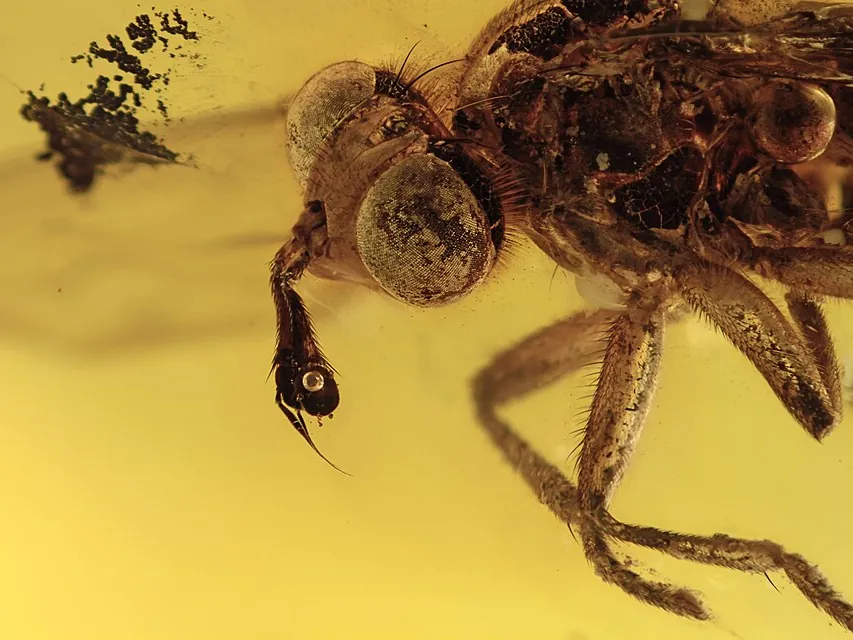
- Whole organisms are rare, but insects and spiders have been trapped in sticky tree resin that hardened into amber, and woolly mammoths have been found frozen in the permafrost of Siberia with skin, hair and stomach contents.
How fossils form
Most living things never become fossils. When an organism dies, scavengers eat it, bacteria and fungi decompose it, and weathering breaks down what's left. For a fossil to form, the remains need to escape all three. The best conditions are:
- Hard parts such as bones, teeth, shells or wood, which decay slowly.
- Rapid burial by fine sediment such as mud, silt, sand or volcanic ash, which hides the remains from scavengers and cuts off the oxygen that decomposers need.
- Water carrying dissolved minerals, which can fill and replace the remains.
- Undisturbed rock for millions of years: not melted, strongly metamorphosed or eroded away.
This is why most fossils are of animals that lived in the sea or in lakes and rivers, where sediment is always settling, and why fossils are found almost only in sedimentary rocks. Igneous rocks form from molten rock that would destroy any remains, and metamorphism usually destroys fossils too.
- Compare a clam and a jellyfish on the sea floor. Why is the difference so big?
- Put a dinosaur on a dry plain. What kind of fossil is most likely, if any?
- Try an insect in a forest with sticky resin. How does it get preserved?
- Run 1000 times with and without quick burial. What does this tell you about the fossil record?
From bones to animals
Fossils are usually found when weathering and erosion expose them, or when quarries, mines or road cuttings break open rock. Palaeontologists record exactly where each piece is found and which rock layer it came from, then dig it out carefully, often wrapping it in a plaster jacket to protect it. In the lab, technicians remove the rock grain by grain with tiny drills, needles and even weak acids.
Complete skeletons are rare, so palaeontologists compare bones with those of related living and extinct animals to fill gaps. Scientists also use CT scanners to see inside fossils without damaging them, measure the chemistry of teeth to find out what animals ate, and compare growth rings in bones to estimate age. A fossil's surrounding rock tells a story too: ripple marks, mud cracks and other fossils reveal what the environment was like.
Australian fossil treasures
- Pilbara, WA: stromatolites about 3.5 billion years old, among the oldest evidence of life on Earth. Stromatolites are mounds built by layers of microbes, and living ones still grow at Shark Bay.
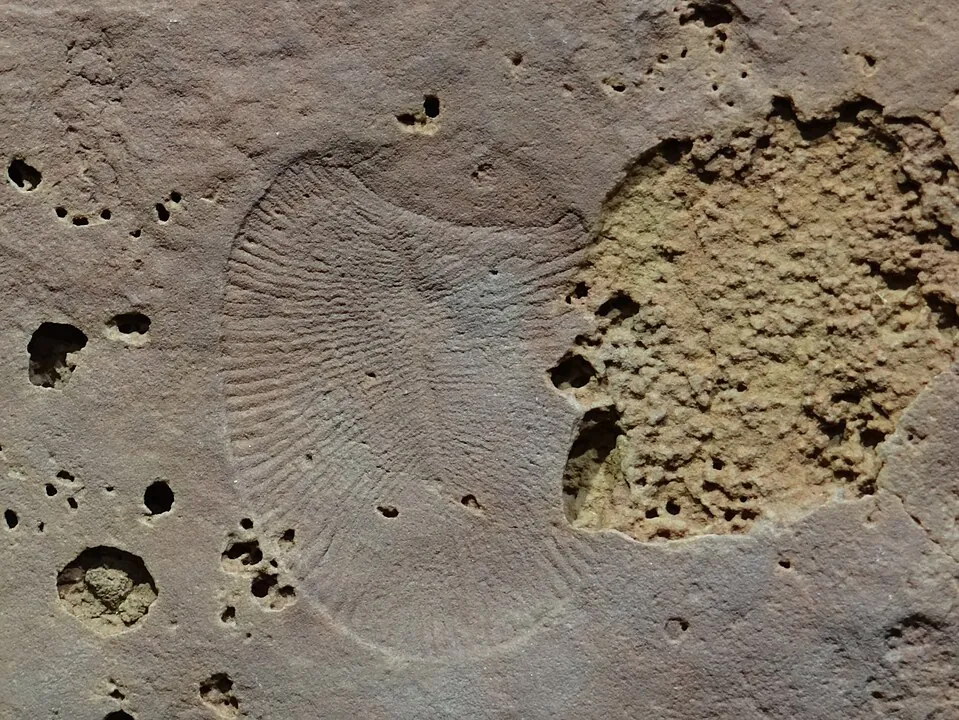
- Ediacara Hills, SA: imprints of soft-bodied animals about 550 million years old, among the earliest complex animals. In 2004 a new period of geological time, the Ediacaran, was named after this site: the first new period added in more than 120 years.
- Canowindra, NSW: thousands of fish from the Devonian period, about 360 million years ago, fossilised together when their pool dried up.
- Gogo, WA: beautifully preserved 380-million-year-old fish, including Materpiscis.
- Riversleigh, Qld (Waanyi Country) and Naracoorte Caves, SA: World Heritage sites full of fossil mammals, including ancient platypuses, marsupial lions and giant wombat relatives, the megafauna.
- Winton, Qld: dinosaurs such as Australovenator and the giant sauropod Australotitan, and the Lark Quarry trackways, with more than 3000 small dinosaur footprints.
Test yourself
Which is a trace fossil?
It records activity, not the body.
Which condition most helps a fossil form?
It protects the remains from decay and scavengers.
Fossils are rarely found in igneous rocks because
They form from magma or lava.
A hollow in rock with the shape of a shell that has dissolved is a
If it later fills with minerals, it forms a cast.
Why are sea creatures with shells the most common fossils?
Both key conditions are met.
Stromatolites in the Pilbara are important because they
About 3.5 billion years old.
Label the steps in fossil formation.
Put the steps in order, from death to discovery.
Body or trace fossil?
Scientists who study fossils are called . Wood that has turned to stone is called wood. Tree resin that has hardened is . Fossilised droppings are called . Fossils are found almost only in rocks.
Explain why the fossil record contains many more marine shellfish than jellyfish, worms or land animals.
To become a fossil, remains must avoid scavengers, decomposers and weathering. Shellfish have hard shells made of minerals, which decay very slowly, while jellyfish and worms are soft and are broken down by bacteria within days unless conditions are exceptional.
Fossils also need rapid burial in fine sediment, which hides the remains and cuts off oxygen. On sea and lake floors, sediment settles all the time, so dead shellfish are quickly buried. Most land animals die where little sediment is being deposited, so their bodies are eaten, scattered and weathered away before they can be buried.
Shellfish meet both conditions far more often than soft-bodied or land animals, so they are much more common in the fossil record. This means the fossil record is biased and incomplete: it shows only a small, uneven sample of past life.