 Coaching Centre
Uses of radiation
How radioisotopes are used in nuclear medicine, radiotherapy, industry and research, how nuclear power stations work, the benefits and risks of nuclear energy, and how radiation is kept safe.
About 30 km south-west of Sydney's CBD, at Lucas Heights, a small research reactor called OPAL runs almost around the clock. Its main job isn't making electricity. It makes radioisotopes for scans and cancer treatments used by hospitals across Australia and overseas.
Choosing the right radioisotope
Radiation is dangerous, but the same properties that make it dangerous make it useful. Choosing an isotope for a job comes down to three questions:
- What must the radiation get through? To reach a detector outside the body, it needs to be gamma. To act only on nearby cells, alpha or beta is better.
- How long is it needed for? A medical tracer should have a short half-life (hours), so the patient isn't radioactive for long. A smoke alarm source must last for years.
- Where will it go? Some elements are taken up by particular organs: iodine collects in the thyroid gland, and phosphate-containing compounds collect in bone.
Radiation in medicine
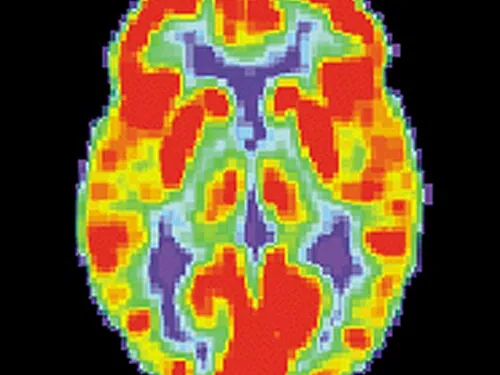
Nuclear medicine imaging. A small amount of a gamma-emitting radioisotope is attached to a chemical that travels to the organ being studied, then injected or swallowed. A gamma camera outside the body detects where the radiation comes from and builds an image showing how well the organ is working, not just its shape. The most widely used isotope is technetium-99m (half-life 6 hours). It is used in tens of millions of scans a year around the world, for bones, heart, lungs and kidneys. ANSTO says about one in two Australians will need nuclear medicine at some point in their lives.
PET scans use isotopes such as fluorine-18 attached to a glucose-like molecule. Cancer cells use a lot of glucose, so they "light up" on the scan. Fluorine-18's half-life is under two hours, so it must be made in a cyclotron near the hospital and used quickly.
Radiotherapy uses radiation to kill cancer cells. It can come from outside the body (beams of high-energy X-rays from a machine, aimed at the tumour from many directions so healthy tissue gets less) or from inside: brachytherapy places small radioactive seeds in or next to a tumour, and iodine-131 is swallowed to treat thyroid cancer because the thyroid absorbs it. Newer treatments attach alpha or beta emitters to molecules that seek out particular cancer cells; one of these, using lutetium-177, was developed with major Australian research input and is now used for some prostate cancers.
Sterilising. Gamma rays from cobalt-60 kill bacteria on syringes, bandages and implants after they are sealed in their packets, without heating them. Some foods and spices are treated the same way to kill pests and microbes. The items do not become radioactive.
Radiation in industry and research
- Smoke alarms contain a tiny amount of americium-241. Its alpha particles ionise air in a small chamber so a current flows. Smoke absorbs the alpha particles, the current drops, and the alarm sounds.
- Thickness gauges: a beta source on one side of a sheet of paper, plastic or aluminium foil and a detector on the other. If the sheet gets thicker, the count drops and the machine adjusts the rollers.
- Tracers can find leaks in buried pipes, track how sediment moves in harbours, or follow how fertiliser is taken up by crops.
- Gamma radiography checks welds in pipelines and aircraft parts for hidden cracks.
- Neutron beams from the OPAL reactor are used to study materials, from batteries to aircraft alloys. ANSTO scientists have also used a nuclear technique called neutron activation analysis to identify the elements in ochre used in Aboriginal artworks and artefacts, which helps show where the ochre was sourced and how it was traded across Country.
- For each job, think about the type of radiation and the half-life before you choose.
- Why is technetium-99m better for scans than iodine-131?
- Why would cobalt-60 be useless in a smoke alarm?
Nuclear power
Some heavy nuclei, such as uranium-235, can be split when they absorb a neutron. This nuclear fission releases a huge amount of energy and two or three more neutrons, which can split more nuclei in a chain reaction. Splitting all the nuclei in one kilogram of uranium-235 releases about as much energy as burning nearly 3000 tonnes of coal.
In a reactor, control rods made of materials that absorb neutrons are lowered or raised to keep the chain reaction steady. The heat turns water into steam, which drives a turbine and generator. In 2023 nuclear power supplied about 9% of the world's electricity; France gets about two-thirds of its electricity from it.
| Benefits | Problems and risks |
|---|---|
| Very little greenhouse gas while running | Radioactive waste stays dangerous for thousands of years and must be stored securely |
| Reliable output day and night, in any weather | Rare but serious accidents: Chernobyl (1986) and Fukushima (2011) forced tens of thousands of people from their homes |
| Uses very little fuel and land for the energy produced | Very expensive and slow to build |
| Australia has large uranium resources | Uranium mining affects land and communities; nuclear materials must be kept from weapons programs |
Australia has no nuclear power stations. Federal laws passed in 1998 and 1999 ban them, and whether Australia should build any remains a political debate. Meanwhile, CSIRO estimates that solar and wind (with storage to cover calm nights) are the cheapest new sources of electricity in Australia, and renewables supplied around 40% of the electricity on Australia's main grid in 2024.
Using radiation safely
People who work with radiation use three simple rules: time (spend as little time near the source as possible), distance (radiation from a small source drops quickly with distance, so use tongs and keep back) and shielding (put the right absorber between you and the source: lead aprons, lead glass, concrete walls). Workers wear dosimeter badges, and radioactive sources are kept locked away and labelled with the radiation trefoil symbol.
Test yourself
Why is technetium-99m used for medical imaging?
Gamma escapes the body; 6 hours means the dose soon fades.
A smoke alarm uses an alpha source because alpha particles
Smoke absorbs them, which drops the current.
In a nuclear reactor, control rods
Fewer neutrons means fewer fissions.
Which is NOT one of the three rules for working safely with radiation?
Temperature doesn't affect radiation.
Label the nuclear power station.
Sort the uses of radiation.
Splitting heavy nuclei to release energy is called nuclear . A tracer for a medical scan should give out rays. It should also have a half-life. Equipment is sterilised using gamma rays from . Australia's research reactor at Lucas Heights is called .
Evaluate the use of nuclear power to generate electricity. In your answer, describe how a nuclear power station produces electricity and weigh up its benefits and limitations.
In a nuclear power station, uranium-235 nuclei absorb neutrons and split (fission), releasing a lot of heat and more neutrons, which keep a chain reaction going. Control rods absorb neutrons to keep the reaction steady. The heat turns water into steam, which spins a turbine connected to a generator.
A major benefit is that nuclear power releases almost no carbon dioxide while operating, so it can cut greenhouse emissions compared with coal and gas. It also produces steady power day and night, needs little fuel and land, and Australia has large uranium resources. However, the spent fuel stays highly radioactive for thousands of years and there is still no permanent storage site in most countries. Although rare, accidents such as Chernobyl and Fukushima released radioactive material and forced tens of thousands of people to leave their homes. Nuclear stations are also very expensive and take more than a decade to build.
Overall, nuclear power is a useful low-carbon option for countries with limited renewable resources or that already have the industry, such as France. For Australia, where it is currently banned and where solar and wind are now cheaper and quicker to build, the high cost, long build times and waste problem make it a weaker choice than expanding renewables with storage, although it may still have a role to play in some situations.