 Coaching Centre
Matter cycles and the carbon cycle
Why matter cycles while energy flows through ecosystems, the stores and processes of the carbon cycle, how human activity is changing it, and what rising carbon dioxide means for climate and oceans.
Breathe out. Some of the carbon dioxide you just released may be taken up by a gum tree this afternoon, built into a leaf, eaten by a koala, and returned to the air in a few weeks. Other carbon atoms have been locked in coal for 250 million years. The carbon cycle runs at every speed from minutes to geological time.
Matter cycles, energy flows
An ecosystem is a community of living things (the biotic part) together with the non-living things around them (the abiotic part): air, water, soil, rock, light and temperature. Two very different things move through every ecosystem:
- Energy flows in one direction. It arrives as sunlight, is trapped by producers, passes along food chains, and is eventually lost as heat. It is never recycled, so ecosystems need a constant supply from the Sun.
- Matter cycles. Atoms are never created or destroyed in an ecosystem. Carbon, nitrogen, oxygen, water and phosphorus are passed between living things and the air, water and rocks, again and again. These are called biogeochemical cycles (bio life, geo Earth).
The carbon cycle
Carbon is the backbone of every molecule in living things: sugars, fats, proteins and DNA. It is stored in several places, called stores or sinks, and moves between them by a handful of processes.
- Photosynthesis takes carbon dioxide out of the air and builds it into glucose in plants, algae and some bacteria (3C).
- Feeding passes carbon compounds from plants to animals along food chains.
- Respiration by plants, animals and microbes breaks glucose down and returns carbon dioxide to the air (3D).
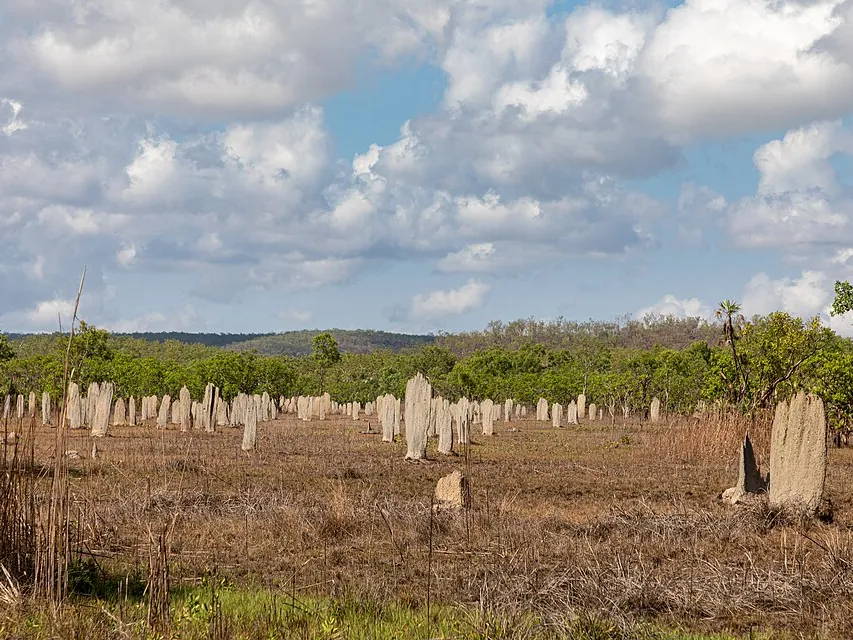
- Decomposition: when organisms die or produce waste, decomposers (bacteria and fungi) feed on it and respire, releasing carbon dioxide. In the dry savannas of northern Australia, where fungi struggle, termites do much of this job, recycling up to a fifth of the carbon there.
- Dissolving: the ocean absorbs carbon dioxide from the air and releases some back. The oceans hold roughly 40 to 50 times more carbon than the atmosphere.
- Fossilisation: over millions of years, buried remains can become coal, oil and natural gas, and shells and coral become limestone. This locks carbon away for a very long time.
- Combustion: burning wood or fossil fuels releases the stored carbon as carbon dioxide in seconds.
People are changing the cycle
For thousands of years before 1800, the air held about 280 parts per million (ppm) of carbon dioxide: 280 molecules in every million. Photosynthesis and respiration were roughly in balance. Since the Industrial Revolution, burning fossil fuels and clearing forests have moved carbon from long-term stores into the air far faster than oceans and plants can absorb it. By 2025 the level was about 425 ppm, higher than at any time in at least 800 000 years, according to air bubbles trapped in Antarctic ice.
Australia has one of the world's key measuring stations. The Cape Grim station on the north-west tip of Tasmania samples air that has crossed thousands of kilometres of Southern Ocean, so it measures the "background" atmosphere. Its record since 1976 shows carbon dioxide rising every single year.
The extra carbon dioxide traps more heat, an enhanced greenhouse effect, which is warming the planet. About a quarter of the extra carbon dioxide dissolves in the oceans, where it forms carbonic acid. Seawater has already become about 30% more acidic since 1800, which makes it harder for corals, shellfish and plankton to build their shells and skeletons.
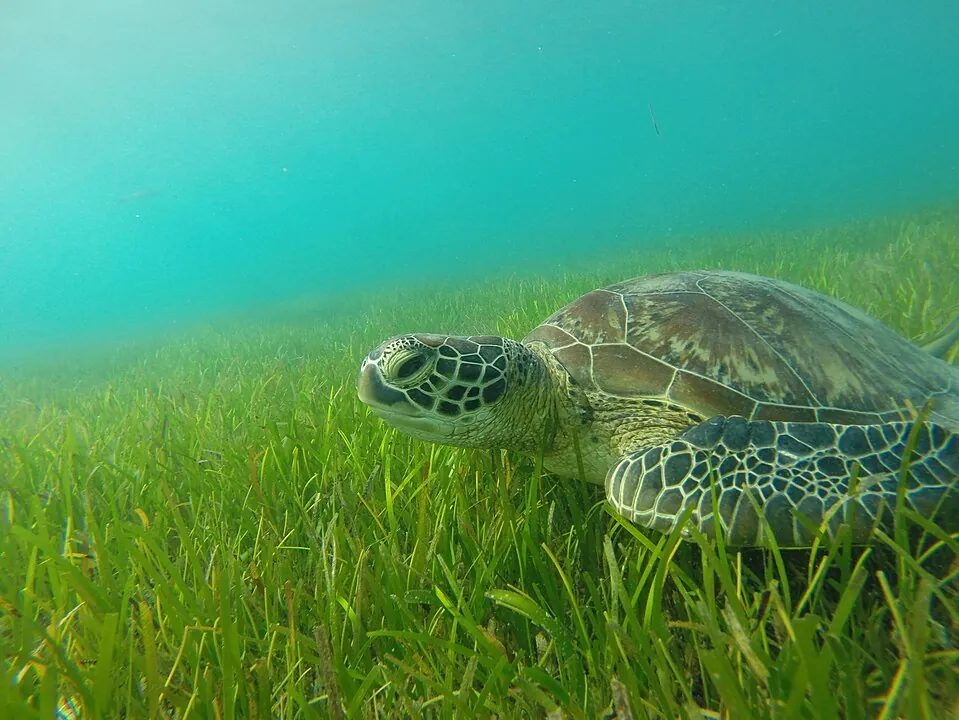
Ecosystems can also store carbon. Australia's mangroves, saltmarshes and seagrass meadows lock away carbon in their muddy sediments far faster than most forests, which is why scientists call it blue carbon and why protecting these coastal ecosystems matters.
- Press "Keep going as today". Roughly what level does CO₂ reach by 2100? When does it pass double the pre-industrial level?
- Set fossil fuels to zero but leave forest clearing at 100%. Is clearing on its own a big source?
- Try "Net zero by 2050". Why doesn't CO₂ drop straight back to 280 ppm?
- How much tree planting does it take to cancel today's fossil fuel burning? What does that tell you?
Test yourself
Which process removes carbon dioxide from the atmosphere?
Photosynthesis uses CO₂ to make glucose. The others release CO₂.
The main difference between matter and energy in an ecosystem is that
Atoms are reused; energy leaves as heat and must be replaced by sunlight.
Before 1800 the air held about 280 ppm of CO₂. In 2025 it held about
About 425 ppm, roughly 50% more than before industrialisation.
Why are the oceans becoming more acidic?
Dissolved CO₂ reacts with water to form carbonic acid.
Name the processes in the carbon cycle.
Sort the processes.
Energy flows through an ecosystem and is eventually lost as . Carbon is returned to the air when decomposers break down dead matter and . Coal, oil and gas are fuels. Burning them is called . Carbon stored by coastal ecosystems such as mangroves is called carbon.
Explain how clearing a forest to create grazing land affects the carbon cycle. Refer to at least two processes.
A forest stores a large amount of carbon in its wood, leaves and soil. When it is cleared, the trees are often burned or left to rot. Combustion and decomposition both release that stored carbon as carbon dioxide. Once the trees are gone there is also much less photosynthesis, so less carbon dioxide is removed from the air each year; grass stores far less carbon than a forest. Grazing animals add more carbon dioxide through respiration. Overall, carbon moves from living things into the atmosphere, raising CO₂ levels and adding to the enhanced greenhouse effect.