 Coaching Centre
Infectious disease and pathogens
Infectious and non-infectious disease, the six main types of pathogen, how diseases spread, virulence and transmissibility, diseases of plants and animals including Phytophthora dieback and devil facial tumour disease, pandemics, biosecurity, and First Nations use of tea tree.
In 1984 a young Perth doctor named Barry Marshall drank a glass of broth swarming with bacteria. Nobody believed his claim that stomach ulcers were caused by an infection; everyone "knew" they came from stress and spicy food. Within days he was vomiting, and a sample from his stomach showed exactly the inflammation he predicted. He and pathologist Robin Warren won the 2005 Nobel Prize, and ulcers are now cured with antibiotics.
Infectious and non-infectious disease
A disease is any condition that stops part of an organism from working properly. Diseases fall into two big groups.
- Infectious diseases are caused by pathogens, organisms or particles that invade a host and harm it. They can be passed from one host to another. Examples are flu, COVID-19, tinea and malaria.
- Non-infectious diseases are not caused by pathogens and can't be caught. They include diseases caused by genes, lifestyle, diet and the environment, such as cystic fibrosis, type 2 diabetes, heart disease and most cancers (4J).
In Year 8 you learnt how Pasteur and Koch showed that microbes cause disease. Here we look more closely at the pathogens themselves.
Types of pathogen
| Pathogen | What it is | Size | Examples of disease | Treated with |
|---|---|---|---|---|
| Bacteria | Single cells with a cell wall but no nucleus; reproduce by splitting in two | about 1–5 µm | Salmonella food poisoning, tetanus, whooping cough, golden staph infections | Antibiotics |
| Viruses | Not cells: genetic material in a protein coat. Can only reproduce inside a host cell, which they hijack. | about 20–300 nm | Flu, COVID-19, measles, the common cold, Hendra | Some antiviral drugs; vaccines prevent many. Antibiotics don't work. |
| Fungi | Cells with a nucleus and cell wall; many grow as threads called hyphae | microscopic threads to large | Tinea (athlete's foot), thrush, ringworm | Antifungal creams and drugs |
| Protozoa | Single cells with a nucleus and no cell wall | about 10–100 µm | Malaria, giardia, amoebic dysentery | Specific drugs such as antimalarials |
| Macroparasites | Multicellular animals that live on or in a host | visible, mm to metres | Head lice, scabies mites, tapeworms, hookworms, ticks | Special lotions, worming tablets |
| Prions | Not alive: misfolded proteins that make normal proteins misfold too | single molecules | Creutzfeldt–Jakob disease (CJD) in humans; mad cow disease (BSE) in cattle | No treatment |
Most bacteria and fungi are harmless or helpful. Your gut alone holds trillions of bacteria that help digest food and crowd out pathogens. Only a small fraction cause disease.
- Read the symptoms, then choose tests. Which test tells a virus apart from a bacterium most quickly?
- Diagnose every patient. Which two pathogens can be seen without any microscope or can't be seen even with one?
- Why does "Add antibiotic" have no effect on the flu, tinea or malaria patients?
- One bacterial infection doesn't respond to the antibiotic. What does this tell you about the bacteria, and what does the doctor need to do?
How diseases spread
| Route | How | Examples |
|---|---|---|
| Air | Droplets and tiny aerosol particles from coughs, sneezes, talking and breathing | Flu, COVID-19, measles, tuberculosis |
| Direct contact | Touching an infected person, or sexual contact | Tinea, scabies, head lice |
| Contaminated surfaces | Touching objects, then your eyes, nose or mouth | Gastro viruses, colds |
| Food and water | Eating or drinking pathogens | Salmonella, cholera, giardia |
| Body fluids | Blood, shared needles, mother to baby | Hepatitis B, HIV |
| Vectors | An animal, usually an insect, carries the pathogen between hosts | Malaria and dengue (mosquitoes), Ross River virus |
| From animals | Diseases that jump from animals to people (zoonoses) | Hendra virus, Q fever, bird flu |
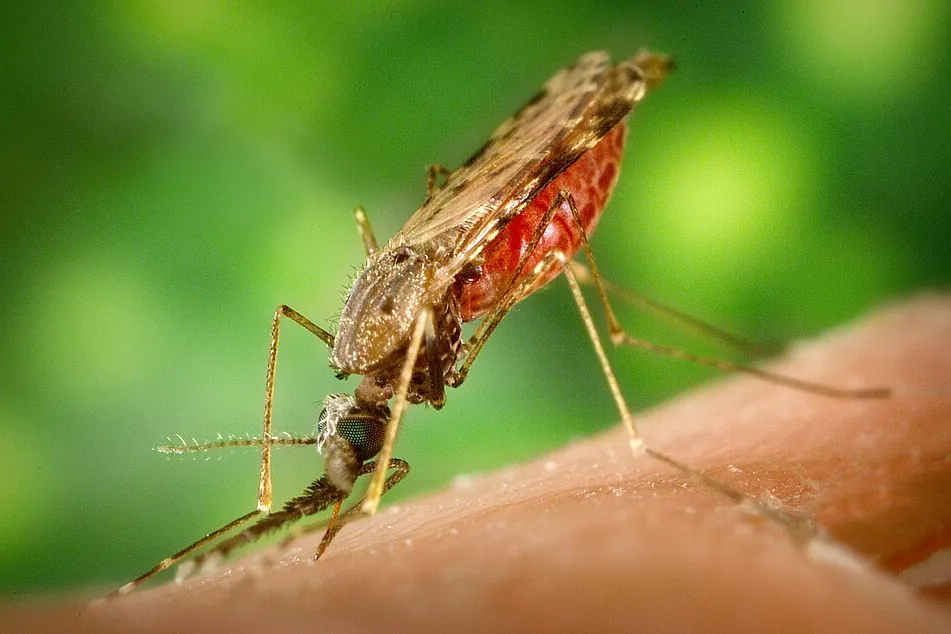
Two words describe how dangerous a disease is. Transmissibility is how easily it spreads from one host to another. Virulence is how much harm it does to an infected host, how severe it is. They don't always go together. The common cold spreads very easily but is rarely serious. Hendra virus is extremely virulent (four of the seven people known to have caught it died), but it hardly ever spreads.
Epidemics and pandemics
An epidemic is an outbreak affecting many people in one region; a pandemic spreads across many countries and continents. The 1918 influenza pandemic, often called Spanish flu, killed an estimated 50 million people worldwide, more than World War I. Australia held it off for months with strict quarantine of arriving ships, so it only arrived in 1919, by which time the virus may have become a little less deadly. It still killed around 15 000 Australians. A century later, COVID-19, caused by the virus SARS-CoV-2, spread from China to almost every country in a few months in 2020. Australia again used border closures, quarantine and lockdowns while vaccines were developed.
New diseases most often come from animals. Hendra virus was first identified in 1994 when it killed horses and their trainer in the Brisbane suburb of Hendra. Flying foxes carry it without getting sick; their urine and droppings infect horses, and horses can pass it to people. A vaccine for horses has been available since 2012. Highly pathogenic H5N1 bird flu has spread around the world since 2021, killing huge numbers of wild birds and even seals, and Australia's biosecurity agencies have been preparing for it to arrive.
Disease in plants and animals
Phytophthora dieback. Phytophthora cinnamomi is a microscopic water mould (often wrongly called a fungus) that lives in soil and attacks plant roots, so the plants die of thirst. It has killed large areas of jarrah forest and heathland in south-west Western Australia, and threatens banksias, grass trees and many rare species. It spreads in moving water and in mud on boots, bikes and car tyres, which is why bushwalking tracks in affected areas have boot-cleaning stations.
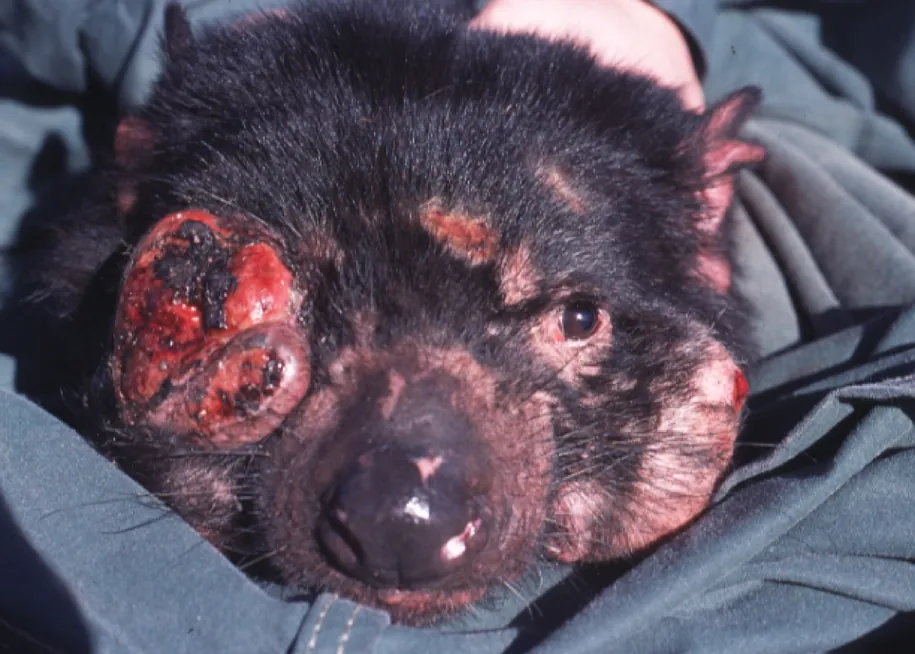
Devil facial tumour disease. This disease of Tasmanian devils is extremely unusual: it is a cancer that spreads like an infection. When devils bite each other's faces while fighting and mating, living tumour cells are transferred. The tumours grow until the devil can't eat, and it dies within months. Since it was first seen in 1996 it has spread across most of Tasmania, and the devil population has fallen by around 80%. Professor Katherine Belov and her team at the University of Sydney found one reason it spreads so easily: devils have very little genetic variety in the genes their immune system uses to recognise foreign cells, so a devil's immune system doesn't notice that the tumour cells came from another animal. Disease-free "insurance" populations are kept in zoos and on Maria Island, and some wild devils now appear to be evolving resistance.
Stopping the spread
- Hygiene: washing hands with soap, covering coughs, cooking food properly, safe drinking water.
- Isolation and quarantine: keeping infected or exposed people away from others.
- Controlling vectors: removing standing water where mosquitoes breed, using repellent and nets.
- Vaccination (4I).
- Biosecurity: Australia's strict checks at airports, seaports and mail centres stop pests and diseases arriving. Our island position has kept out many diseases that are common elsewhere, such as foot-and-mouth disease and rabies.
Tea tree: knowledge that science confirmed
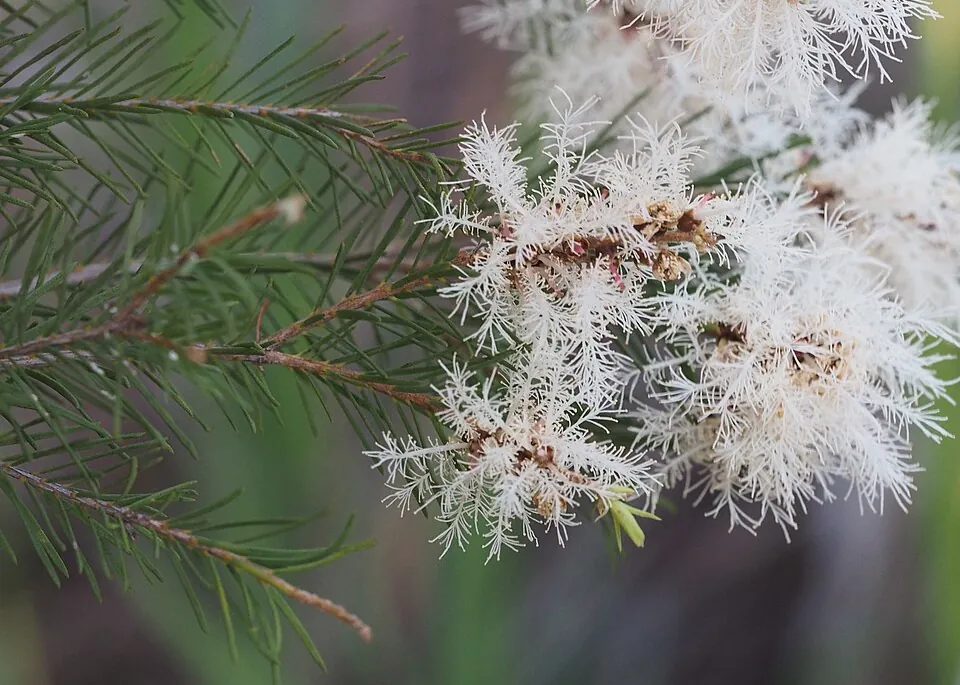
The Bundjalung people of northern New South Wales have used the leaves of the tea tree, Melaleuca alternifolia, for a very long time. Crushed leaves were inhaled to ease coughs and colds, and applied to cuts and skin infections, sometimes as a poultice. Laboratory studies have since found that tea tree oil contains a compound, terpinen-4-ol, that kills or slows the growth of many bacteria and fungi, including some that cause skin infections. Tea tree oil is now an Australian export. It is a reminder that First Nations knowledge, built from careful observation over many generations, can point scientists towards useful medicines, and that the people whose knowledge it is should be recognised and share in the benefits.
Test yourself
Which pathogen is not made of cells and can only reproduce inside a host cell?
Viruses are genetic material in a protein coat and hijack host cells.
Malaria is spread by
Mosquitoes carry the protozoan Plasmodium between people.
A disease that is very severe but rarely spreads has
Virulence is severity; transmissibility is spread.
Why does devil facial tumour disease spread so easily between devils?
The tumour cells pass in bites and are not rejected.
Name each type of pathogen.
What type of pathogen causes each disease?
A disease-causing organism is called a . An animal that carries a pathogen between hosts is a . A disease that spreads across many countries is a . Phytophthora is a water that kills plant roots. Australia's border checks that keep out pests and diseases are called .
A bushwalking club wants to walk through a national park in south-west Western Australia where Phytophthora dieback is present. Explain how the disease could be spread by the group, and recommend two precautions.
Phytophthora cinnamomi is a water mould that lives in soil and moves in water, attacking plant roots so the plants die. Walkers can pick up infected mud on their boots, poles and packs in one area and drop it in a healthy area further along the track, starting a new infection. The club should clean all mud off their boots and spray them with disinfectant at the cleaning stations before and after the walk, so no infected soil is carried. They should also stay on the marked tracks and avoid walking in wet weather, when mud sticks to boots and the mould spreads most easily in water.