 Coaching Centre
What changes populations
How populations grow and level off at the carrying capacity, boom-and-bust cycles such as mouse plagues, and how limiting resources, seasons, disease, drought and human activity change population sizes, with Australian case studies.
In 2020 the drought broke across inland NSW and southern Queensland. Farmers planted their biggest grain crops in years, and house mice moved in. By the autumn of 2021 the ground was moving with them: mice chewed through crops, hay, wiring and machinery and invaded homes, hospitals and shops. Then, within months, the plague collapsed. Both the boom and the bust are explained by one idea: carrying capacity.
How populations grow
A population changes in four ways: births and immigration (animals moving in) increase it, while deaths and emigration (moving out) decrease it.
change in population = (births + immigration) − (deaths + emigration)
When a few individuals arrive in a new area with plenty of resources, numbers grow slowly at first, because there are few parents. Then growth becomes rapid, because more individuals means more births. Eventually the population runs short of food, water, shelter or space, deaths rise and births fall, and numbers level off. The largest population an environment can support long-term is its carrying capacity. In real ecosystems, populations go up and down around it rather than sitting exactly on it.
Limiting factors
Anything that stops a population growing is a limiting factor.
- Biotic factors (from living things): food supply, predators, disease, parasites and competition.
- Abiotic factors (non-living): water, temperature, light, nesting sites, soil nutrients, and events such as drought, flood and fire.
Seasons also matter. Many Australian animals breed when food is most plentiful: the male brown antechinus is famous for mating so frantically in late winter that all the males die within weeks, leaving the females to raise young when insects are most abundant in spring.
Australian case studies
Disease: the Tasmanian devil
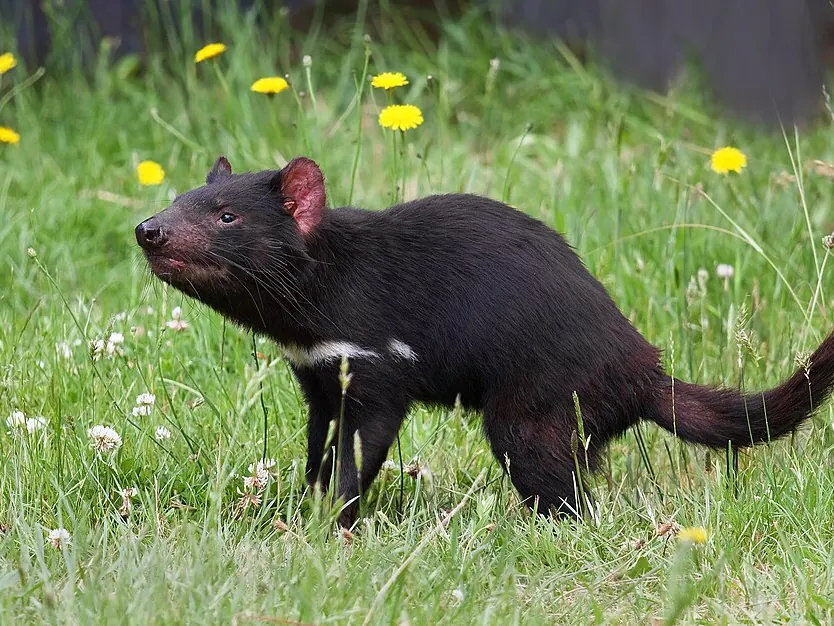
Devil facial tumour disease was first noticed in 1996. It is a rare cancer that spreads between devils when they bite each other's faces while feeding or mating. Devil numbers fell by about 80% in two decades. Scientists set up "insurance populations" on the mainland and on Maria Island, and some wild devils now show signs of evolving resistance.
Boom and bust: mouse plagues
House mice were introduced with European settlement and live in farmland across southern and eastern Australia. A female can breed from about six weeks old and can have a litter of six to eight young every three to four weeks. Usually their numbers are held down by limited food, cold, predators and disease. After a drought breaks, though, the carrying capacity suddenly jumps: a huge grain crop, with spilt grain and weeds, provides food far beyond what the small surviving population can eat. With few limits, the population grows almost unchecked for several breeding cycles.
The bust comes when the population overshoots. Once the harvest is in and winter arrives, food runs out and cold weather stops breeding. Crowded, hungry mice fight, eat each other and spread disease, and numbers crash. The 2021 plague did enormous damage to farms and towns before this happened. CSIRO scientists now predict likely plague years from rainfall, crop and mouse survey data, so farmers can bait early, before the boom.
(Fire is another big influence on Australian populations. You studied how plants and animals respond to fire, and cultural and hazard reduction burning, in Year 8, 1I.)
Drought and water: the Murray–Darling
The Murray–Darling Basin supplies much of Australia's irrigation water. Taking too much water, combined with drought, means wetlands no longer flood regularly, so fish, frogs and waterbirds can't breed. In the summers of 2018–19 and 2023, millions of fish, including large Murray cod, died near Menindee when hot weather and low flows caused oxygen levels to crash.
Introduced species
Introduced species often have few natural predators, diseases or competitors in their new home, so they can grow far beyond the numbers they reach in their native range. Feral cats alone kill well over a billion native animals a year. You studied rabbits, foxes, cane toads and biological control in Year 8 (1E); the simulation below lets you model how events push an introduced population up and down.
- With no events, describe the curve. Where does it level off? Change the rainfall. What does rainfall control?
- Add a drought, then a bushfire. Which one has the longer-lasting effect, and why?
- Add calicivirus three times. Why does each outbreak have less effect?
- Add foxes. What happens to the rabbit population's new level?
Test yourself
The carrying capacity of an environment is
It is set by limiting resources.
Which of these is an abiotic limiting factor?
Rainfall is non-living.
Mouse plagues usually begin after
The sudden food supply raises the carrying capacity far above the mouse population.
Wild Tasmanian devil numbers fell by about 80% after 1996 mainly because of
Devil facial tumour disease spreads when devils bite each other.
Label the population growth curve.
Sort the factors.
Animals moving into an area is called . The largest population an area can support is its carrying . A factor that stops a population growing is a factor. A population that rises above its carrying capacity and then crashes has . Living factors such as disease are called factors.
Explain why a mouse plague can develop within a year after a drought breaks, and why the plague then crashes. Use the terms carrying capacity and limiting factor in your answer.
During a drought there is little food, so food is the limiting factor and only a small mouse population survives. When the drought breaks, rain produces a large grain crop, spilt grain and weeds, so the carrying capacity rises far above the number of mice. With food no longer limiting, the mice breed very fast: females can breed at about six weeks old and have a litter of six to eight every few weeks, so numbers multiply over several generations within a single season. The population grows until it overshoots what the land can support. After harvest, and as winter arrives, food runs short again and cold weather stops breeding. Hungry, crowded mice fight, eat each other and catch diseases more easily, so deaths far exceed births and the population crashes back down.