 Coaching Centre
Relationships between organisms
Relationships within a species and between species: competition, predation, parasitism, mutualism and commensalism, the meaning of symbiosis, and how predator and prey populations rise and fall together.
The corals of the Great Barrier Reef are animals, but most of their food is made by algae living inside their cells. When the water gets too hot, the corals expel the algae, lose their colour and start to starve. Coral bleaching is what happens when a partnership between two species breaks down.
Relationships within a species
Members of the same species interact in three main ways (intraspecific relationships):
- Cooperation. Working together helps everyone survive: meat ants follow scent trails laid by other ants, fish swim in schools to confuse predators, and dingoes hunt in packs to bring down kangaroos.
- Mating. Sexually reproducing species must come together to breed. Satin bowerbird males build and decorate bowers with blue objects to attract females.
- Competition. Individuals of the same species need exactly the same things, so competition between them can be fierce: seedlings crowd each other for light, and male kangaroos box for the chance to mate.
Relationships between species
Relationships between different species (interspecific relationships) are often summarised by whether each species benefits (+), is harmed (−) or is unaffected (0).
| Relationship | Effect | Australian examples |
|---|---|---|
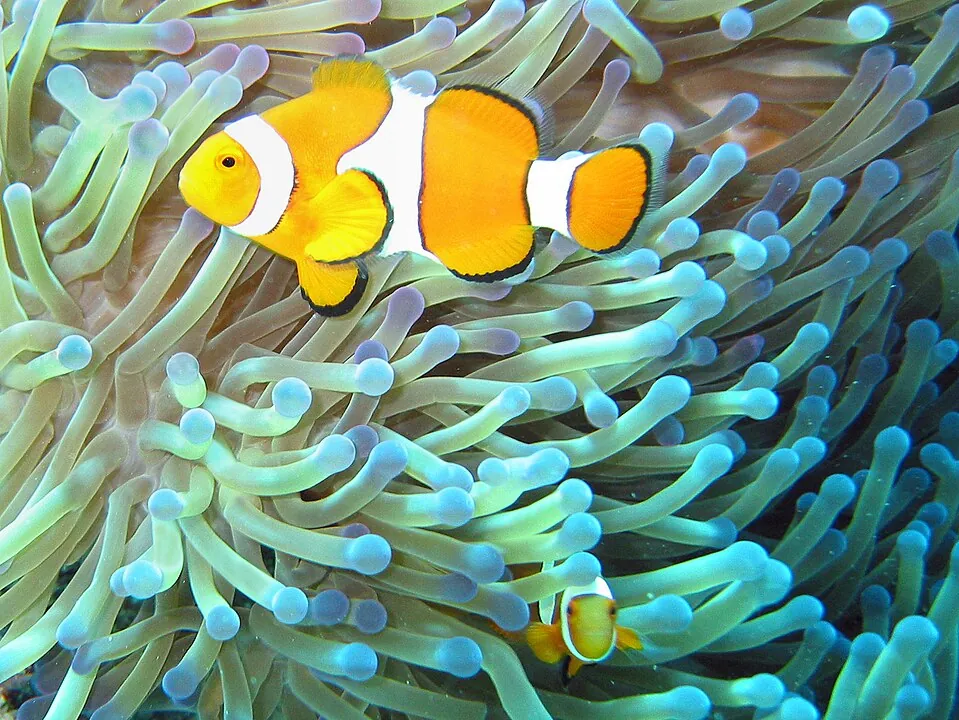
| Mutualism | + / + | Clownfish shelter among anemone tentacles and in return chase off fish that eat anemones. Corals and the algae inside them. Wattles and the nitrogen-fixing bacteria in their roots (3B). |
| Commensalism | + / 0 | Cattle egrets catch insects stirred up by grazing cattle. Ferns and orchids growing on rainforest trees (epiphytes) get light without harming the tree. |
| Parasitism | + / − | The paralysis tick feeds on the blood of bandicoots, dogs and people. Mistletoe taps into eucalypt branches for water and minerals and can kill a stressed tree. |
| Predation | + / − | Wedge-tailed eagles hunting rabbits; quolls eating insects and small mammals. |
| Competition | − / − | Native birds such as rosellas competing with introduced common mynas for tree hollows. |
Symbiosis means two species living in close association for a long time. Biologists use it as an umbrella word that covers mutualism, commensalism and parasitism; some older books use it to mean only partners that can't survive apart, such as the fungus and alga that make up a lichen. A parasite is different from a predator because it usually lives on or in its host for a long time and doesn't kill it quickly; a dead host is bad news for the parasite.
A special kind of competition is inhibition (allelopathy), where one organism releases a chemical that harms another. The mould Penicillium makes penicillin, which kills bacteria competing with it, which is how the first antibiotic was found. Howard Florey, from Adelaide, led the team that turned penicillin into a medicine in the 1940s.
Predators and prey
Predator and prey populations are linked. When prey are plentiful, predators have plenty of food, raise more young and increase. More predators eat more prey, so the prey population falls. Then predators run short of food and their numbers fall too, which lets the prey recover. The cycle repeats, with the predator peaks always lagging behind the prey peaks. Predators also benefit the prey population as a whole, by removing old, sick and weak individuals and stopping prey eating out their own food supply.
- Run the normal model. Which population peaks first? By how many years?
- Increase the rabbit birth rate. What happens to the size of the fox peaks?
- Add a drought in year 10. Describe what happens to each population and why.
- Try fox baiting. Why might controlling foxes alone be a problem for farmers?
Test yourself
Clownfish and sea anemones both benefit from living together. This is
+/+ is mutualism.
A tick feeding on a bandicoot is an example of
The tick benefits and lives on the host, which is harmed but not killed quickly.
In a predator–prey graph, the predator population peaks
Predators need time to breed after food becomes plentiful.
Two male kangaroos fighting over a female is an example of
Competition within the same species.
Label the predator–prey graph.
Classify each relationship.
A relationship between members of the same species is called . In , one species benefits and the other is unaffected. The organism a parasite lives on is called the . When one organism releases a chemical that harms another, it is called inhibition or .
Explain why the populations of a predator and its prey rise and fall in a repeating cycle, and why the predator's numbers change after the prey's.
When there are lots of prey, predators have plenty of food, so more of them survive and raise young and the predator population grows. With more predators, more prey are eaten, so the prey population falls. Now there is less food for predators, so fewer survive and breed, and the predator population falls. With fewer predators, more prey survive and their numbers rise again, and the cycle repeats. The predator changes come after the prey changes because it takes time for predators to breed and raise young in response to more food, and time for them to starve when food runs out.