 Coaching Centre
Caring for Country and sustainability
How First Nations peoples have managed ecosystems sustainably for tens of thousands of years, including the Brewarrina fish traps and Anangu habitats and seasons, savanna fire management and carbon, and how these ideas shape sustainable management today.
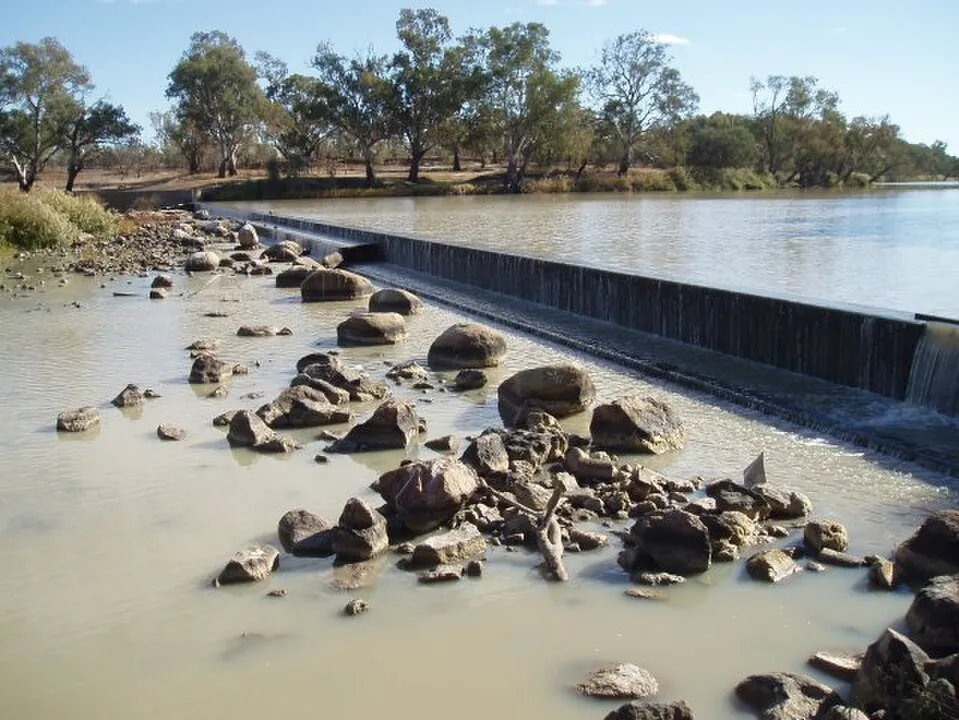
On the Barwon River at Brewarrina, in north-western NSW, there are stone fish traps that may be among the oldest human-built structures on Earth. Built by the Ngemba people, they were used to feed large gatherings of many nations for thousands of years without ever exhausting the fish. That only works if you understand the river's ecology very well.
Caring for Country
For Aboriginal and Torres Strait Islander peoples, Country means more than land. It includes the waters, sky, plants, animals, people and ancestral beings, all connected by relationships and responsibilities. Over more than 60 000 years, people built up detailed knowledge of how ecosystems work: when animals breed, which plants fruit in which season, how fire changes the landscape, and how much can be taken while leaving enough for the future. This knowledge was passed down through story, song, dance, art and ceremony, and through rules about who could hunt or gather what, and when.
That is sustainability: using resources to meet our needs without stopping future generations from meeting theirs.
The Brewarrina fish traps
The traps, called Baiame's Ngunnhu, are a network of dry-stone walls and pools stretching about half a kilometre along the river. In the Ngemba story, the ancestral being Baiame designed them and gave each family group its own pools to use and maintain. When the river rises, fish such as golden perch and Murray cod swim upstream through gaps in the walls. As the water drops, some are left in the pools where they can be caught by hand or with spears.
The design has sustainability built in. Gaps can be opened so fish can still move upstream to breed, and the rules about which family fished which pool meant no one could take too much. Archaeologists debate how old the traps are; estimates range from a few thousand years to as much as 40 000. They were added to the National Heritage List in 2005. Similar knowledge shaped the Gunditjmara eel traps and channels at Budj Bim in western Victoria, at least 6600 years old and World Heritage listed in 2019.
- Choose "Take everything trapped" and run 10 years. What happens to the catch?
- Start again with "Take only what is needed" and the gaps open. Run 30 years (press Run 10 years three times) with each rule and compare the total catch. Which rule takes more in the first few years, and which feeds people for longer?
- Try "Take a lot". The yearly catch ends up similar to "Take only what is needed", so why is it riskier? Look at the number of fish left in the river.
- Close the gaps but take only what is needed. Is that enough to keep the population healthy? Why?
- Which rule matters more: the amount taken or the gaps? Explain using the graph.
Anangu habitats and seasons
The Anangu are the traditional owners of Uluru–Kata Tjuta National Park in the Central Australian desert. Anangu knowledge sorts the land into habitats, each with its own plants, animals and foods:
| Habitat | Description | Plants and animals |
|---|---|---|
| Puli | Rocky areas, gorges and stony slopes, where animals find shelter and water | Euros, black-footed rock-wallabies, echidnas, fat-tailed antechinus |
| Puti | Open woodland, with lots of grass after rain | Mulga, desert oak, bloodwood; red kangaroos; witchetty grubs in the roots of the witchetty bush |
| Pila | Spinifex plains and flats between sand dunes | Over 50 kinds of desert grass, whose seeds are ground for flour; spinifex resin used as glue for tools |
Anangu also recognise five seasons, based on weather, plants and animal behaviour rather than on four fixed calendar blocks. Knowing the seasons tells people where food will be and when animals are breeding, so they can avoid hunting them then.
- Piriyakutu (about August–September): warm, steady winds from the north and west; plants such as honey grevillea flower and animals breed; a good time to hunt kangaroos.
- Mai wiyaringkupai / Kuli (around December): the hottest time, when food is scarce; dry storms bring lightning and bushfires.
- Itjanu / Inuntji (January–March): cloud brings scattered storms and food plants flower.
- Wanitjunkupai (about April–May): cooling weather; reptiles become less active.
- Wari (June–July): the cold season, with frosts and dew; the frosts dry the grasses, which become fuel for fires later.
Introduced species threaten this knowledge and the ecosystems it describes. Buffel grass, planted to stop erosion, has spread across central Australia, crowding out the native grasses whose seeds people eat and fuelling fires so hot they kill desert trees. Camels, rabbits, foxes and feral cats have also done serious damage.
Fire, carbon and ranger jobs
In Year 8 (1I) you learned how cultural burning uses small, cool fires to create a patchy mosaic that protects Country from big wildfires. In the tropical savannas of northern Australia, this knowledge now also helps the carbon cycle (3A).
Savanna grasses grow fast in the wet season and dry out each year, so the savannas burn often. Late dry season wildfires are hot and huge, and they burn more of the fuel, including logs and leaf litter. Fires don't just release carbon dioxide (which the regrowing grass soon takes back up); they also release methane and nitrous oxide (3B), which are much stronger greenhouse gases and are not reabsorbed. Burning early in the dry season, when the fires are cooler and patchier, means less fuel burns overall and less of these gases is released.
The Western Arnhem Land Fire Abatement project, started in 2006 by Aboriginal ranger groups working with scientists, was the first to use this. It greatly reduced the area burnt by late dry season fires and cut fire emissions by around a third. The emission cuts are sold as carbon credits, which pay for ranger jobs on Country. Savanna burning projects now run across tens of millions of hectares of northern Australia, many of them led by Traditional Owners.
Test yourself
The gaps in the walls of the Brewarrina fish traps helped make fishing sustainable because they
Fish that escape can breed, so the population is maintained.
In Anangu knowledge, puli is
Puli is rocky country, where animals find shelter and water.
Anangu people knew which habitat to hunt or gather in at different times of year. This is an example of
Matching harvesting to seasons and breeding times leaves enough for the future.
Buffel grass is a problem in central Australia because it
It replaces native seed grasses and adds fuel.
Name the five Anangu seasons.
Label the fish traps.
Which Anangu habitat?
Using resources so that future generations can still meet their needs is called . The Brewarrina fish traps were built by the people on the Barwon River. Two-way science combines Traditional with modern scientific tools. Areas managed by Traditional Owners for conservation are called Indigenous Areas.
Using one example, explain how Aboriginal or Torres Strait Islander knowledge of ecosystems supports sustainable use of resources, and explain how this knowledge is used in managing ecosystems today.
The Brewarrina fish traps, Baiame's Ngunnhu, were built by the Ngemba people as stone walls and pools across the Barwon River. When the river rose, fish such as golden perch and Murray cod swam upstream through gaps in the walls, and as the water fell many were left in the pools where they could be caught. The traps were sustainable because the gaps could be opened so fish could still pass upstream to breed, keeping the breeding population healthy, and because each family group had its own pools to use and look after, so no one could take too much. This let large gatherings be fed for thousands of years without exhausting the fish. The same ideas are used today: NSW fishing rules set bag and size limits and a closed season for Murray cod while they breed, like opening the gaps, and Traditional Owners, rangers and scientists now work together in two-way science to monitor and restore fish populations in the Barwon–Darling.