 Coaching Centre
The immune system and vaccination
The three lines of defence, phagocytes and lymphocytes, antigens and antibodies, primary and secondary immune responses and memory cells, active and passive immunity, how vaccines including mRNA vaccines work, antibiotics and resistance, and when the immune system goes wrong.
You will probably catch chickenpox at most once in your life, but you can catch a cold many times every year. Both are viruses. The difference is that there is only one chickenpox virus, while more than 200 different viruses cause colds. Your immune system remembers every pathogen it has beaten, but it has to meet each one first.
Three lines of defence
Your body is under constant attack from pathogens. It defends itself in three layers.
First line: keep them out. These barriers are non-specific; they stop any pathogen.
- Unbroken skin is a tough waterproof layer, and the helpful bacteria living on it crowd out harmful ones.
- Mucus in the nose and airways traps microbes, and tiny hairs called cilia sweep it up to the throat to be swallowed.
- Tears and saliva contain an enzyme, lysozyme, that breaks down bacterial cell walls.
- Stomach acid kills most microbes in food.
- Reflexes such as coughing, sneezing and vomiting expel invaders.
Second line: attack anything foreign. If pathogens get through, for example through a cut, a non-specific response begins.
- Inflammation. Damaged cells release chemicals that widen nearby blood vessels and make them leaky. The area becomes red, warm, swollen and sore, and white blood cells and fluid flood in.
- Phagocytes are white blood cells that engulf pathogens and digest them. This is called phagocytosis. Pus is mostly dead phagocytes and the remains of what they ate.
- Fever. Raising body temperature slows the growth of many pathogens and speeds up the immune response (4E).
- Blood clotting seals wounds so fewer pathogens can enter.
Third line: a targeted attack. This is the specific immune response. It is slower to start, but it targets one particular pathogen and remembers it.
Antigens, antibodies and lymphocytes
Every cell and virus has molecules on its surface, mostly proteins, that act like name tags. Your immune system learns to ignore your own and to recognise foreign ones. A foreign molecule that triggers an immune response is called an antigen.
The specific response is carried out by white blood cells called lymphocytes. There are millions of different lymphocytes in your body, each able to recognise just one antigen shape.
- B cells make antibodies, Y-shaped proteins whose tips fit one antigen exactly. When a B cell meets its matching antigen, it multiplies rapidly into thousands of identical cells that pour out antibodies. Antibodies stick to pathogens, clump them together, stop viruses entering cells, and mark the pathogens so phagocytes can find and eat them.
- Killer T cells find body cells that have been infected by a virus and destroy them, along with the viruses being made inside.
- Some of the new B and T cells become long-lived memory cells. They stay in your blood and lymph nodes for years, sometimes for life, ready for the same antigen to return.
The first time you meet a pathogen, finding and multiplying the right lymphocytes takes about a week. Meanwhile the pathogen is multiplying too, so you get sick. This is the primary response. If the same pathogen comes back, memory cells recognise it at once, and the secondary response is faster and much bigger. The pathogen is usually destroyed before you notice any symptoms. You are now immune.
- Play "Infected twice". Compare the first and second antibody peaks: which comes sooner, and which is higher? How many days was the person sick each time?
- Play "Vaccinated, then infected", then "Not vaccinated, infected". Use the "Days feeling sick" readout to compare them.
- Why does the pathogen line drop much faster during the second infection?
- Try "Weakened immune system". Explain why people having chemotherapy, or with untreated HIV, are at greater risk from infections.
Types of immunity
| Natural | Artificial | |
|---|---|---|
| Active: your body makes its own antibodies and memory cells; lasts a long time | Catching a disease and recovering | Vaccination |
| Passive: you are given ready-made antibodies; works at once but fades in weeks or months, because no memory cells are made | Antibodies passing from mother to baby across the placenta and in breast milk | Antibody injections, such as antivenom for a snakebite or antibodies against tetanus or RSV |
Australia has some of the world's most venomous snakes and spiders. Antivenoms are made by injecting animals with small, harmless doses of venom and collecting the antibodies they make: horses for most snake antivenoms, and rabbits for funnel-web spider antivenom. Since the first funnel-web spider antivenom was introduced in 1981, no one in Australia is known to have died from a funnel-web bite when antivenom was given.
How vaccines work
In Year 8 you met Jenner's smallpox vaccine and saw how herd immunity protects people who can't be vaccinated. A vaccine works by giving your immune system a safe preview of a pathogen's antigens, so it makes memory cells without you having to get sick first. Then, if the real pathogen arrives, you get the fast secondary response.
Vaccines can contain:
- a weakened live pathogen that can't cause serious disease, as in the measles, mumps and rubella vaccine
- a killed pathogen, as in many flu vaccines
- a part of a pathogen, such as one protein, or an inactivated toxin, as in the tetanus and whooping cough vaccines and the HPV vaccine
- mRNA, a set of instructions that makes your own cells build one harmless protein from the pathogen, such as the spike protein on the COVID-19 virus. Your immune system then learns to recognise it. The mRNA never enters the cell's nucleus, can't change your DNA, and is broken down within days.
Some vaccines need several doses or boosters, because the memory fades or because the pathogen changes. Flu viruses change their antigens every year, so a new flu vaccine is made each year, and it is recommended for everyone from 6 months of age. Adults need tetanus boosters from time to time, and an extra one after a deep or dirty wound if their last dose was more than five years ago. The bacteria that cause tetanus live in soil, dust and animal manure, not on "rusty nails" as such: a rusty nail is just likely to be dirty and to make a deep wound.
Australia is a world leader in one vaccine. Professor Ian Frazer and Dr Jian Zhou at the University of Queensland developed the technology behind the HPV vaccine, which protects against the virus that causes most cervical cancers. It has been given free to Australian school students since 2007, and Australia is on track to become one of the first countries to eliminate cervical cancer.
Antibiotics and resistance
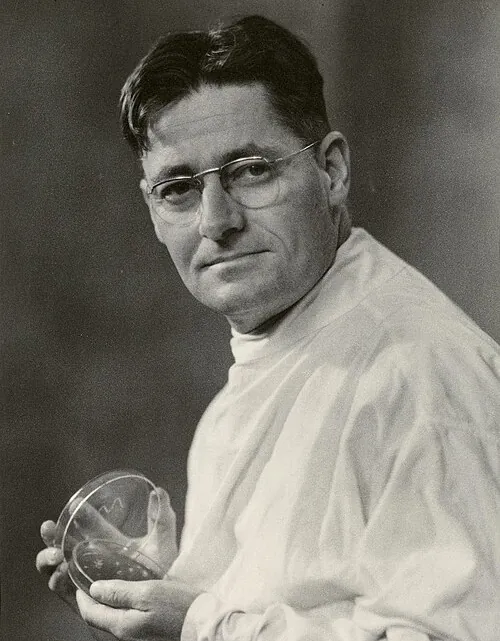
Antibiotics are medicines that kill bacteria or stop them growing. Penicillin, discovered by Alexander Fleming in 1928, stops bacteria building their cell walls, so they burst as they grow. It wasn't until 1941 that a team at Oxford led by the Australian Howard Florey, with Ernst Chain and Norman Heatley, worked out how to purify it and showed it could cure infections. Florey, Fleming and Chain shared the 1945 Nobel Prize, and Florey grew up in Adelaide. Human cells have no cell walls, which is why penicillin can kill bacteria without harming us. Viruses have no cell walls or cell machinery of their own, so antibiotics don't affect them.
Whenever antibiotics are used, any bacteria that happen to be slightly resistant are more likely to survive and multiply. Over time, whole populations become resistant. Strains such as MRSA (methicillin-resistant golden staph) no longer respond to many common antibiotics. To slow this, doctors avoid prescribing antibiotics for viral infections, and patients should take the whole course as prescribed. In Australia, all medicines, including vaccines, must be tested and approved by the Therapeutic Goods Administration (TGA) for safety and effectiveness before they can be sold.
When the immune system goes wrong
- Allergies: the immune system overreacts to harmless antigens such as pollen, dust mites or peanuts. Australia has one of the highest rates of food allergy in the world. In anaphylaxis, the most severe reaction, airways swell and blood pressure falls, and an adrenaline auto-injector is needed at once.
- Autoimmune diseases: the immune system attacks the body's own cells, as in type 1 diabetes (4D), multiple sclerosis (4A) and rheumatoid arthritis.
- Immune deficiency: a weakened immune system can't fight infections. HIV destroys a type of T cell, and without treatment it leads to AIDS. Modern medicines keep HIV under control so people can live long, healthy lives.
Test yourself
Which of these is part of the first line of defence?
The first line is barriers that keep pathogens out.
What is an antigen?
Antigens are recognised; antibodies are made to fit them.
Why is the second infection with the same virus usually much milder?
Memory cells allow the secondary response.
A bushwalker bitten by a brown snake is given antivenom. This is
Ready-made antibodies are injected; no memory cells are made.
Why won't antibiotics cure the flu?
Antibiotics target bacterial structures and processes.
Name the three lines of defence.
Label the antibody diagram.
Is each example active or passive immunity?
White blood cells that engulf pathogens are called . B cells make Y-shaped proteins called . After an infection, long-lived cells remain. Bacteria that survive antibiotics can become . Medicines in Australia are approved by the .
A student is vaccinated against measles at 12 months. Years later she is exposed to the measles virus at school but doesn't get sick. Explain how the vaccine protected her.
The vaccine contained a weakened form of the measles virus that couldn't cause the disease but still carried measles antigens. Lymphocytes whose receptors matched those antigens recognised them and multiplied. B cells made antibodies that fitted the antigens, and some of the new lymphocytes became memory cells, which stayed in her body. When she was exposed to real measles at school, the memory cells recognised the antigens straight away. This secondary response was much faster and larger than a first response would have been: huge amounts of antibodies were made within a day or two. They stuck to the viruses and stopped them entering cells, and phagocytes destroyed them, so the virus was cleared before it could multiply enough to make her sick.