 Coaching Centre
Removing toxins from food
How Aboriginal and Torres Strait Islander Peoples have used solubility and equilibrium to make cycad seeds and other toxic plant foods safe to eat: leaching in running water, increasing surface area, ageing, and the chemistry of the water-soluble toxins involved.
Cycad seeds are big, plentiful and packed with starch, and in some places a single grove can produce hundreds of kilograms in a season. They are also poisonous: eaten raw, they cause vomiting, liver damage and nerve damage. For thousands of years Aboriginal peoples across northern and eastern Australia have turned these seeds into a staple food. The methods they developed use the same solubility equilibrium you've just studied, worked out by careful observation and passed down through generations long before anyone wrote an equilibrium expression.
Cycads and their toxins
Cycads are ancient seed plants with stiff, palm-like fronds. Australia has around 80 species in four genera: Cycas across the tropical north, Macrozamia (including the burrawang, M. communis, of the NSW coast and the zamia, M. riedlei, of south-west Western Australia), Lepidozamia in eastern Queensland and northern NSW, and Bowenia in Queensland.
The main toxins in the seeds are:
- Cycasin and macrozamin. These are glycosides: a sugar joined to a small toxic molecule, methylazoxymethanol (MAM). In the gut, enzymes split off the sugar, releasing MAM, which damages the liver and can cause cancer. Cycasin is most important in Cycas and macrozamin in Macrozamia.
- BMAA (β-methylamino-L-alanine), an amino acid that is not used to build proteins and acts as a nerve toxin.
The key property for chemists is that these toxins are small, polar molecules with many –OH and N–H groups, so they hydrogen bond with water and are highly water-soluble. Starch, the food value of the seed, is made of huge molecules and is insoluble in cold water. So water can separate the toxin from the food. Cattle that eat cycad seeds and fronds on the farm suffer liver damage and a nerve condition known as "zamia staggers", a reminder that the raw plant really is dangerous.
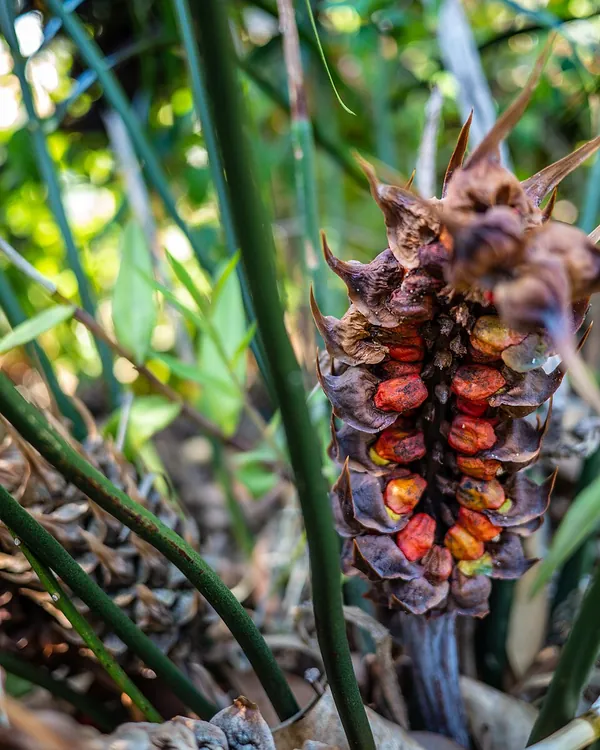
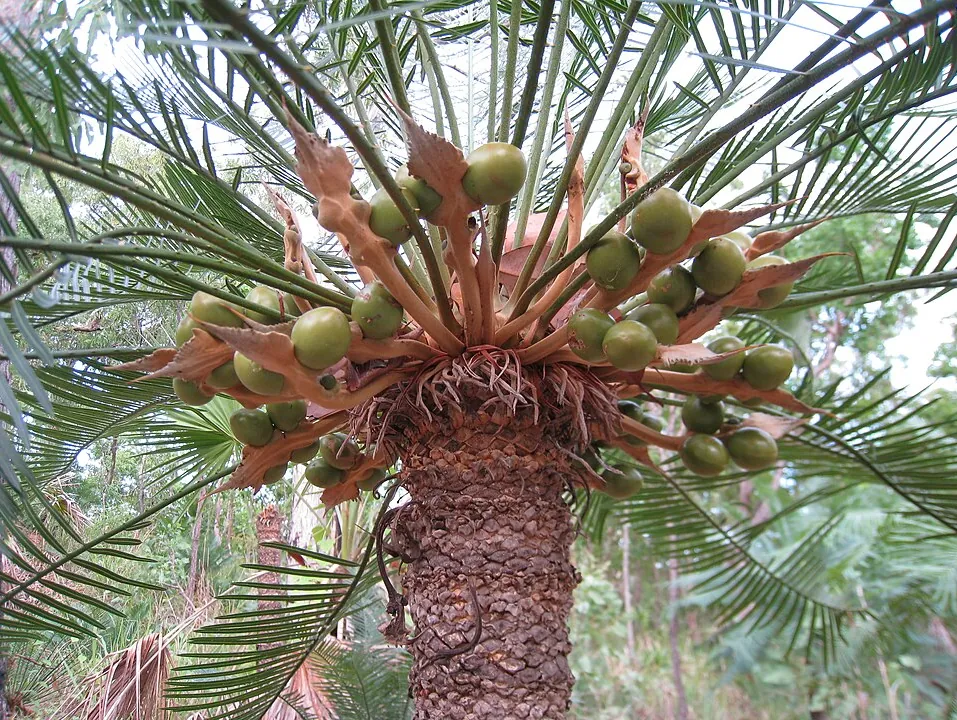
Leaching as an equilibrium
When cut kernels are placed in water, toxin molecules diffuse out of the plant tissue and dissolve, while some dissolved toxin diffuses back in:
$$\text{toxin (in kernel)} \rightleftharpoons \text{toxin (aq)}$$
In a bowl of still water the concentration of toxin in the water rises until the two rates are equal and equilibrium is reached. At that point a fixed fraction of the toxin is still in the kernels and no further net leaching occurs, no matter how long you wait.
Running water changes everything. The creek continually replaces water containing toxin with fresh water, so the concentration of toxin around the kernels stays close to zero. Using the language of lesson 5E, Q stays well below K, so there is a continual net movement of toxin out of the kernels. This is Le Chatelier's principle at work: removing a product (dissolved toxin) keeps shifting the equilibrium to the right. Changing the water in a bowl many times does the same job in steps.
Other features of traditional processing also follow from the chemistry:
- Cracking, slicing, pounding or grating the kernels increases the surface area and shortens the distance the toxin must travel to reach water, so leaching is much faster.
- Woven bags or baskets hold the pieces in the current, keeping fresh water flowing around every piece.
- Time. Leaching often lasted from several days to weeks, depending on the species, the preparation and the local practice.
- Start with Sliced kernels in Still water. What percentage of toxin is left when equilibrium is reached? Why does it stop falling?
- Press Change the water each time equilibrium is reached. How many changes are needed to get below the 1% line?
- Switch to the Running creek. How long does it take to fall below 1% with sliced kernels? With whole kernels? With crushed kernels?
- Explain the shape of the running-water curve. Why does the rate of leaching slow down even though the water stays fresh?
Traditional processing methods
Methods varied between Aboriginal Nations and with the species available, and they are part of the knowledge and culture of particular communities. Broadly, three approaches are described:
- Leaching. Seeds were collected when ripe, the hard outer shell cracked off, and the kernels sliced, crushed or pounded. The pieces were placed in a dilly bag, basket or a pit lined with grass or bark, and left in a running stream, or soaked with repeated changes of water, for days or weeks. The leached pulp was then dried and pounded into a flour or paste and baked in hot ashes as a damper or cakes. This approach is recorded for Cycas species in the Northern Territory and Cape York, and for burrawang on the NSW south coast.
- Ageing (fermentation). In some regions, including the south-west of Western Australia with Macrozamia riedlei, seeds were stored, sometimes buried in pits or kept in water, for weeks or months. Microorganisms and the seed's own enzymes break down the toxic glycosides during this time. The fleshy outer layer was also eaten after ageing.
- Heating. Roasting or baking was usually combined with leaching or ageing. Heat alone does not remove all of the toxin.
Archaeological evidence from a rock shelter in south-western Australia suggests Macrozamia seeds were being processed there at least 13 000 years ago. Seeds were sometimes prepared in large quantities, providing enough food to support big ceremonial gatherings.
The methods were tested over many generations: processing that left toxin behind caused illness and would not have been continued. Chemical analyses of traditionally processed cycad flour have found that the toxin content is greatly reduced.
Other foods made safe by leaching
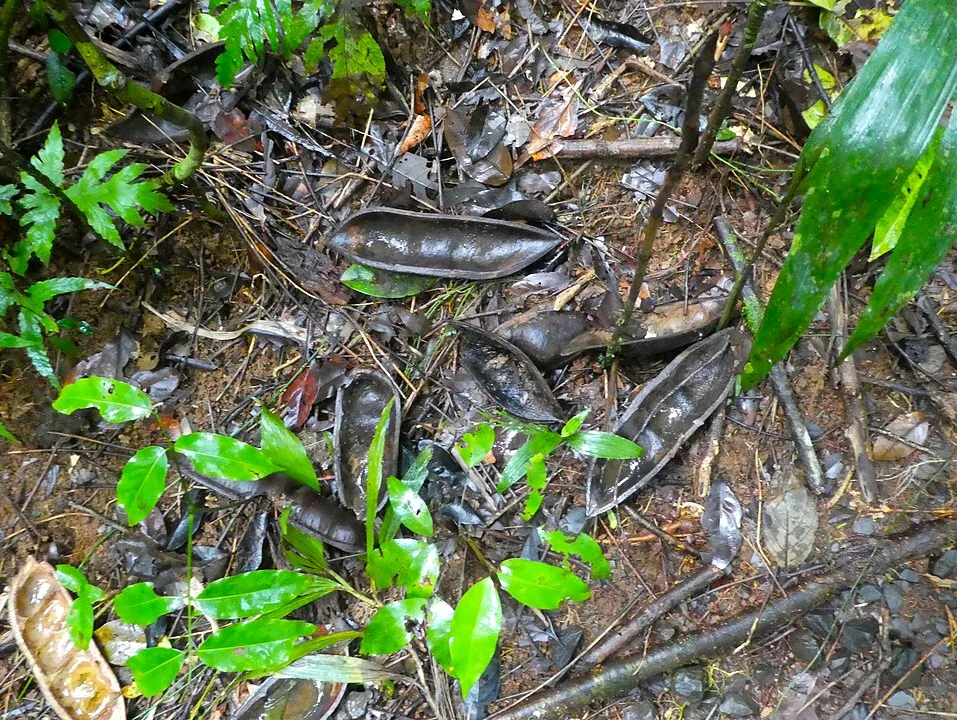
- Moreton Bay chestnut (black bean, Castanospermum australe), a rainforest tree of eastern Queensland and northern NSW. Its large seeds contain saponins and other toxic compounds. They were sliced or grated, soaked or leached in running water for an extended period and then roasted or baked.
- Yellow walnut (Beilschmiedia bancroftii) of the north Queensland rainforests. The kernels were roasted, grated or pounded and leached in water before being made into a damper.
Many communities continue to keep and teach this knowledge. If you're investigating it, look for sources written or produced with the involvement of Aboriginal and Torres Strait Islander people, and note that some knowledge is not for general sharing.
Safety: never eat any part of a cycad or other wild seed. Correct processing requires detailed, local knowledge, and poisoning of people and pets still happens today.
Test yourself
Which property of cycasin is most important in removing it from cycad kernels?
Leaching works because the toxin dissolves and the starch does not.
Why is leaching in a running creek more effective than soaking in a single bowl of water?
[toxin(aq)] stays low, so Q < K and there is a continued net loss of toxin.
Kernels are sliced before leaching mainly to
Surface area affects the rate, not the equilibrium position.
Label the two leaching situations.
Put the steps of leaching cycad seeds in order.
Explain, using equilibrium principles, how Aboriginal peoples removed water-soluble toxins from cycad seeds. Include an equation and refer to the role of running water and preparation of the kernels.
The toxins in cycad seeds, such as cycasin, are small polar molecules that form hydrogen bonds with water and are very soluble, while the starch is insoluble. When kernel pieces are placed in water, an equilibrium is set up: toxin (in kernel) ⇌ toxin (aq). In a bowl of still water the concentration of dissolved toxin increases until the rates of the forward and reverse processes are equal; at equilibrium some toxin is still left in the kernels. Aboriginal peoples placed the kernels in woven bags in running water. The flowing water continually removes the dissolved toxin, keeping [toxin(aq)] close to zero, so Q stays below K. By Le Chatelier's principle the equilibrium keeps shifting to the right and toxin continues to leach out until very little remains. Cracking, slicing or pounding the kernels first increases the surface area in contact with water and shortens the diffusion distance, so the toxin is removed much faster.