 Coaching Centre
Le Chatelier’s principle
Predicting how an equilibrium responds to changes in concentration, pressure and volume, temperature and catalysts, reading concentration–time graphs, the cobalt chloride, iron(III) thiocyanate and nitrogen dioxide practicals, and industrial and biological examples.
Seal some brown nitrogen dioxide in a glass syringe. Drop it in iced water and the colour fades almost to nothing; move it to hot water and it turns dark brown. Push the plunger in and it darkens, then slowly lightens a little. One rule predicts every one of those changes.
The principle
Le Chatelier's principle: if a system at equilibrium is disturbed, the system adjusts to partially counteract the disturbance and reach a new equilibrium.
Two phrases matter. "Partially": the system never fully undoes the change. Add more of a reactant and its concentration at the new equilibrium is still higher than before, just not as high as straight after you added it. "Equilibrium position": we describe the response as a shift to the right (more products, forward reaction favoured) or a shift to the left (more reactants). A shift in position is not the same as a change in K. Only temperature changes K.
Changing concentration
Consider the iron(III) thiocyanate equilibrium, which is pale yellow-orange on the left and blood red on the right:
$\text{Fe}^{3+}(aq) + \text{SCN}^-(aq) \rightleftharpoons \text{FeSCN}^{2+}(aq)$
- Add Fe³⁺ or SCN⁻: the system uses up some of the added ion, so the equilibrium shifts right and the solution becomes a deeper red.
- Remove SCN⁻ (add Ag⁺, which precipitates white AgSCN) or remove Fe³⁺ (add OH⁻, which precipitates Fe(OH)₃): the system replaces some of what was lost, so it shifts left and the red fades.
- Add a pure solid or liquid that's in the equation, for example more CaCO₃ to CaCO₃(s) ⇌ CaO(s) + CO₂(g): no shift. Their "concentration" doesn't change.
Dilution is worth a careful look. Adding water lowers every concentration. The system responds by shifting towards the side with more dissolved particles, partially restoring the total concentration. Here that's the left (two ions versus one), so the red fades by more than dilution alone would explain.
Changing pressure and volume
For reactions involving gases, the pressure depends on the number of gas molecules. Compressing the system (halving the volume) instantly doubles every gas concentration and the total pressure. The system counteracts the pressure increase by shifting towards the side with fewer moles of gas.
$\text{N}_2\text{O}_4(g) \rightleftharpoons 2\text{NO}_2(g) \qquad \Delta H = +57 \text{ kJ mol}^{-1}$
In the syringe, pushing the plunger in first makes the gas darker: the same NO₂ is squeezed into a smaller volume. Then the equilibrium shifts left (1 mole of gas instead of 2), some NO₂ pairs up into colourless N₂O₄, and the colour fades a little, though it stays darker than the start.
- If both sides have the same number of gas moles, as in H₂(g) + I₂(g) ⇌ 2HI(g), a volume change has no effect on the position.
- Adding an inert gas such as argon at constant volume raises the total pressure but doesn't change any reacting gas's concentration (or partial pressure), so there is no shift.
Changing temperature
Treat heat as if it were a reactant (endothermic) or a product (exothermic). Raising the temperature favours the endothermic direction, which absorbs some of the added heat; lowering it favours the exothermic direction.
- N₂O₄ ⇌ 2NO₂ is endothermic forward: heating shifts right, so the gas goes darker brown; cooling in ice makes it paler.
- Fe³⁺ + SCN⁻ ⇌ FeSCN²⁺ is exothermic forward: heating shifts left and the red fades.
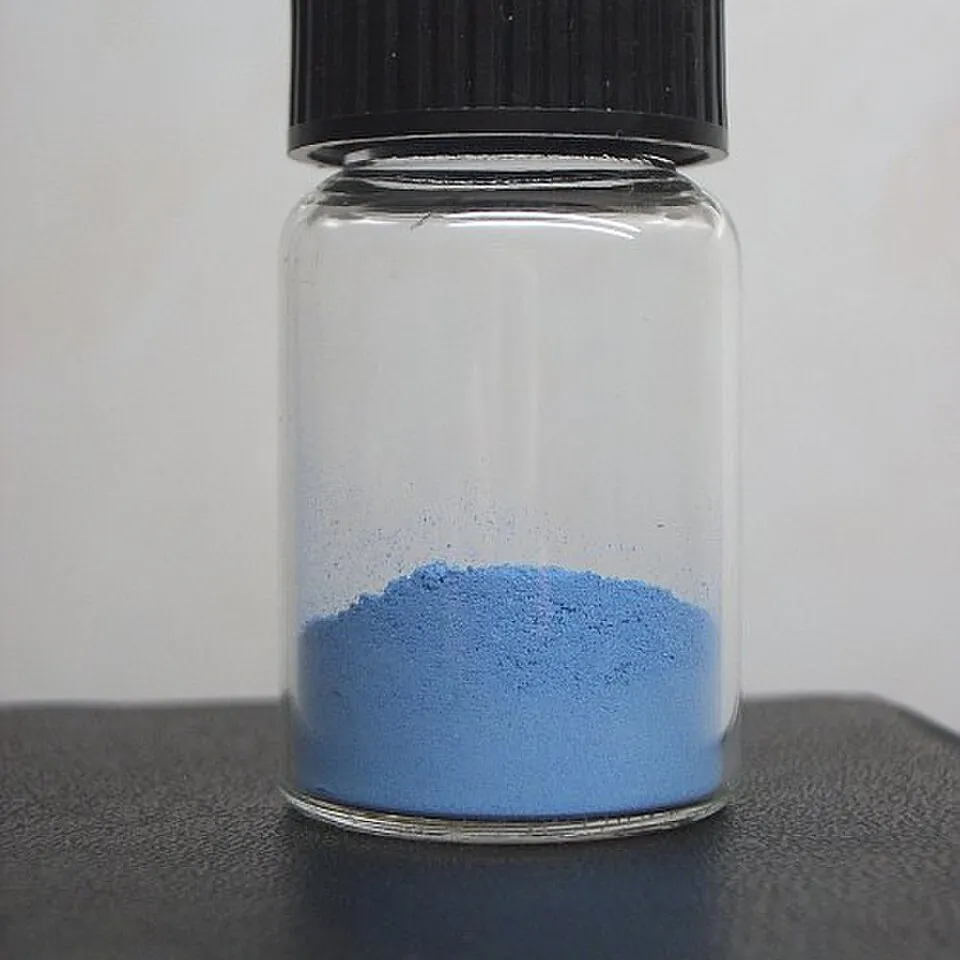
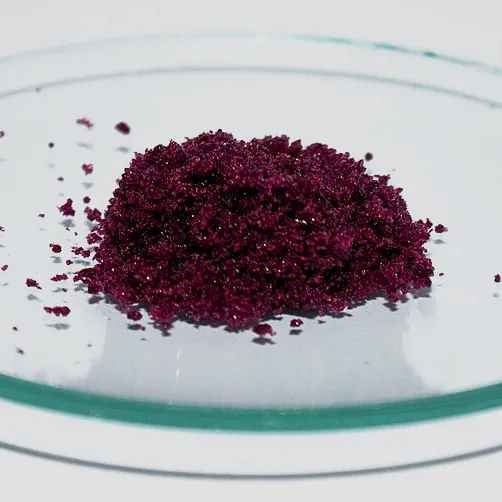
The cobalt chloride equilibrium is endothermic in the forward direction: warming the violet solution turns it blue, cooling in ice turns it pink. Adding concentrated HCl adds Cl⁻ and shifts it right (blue); adding water dilutes everything and shifts it towards the side with more particles in solution, which is the left (pink). Some notes write this equilibrium in a simplified form as CoCl₂·6H₂O ⇌ CoCl₂ + 6H₂O; the version above, with the two complex ions, is the accurate one.
Temperature is different from every other change: it changes the value of K itself (5E). For an endothermic forward reaction, K increases as temperature rises; for an exothermic one, K decreases.
Adding a catalyst
A catalyst lowers the activation energy of the forward and reverse reactions by the same amount, so both speed up by the same factor. Equilibrium is reached sooner, but its position and K are unchanged.
- For N₂O₄ ⇌ 2NO₂, press Add NO₂. Describe the shape of each line: which change is sudden and which is gradual?
- Press Halve volume. Compare the NO₂ concentration at the new equilibrium with the value just before the change.
- Heat by 20 °C twice. How do Q and K change? Then press Add argon and Add catalyst and explain what happens.
- Switch to the iron(III) thiocyanate system and press Dilute with water ×2. Why does the FeSCN²⁺ concentration end up less than half its earlier value?
Reading concentration–time graphs
HSC questions often show a graph like this and ask what happened at each time. Look for three signatures:
- One line jumps vertically, the others don't: that substance was added or removed. The other lines then change gradually as the system responds.
- All gas lines jump at once, in proportion: the volume was changed. A halving of volume doubles every concentration instantly.
- No jump, but gradual changes in opposite directions: the temperature changed (or, in an exam, possibly a slow addition). Use the direction of the shift and ΔH to decide whether it was heating or cooling.
Also check the stoichiometry: in N₂O₄ ⇌ 2NO₂, every time [N₂O₄] changes by x, [NO₂] changes by 2x in the opposite direction. Graphs that don't respect this are drawn wrongly. A catalyst produces no change at all on an equilibrium graph.
Equilibrium at work
The Haber process. N₂ + 3H₂ ⇌ 2NH₃, ΔH = −92 kJ mol⁻¹. Le Chatelier's principle says high pressure (fewer gas moles on the right) and low temperature (exothermic forward) maximise the yield. But at low temperatures the rate is far too slow, so plants run at around 400–450 °C with an iron catalyst as a compromise, and at 100–250 times atmospheric pressure, which is about as high as is safe and economical. Ammonia is removed by cooling it until it liquefies, so the equilibrium keeps shifting right, and unreacted gases are recycled.
Your blood. Haemoglobin (Hb) picks up oxygen in the lungs and releases it in the tissues: Hb + 4O₂ ⇌ Hb(O₂)₄. Where oxygen concentration is high (lungs) the equilibrium shifts right; where it's low (working muscles) it shifts left and oxygen is released. At high altitude the lower oxygen concentration shifts it left, which is why climbers feel breathless until their bodies make more haemoglobin.
Test yourself
For 2SO₂(g) + O₂(g) ⇌ 2SO₃(g), ΔH = −197 kJ mol⁻¹, which change increases the equilibrium yield of SO₃?
Smaller volume shifts to fewer gas moles (2 on the right versus 3 on the left).
Silver nitrate solution is added to a red Fe³⁺/SCN⁻/FeSCN²⁺ equilibrium mixture. A white precipitate forms and the solution becomes paler because
AgSCN precipitates, lowering [SCN⁻]; the system replaces some by shifting left.
A sealed tube of NO₂/N₂O₄ goes darker when placed in hot water. This shows that
Heating favours the endothermic direction, which makes more brown NO₂.
On a concentration–time graph for H₂(g) + I₂(g) ⇌ 2HI(g), all three lines jump up by the same factor at one moment and then stay flat. What happened?
A volume change makes every concentration jump together. With 2 gas moles on each side there's no shift afterwards.
Name each disturbance on the graph.
For N₂O₄(g) ⇌ 2NO₂(g), ΔH = +57 kJ mol⁻¹, how does the equilibrium respond?
When an equilibrium is disturbed, the system shifts to counteract the change. Raising the temperature favours the reaction. Increasing pressure by decreasing volume shifts the equilibrium towards fewer moles of . A does not change the position of equilibrium. The only change that alters K is a change in .
A violet solution contains the equilibrium [Co(H₂O)₆]²⁺(aq) (pink) + 4Cl⁻(aq) ⇌ [CoCl₄]²⁻(aq) (blue) + 6H₂O(l). Samples are (i) placed in an ice bath and turn pink, (ii) treated with concentrated HCl and turn blue, and (iii) diluted with water and turn pink. Explain each observation, and deduce the sign of ΔH for the forward reaction.
(i) Lowering the temperature makes the system shift in the direction that releases heat, partially counteracting the cooling. The solution turns pink, so the equilibrium has shifted left, which means the reverse reaction is exothermic. Therefore the forward reaction is endothermic, ΔH > 0.
(ii) Concentrated HCl increases [Cl⁻]. The system shifts right to use up some of the added chloride, forming more blue [CoCl₄]²⁻ and less pink [Co(H₂O)₆]²⁺, so the solution turns blue. (In collision terms, more Cl⁻ means more frequent collisions with [Co(H₂O)₆]²⁺, so the forward rate increases until a new equilibrium is reached.)
(iii) Adding water dilutes all the dissolved species. The system shifts towards the side with more dissolved particles, the left (five on the left, one on the right; water is the solvent and is not counted), partially restoring the total concentration. More pink [Co(H₂O)₆]²⁺ forms, so the solution turns pink.